Owner’s manual
 Error Codes


How to unclog drain hose on Kenmore washer?
To unclog the drain hose on your Kenmore washer model 11026932690, unplug the washer, remove as much water as possible, then check the hose for kinks and clear blockages at the standpipe end and at the washer drain outlet. Reinstall the hose exactly as shown in the owner's manual.
- Unplug the washer before touching hoses or internal components.
- Turn off both water faucets to prevent accidental filling.
- Expect water to spill; use towels and a shallow pan.
- Wear gloves; debris and sharp objects can be inside the hose.
- Check the easy end first: Pull the hooked end out of the standpipe or laundry tub; remove lint, coins, or a sock.
- Inspect for kinks: Straighten the hose and re-route it so it is not pinched behind the cabinet.
- Flush the hose: Run water through the hose (outdoors or into a tub) to push out lint buildup.
- Clear the washer outlet connection: If the clog is near the washer, remove the hose from the bottom drain connector and clear the obstruction.
- Reinstall correctly: Wet the inside of the straight hose end with tap water only, position the clamp correctly, then twist and push the hose fully onto the drain connector until it hits the cabinet stop.
The manual guidance below helps prevent slow draining and backups.
| What to check | What “right” looks like | What it prevents |
|---|---|---|
| Hooked end position | Hooked end sits in standpipe/tub without forcing extra hose in | Backflow into the washer |
| Hose routing | No sharp bends; no crushed section behind washer | Kinks and slow drain |
| Drain capacity | Standpipe/tub drain can handle high flow (about 17 gallons per minute) | Overflow and poor draining |
| Hose security | Hose is strapped/secured so it cannot pop out | Leaks and flooding |
A partially clogged or kinked drain hose can cause “won’t drain,” “won’t spin,” and wet loads. It can also lead to leaks if the hose isn’t clamped and secured correctly.
Last updated: February 2026
How to read Kenmore washer model numbers?
Kenmore washer model numbers are structured so the first 3 digits identify the manufacturer, the next group identifies the base design, and the remaining digits show feature or production variations. For your Kenmore washer, the full model number is 11026932690; match it exactly when ordering parts.
On Kenmore model 11026932690, the model and serial number are printed on the model and serial number plate. We recommend copying both numbers into your records so you can reference them for parts, troubleshooting, and service history (see the 11026932690 owner's manual).
- Look for the model and serial number plate on the washer cabinet
- Record the model number and serial number together
- Use the full model number when searching diagrams and parts lists
- Keep the information with your purchase records for quick access
Kenmore model numbers are designed to help you identify the correct parts and documentation. The prefix is especially important because Kenmore-branded washers were built by different manufacturers over the years, and parts are not interchangeable across designs.
| Section of model number | What it generally indicates | Why you care |
|---|---|---|
| First 3 digits (prefix) | Manufacturer identifier | Helps match the correct parts system |
| Middle digits | Base model/platform | Narrows down the correct diagrams |
| Ending digits | Version/feature variation | Prevents ordering a similar but wrong part |
Even a single digit mismatch can point to a different platform with different components.
- Use the full model number 11026932690 when selecting parts
- Compare the part description to your symptom (spin issue, agitation issue, vibration)
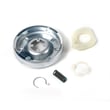
- Common wear items on many Kenmore top-load designs include the agitator dog 80040 and the coupling 285753A
- Confirm the part fits your exact model before checkout
Using the exact model number helps ensure the replacement part matches your washer’s drive system, agitator style, and tub configuration, which saves time and prevents returns.
Last updated: February 2026
What is the life expectancy of a Kenmore washer?
Most Kenmore washers typically last 10 to 15 years with normal household use and basic maintenance. Your Kenmore washer model 11026932690 is built for long-term service, and keeping it level, avoiding overloads, and fixing wear parts early helps it reach the upper end of that range (or longer). See the owner's manual for care and operating guidance.
Lifespan depends most on load size, weekly cycles, water quality, and how quickly worn drive and suspension parts are replaced.
- 10 to 15 years is the typical expectation for a residential washer
- Heavy use (large families, daily loads) shortens lifespan
- Chronic overloading and unbalanced loads accelerate wear on the drive system
- Small leaks or unusual noises are worth addressing early
- Good habits (correct detergent amount, proper loading) reduce strain on the motor and gearcase
On many Kenmore top-load designs like model 11026932690, common wear points are in the agitation and drive system.
- Agitation issues: worn agitator dog 80040
- No spin or weak agitation: worn coupling 285753A
- Slow or slipping spin: worn clutch 285785
- Basket movement or banging: worn suspension components such as washer suspension spring WP63907
Use this as a practical way to decide what to do when problems start.
| What you notice | Most likely category | Typical next step |
|---|---|---|
| Agitator moves poorly or “ratchets” | Agitator wear | Inspect/replace agitator dogs |
| Motor runs but washer will not agitate/spin | Drive coupling | Inspect coupling and drive components |
| Spins but struggles under load | Clutch/drive | Check clutch and basket drive |
| Loud banging or walking | Suspension/leveling | Level washer; inspect springs/pads |
A washer near the end of its life often shows small symptoms first (noise, vibration, weaker spin). Replacing a lower-cost wear part early can prevent secondary damage to higher-cost assemblies like the gearcase or drive basket.
Last updated: February 2026
How many cubic feet is a Kenmore Model 11026932690 washer?
The exact cubic-foot capacity for Kenmore washer model 11026932690 is not listed in the manual excerpts we have for this model. Most Kenmore 110-series, direct-drive top-load washers of this style typically fall in the about 3.0 to 3.5 cu. ft. range; use the tub measurement method below to calculate your washer’s true capacity.
Use this when you need a precise number for load sizing, moving, or comparing washers.
- Unplug the washer for safety.
- Measure the inside tub diameter (left to right) in inches.
- Measure the inside tub depth (top rim down to the bottom) in inches.
- Convert inches to feet (divide by 12).
- Calculate: Capacity (cu. ft.) = π × (radius in feet)² × (depth in feet).
| What to measure | Symbol | What it means |
|---|---|---|
| Tub radius | r | Half of the inside tub diameter |
| Tub depth | h | Inside tub depth |
| Pi | π | Use 3.1416 |
Even with the same cubic feet, real-world load size changes based on how the washer moves clothes and how full you pack it.
- Agitator design affects rollover and turnover (your model uses a Triple Action style agitator).
- Bulky items (comforters, jackets) trap air and take up more space.
- Overloading reduces cleaning and can increase vibration.
- Water level selection changes how freely items circulate.
For cycle and loading guidance specific to this washer, follow the recommendations in the owner's manual.
If the washer struggles to agitate or spin only when heavily loaded, check common drive and agitation wear items.
- Worn agitator dogs can cause weak top-agitation: agitator dog 80040
- A failing motor coupling can cause no-agitate/no-spin symptoms: coupling 285753A
- A worn clutch can cause slow or slipping spin: clutch 285785
Last updated: February 2026