 Owner’s manual



What does E27 mean on a Bosch washer?
On a Bosch WFL2060UC washer, an E27 code points to a door lock or door-latch problem; the washer is not sensing the door as safely locked, so it stops to prevent leaks and spinning with the door unsecured. Use the WFL2060UC user manual for model-specific safety and access guidance.
What to check first (fast, no parts)
- Press the door firmly closed; listen for a solid latch click.
- Power reset: unplug the washer (or switch off the breaker) for 2 minutes, then restore power.
- Check for items caught between the door and gasket (socks, strings, detergent buildup).
- Confirm the load is not pushing on the door (overloading can prevent a full latch).
- If the door handle feels loose or doesn’t return normally, inspect the handle and latch area.
Likely causes and the most common fixes
| Symptom | Most likely cause | Typical fix |
|---|---|---|
| Door won’t click shut | Misaligned door/strike or damaged handle | Re-seat door, inspect/replace handle components |
| Code appears mid-cycle | Lock mechanism overheating or failing | Replace door lock assembly |
| Door locks but won’t start | Lock switch not proving “locked” | Replace electronic lock, check wiring |
| Intermittent E27 | Loose connection in harness | Inspect connectors, repair/replace harness |
Parts that commonly relate to E27 on this model
If the mechanical feel of the door is the issue, start with the handle and door frame components. If the door closes normally but the code persists, the lock is the usual suspect.
- Washer door handle 00490903 (broken lever, loose pivot, or poor engagement)
- Washer door inner frame 00432074 (warped/cracked frame can prevent proper alignment)
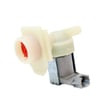
- Electronic lock 00603517 (lock not engaging or not reporting locked status)
- Washer wire harness 00184452 (intermittent lock signal due to connection issues)
Why it matters
The door lock is a critical safety circuit. If the washer cannot confirm the door is locked, it will not spin at high speed and may stop draining or tumbling to prevent water leaks and injury.
Helpful reference
For code lookups and related symptoms, use Bosch nexxt front load washer error codes.
Last updated: February 2026
What is the most common problem with a Bosch washing machine?
Drain and drain-related faults are the most common issues we see on Bosch washers like model WFL2060UC: slow draining, no drain, or error codes tied to a restricted pump/filter or drain hose. Leaks at the door area and “won’t spin” complaints (often door lock or load balance related) are also frequent. For model-specific care and troubleshooting, use the WFL2060UC owner’s manual.
Most common problems (and what they usually mean)
- Washer will not drain or drains slowly: drain pump filter restriction, clogged hose, or a failing pump
- Washer will not spin: load out of balance, door not locking, or a drain issue preventing high-speed spin
- Water leaking at the front: door seal area, door alignment, or door frame/trim damage
- Washer will not start: door not fully latched, control not accepting input, or power supply issue
- Odor or residue: detergent buildup, standing water from poor draining, or infrequent cleaning
Quick checks you can do first
- Confirm draining: if water remains in the drum, address drain restrictions before chasing spin issues.
- Inspect the drain path: look for kinks or clogs in the drain hose; check the pump area for debris.
- Check the door closure: if the door does not close smoothly, inspect the handle and inner frame.
- Use correct detergent amounts: the manual notes that with the correct detergent amount, descaling is typically not necessary.
Common symptoms and likely parts to inspect
| Symptom | Most likely area | Parts from this model to consider |
|---|---|---|
| Won’t drain / water left in drum | Drain system | Drain pump 00144486, hose routing and clogs |
| Door won’t latch or feels loose | Door hardware | Washer door handle 00490903, washer door inner frame 00432074 |
| Leaks at the door | Door sealing surfaces | Door seal area (inspect for tears, debris, misalignment) |
Why it matters
Drain problems often trigger secondary complaints like “won’t spin,” odors, and poor cleaning because the washer cannot complete the cycle correctly. Fixing the drain path first prevents repeat failures and reduces strain on the motor and controls.
When an error code is involved
If your display shows a code, match it to the Bosch Nexxt list first; it speeds up diagnosis and helps you avoid replacing the wrong part. Use Bosch nexxt front load washer error codes.
Last updated: February 2026
How do I find the model number on my WFL2060UC?
Your Bosch washer’s model number is printed on the rating label (data plate) attached to the washer cabinet. On the Bosch WFL2060UC, you will typically find this label around the door opening area or on the door frame; match the full model on the label to order the correct parts.
Where to look on a Bosch front-load washer
Check these common label locations first:
- Open the washer door and look along the door opening (inner rim of the front panel)
- Check the door frame area near the latch side
- Look just inside the opening on the front cabinet where the door closes
- If you do not see it there, check the back panel near the power cord entry
What the label information means
The rating label usually includes more than just the model number. Use the model number to match diagrams and parts, and use the additional codes when you need an exact fit.
| Label item | What it’s used for |
|---|---|
| Model number (WFL2060UC) | Identifies the washer design family for parts and manuals |
| FD number or production code | Helps narrow down version changes within the same model |
| Serial number | Identifies your specific unit for service history |
Why it matters for parts and troubleshooting
Bosch washers can have small design changes across production runs. Using the exact model number from the rating label helps ensure you get the right door parts, drain components, and electrical items for your washer.
If you are ordering parts, compare the label model number to the parts list and diagrams, then use the instructions in the owner's manual for safe access and disassembly steps.
Last updated: March 2026


