Owner’s manual
 Error Codes



What is the lifespan of a KitchenAid refrigerator?
A KitchenAid refrigerator like model KSF26C4XYY03 typically lasts 12 to 17 years with normal household use. Regular maintenance (clean condenser coils, keep door gaskets sealing, replace filters on schedule) helps you stay closer to the high end of that range.
- Condenser coil cleanliness (dirty coils make the compressor work harder)
- Door gasket condition (air leaks cause longer run times and frost issues)
- Airflow inside the cabinet (overpacking blocks vents and stresses cooling)
- Water quality and filter changes (protects the dispenser and ice maker system)
- Room temperature and ventilation (hot garages and tight enclosures shorten life)
Use the care and maintenance guidance in the KSF26C4XYY03 user manual.
- Vacuum and brush condenser coils on a routine schedule
- Keep doors closing squarely; fix sagging doors before they damage seals
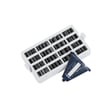
- Replace the water filter on schedule using the correct fit, such as refrigerator water filter EDR1RXD1
- Replace the air filter if your unit uses one, such as refrigerator air filter W10311524
- Set stable temperatures and avoid frequent warm-up from long door openings
| If your fridge is... | Usually makes sense to... |
|---|---|
| Under 8 years old | Repair most common issues |
| 8 to 12 years old | Compare repair cost vs. condition |
| 12+ years old | Replace if major sealed-system or compressor work is needed |
Knowing the expected lifespan helps you plan for preventive maintenance and decide when a repair is worth it. Small fixes (filters, gaskets, airflow issues) can reduce compressor run time and extend the service life of your KSF26C4XYY03.
Last updated: January 2026
Is side-by-side better than a French door?
It depends on how you use your KitchenAid KSF26C4XYY03. Side-by-side refrigerators keep both fresh and frozen foods at eye level and often make freezer organization easier, while French door models usually give you wider refrigerator shelves for platters and large containers. For feature and layout details specific to your unit, use the KSF26C4XYY03 owner’s manual.
- Side-by-side strengths: easy access to freezer items, narrower door swing, strong vertical organization
- French door strengths: wider refrigerator shelves, more room for large trays, often more flexible fresh-food storage
- Best choice depends on: kitchen space, what you store most, and how often you use the freezer
| What matters most | Side-by-side is usually better | French door is usually better |
|---|---|---|
| Freezer access and organization | Yes | Sometimes |
| Storing wide platters and pizza boxes | Sometimes | Yes |
| Narrow kitchen aisles (door swing) | Yes | Sometimes |
| Fresh-food visibility and layout | Sometimes | Yes |
Use these practical checks before choosing a style:
- Measure aisle clearance; side-by-side doors typically need less swing space.
- Think about what you grab daily; frequent freezer users often prefer side-by-side.
- Consider shelf needs; if you store wide party trays often, French door layouts can be easier.
- Check dispenser preferences; many side-by-side models place ice and water in the door.
- Plan for maintenance items like filters; your KSF26C4XYY03 uses a compatible refrigerator water filter EDR1RXD1.
The “better” refrigerator is the one that fits your kitchen layout and your food habits. Choosing the right door style can reduce wasted space, improve organization, and make everyday access (fresh food vs freezer) more convenient.
Last updated: January 2026
What is the most common problem with a KitchenAid refrigerator?
For the KitchenAid KSF26C4XYY03 side-by-side refrigerator, the most common customer-reported problems typically fall into three buckets: cooling that is not consistent, ice maker or dispenser issues, and water leaks. These symptoms often trace back to airflow, defrost, or water-supply components rather than the sealed system.
- Fridge not cold enough or temps swing: dirty condenser area, restricted airflow, or an evaporator fan problem.
- Freezer cold but fresh food warm: airflow/damper issues or a weak evaporator fan.
- Ice maker not making ice or slow ice: water supply restriction, valve issue, or ice maker component failure.
- Water under the refrigerator or inside compartments: clogged defrost drain, loose tubing/fittings, or a leaking valve.
- Frost buildup in freezer: defrost system problem (heater, thermostat/bi-metal, or control).
Use the troubleshooting and care steps in the KSF26C4XYY03 user manual first; it helps you confirm settings, airflow loading, and basic maintenance.
- Confirm temperature settings and allow 24 hours after changes.
- Make sure vents are not blocked by food packages.
- Clean dust from the condenser area (improves cooling and reduces run time).
- If the unit has a water dispenser/ice maker, verify the household shutoff valve is fully open.
- Look for ice or debris in the drain area if you see puddles.
If symptoms persist after basic checks, these model-compatible parts are often involved:
| Symptom | Commonly involved part | Example from this model’s parts list |
|---|---|---|
| Warm fridge, noisy or no airflow | Evaporator fan motor | Refrigerator evaporator fan motor WP2315549 |
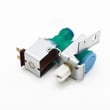
| No ice or weak water flow to ice maker | Water inlet valve | Refrigerator water inlet valve WPW10341320 |
| Frost buildup, poor cooling | Defrost control components | Refrigerator heater WPW10495967 and refrigerator defrost bi-metal WPW10225581 |
Cooling, ice, and leak problems can quickly lead to food spoilage, ice buildup that blocks airflow, or water damage around the refrigerator. Catching the symptom early usually keeps the repair simpler and less expensive.
Last updated: January 2026
What are the dimensions of a 22 cubic foot refrigerator?
A “22 cubic foot refrigerator” describes interior capacity, not a single standard cabinet size. For KitchenAid model KSF26C4XYY03, the exact height, width, and depth can vary by configuration and are best confirmed in the KSF26C4XYY03 user manual.
Most 22 cu ft refrigerators (including many side-by-side designs) commonly fall into these approximate ranges:
- Width: 32 to 36 inches
- Height: 65 to 71 inches
- Depth (cabinet): 30 to 35 inches
- Depth with handles: often 1 to 3 inches deeper than cabinet depth
We recommend measuring your actual unit (or the installation opening) because handles, hinges, and door swing clearance can change what “fits.”
- Measure width at the widest point (often the handles).
- Measure height from floor to top of cabinet; include hinge cover if it sits higher.
- Measure depth from back to front of doors; then measure again to the front of handles.
- Allow extra space behind for airflow and for the water line if you have an ice maker.
Use this quick guide when planning a replacement or a tight install:
| What you’re planning for | What to include | Why it matters |
|---|---|---|
| Fit in the opening | Cabinet width/height/depth | Prevents binding and vibration |
| Door swing | Door thickness + handle depth | Ensures doors open fully |
| Service access | Space behind and above | Helps cooling performance and repairs |
Capacity (22 cu ft) tells you how much food the refrigerator holds, but dimensions determine whether it fits your kitchen and whether doors and drawers can open without hitting walls or cabinets.
Last updated: January 2026