Owner’s manual
 Error Codes


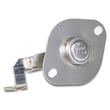
How to tell if a dryer thermal fuse is bad?
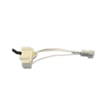
On a Kenmore dryer model 11064722400, a bad (blown) thermal fuse typically causes the dryer to not start at all or to run with no heat, depending on how the safety circuit is wired. The sure way to confirm is a quick continuity test with a multimeter.
A blown thermal fuse is usually linked to overheating from restricted airflow. Common signs include:
- Dryer will not start (no motor run)
- Dryer runs but produces no heat
- Cycle stops early or acts “dead” after a heat-related event
- Burning smell or very hot cabinet before the failure
- Lint buildup in the lint screen housing or vent path
- Unplug the dryer (or switch off the breaker). For gas models, also shut off the gas supply.
- Access the fuse location (often on the blower housing or heater duct area).
- Pull the wires off the fuse terminals (grab connectors, not wires).
- Set the meter to continuity or lowest ohms.
- Touch one probe to each terminal:
- Good fuse: continuity (beep) or near 0 ohms
- Bad fuse: no continuity (OL or very high resistance)
For panel removal and access steps specific to this model, use the 11064722400 owner's manual.
Replacing the fuse without fixing the airflow problem often leads to another failure. Check these items first:
- Clean the lint screen and lint screen housing
- Inspect and clear the vent duct to the outside
- Confirm the outside vent hood opens freely
- Check for a crushed or overly long flexible vent
- Verify strong airflow at the exterior vent while running
| Area | What to check | Why it matters |
|---|---|---|
| Venting | Blockage, kinks, long runs | Most common cause of overheating |
| Blower system | Wheel damage or lint packing | Low airflow raises heater temps |
| Heating control | Thermostat cycling issues | Can contribute to overheating |
The thermal fuse is a one-time safety device designed to stop unsafe temperatures. When it opens, it is telling you the dryer likely overheated, so restoring proper airflow protects the heater, motor, and wiring.
Last updated: January 2026
Are dryer thermal fuses universal?
No. Dryer thermal fuses are not truly universal; for Kenmore model 11064722400, you must match the fuse’s temperature rating, electrical rating, and mounting style to the original so the dryer shuts down safely if it overheats.
Many thermal fuses are marketed as universal because they fit several Kenmore, Whirlpool, and Maytag-style dryers, but they are only interchangeable when the key specs match.
- Trip temperature (the most important match)
- Electrical rating (amps/volts)
- Mounting and connector style (holes, bracket, terminals)
- Location in the dryer (blower housing vs heater housing)
- Kit vs single fuse (some include a thermostat)
Use these steps for model 11064722400:
- Unplug the dryer (and shut off gas if applicable).
- Remove the old thermal fuse and read any numbers/ratings printed on it.
- Match the replacement by rating and fit, not by appearance alone.
- Fix the overheating cause before running again (vent restriction is most common).
- Confirm the correct disassembly and access steps in the 11064722400 owner's manual.
A thermal fuse is a one-time safety device. If the rating is wrong:
| If the fuse rating is… | What you may see | What it leads to |
|---|---|---|
| Too low | Fuse blows repeatedly | Dryer stops mid-cycle, no heat or no run |
| Too high | Fuse may not open soon enough | Overheating risk and heat damage |
Replacing the fuse without correcting airflow problems often results in another blown fuse.
- Crushed or long vent run
- Lint buildup in vent duct or blower housing
- Clogged lint screen or lint screen housing
- Weak airflow from a damaged blower wheel
- Restricted exterior vent hood
On Kenmore dryers like 11064722400, the thermal fuse is a critical overheating safeguard. Matching the correct fuse and restoring proper airflow helps the dryer heat normally, dry faster, and avoid repeat shutdowns.
Last updated: January 2026
Does a dryer thermal fuse reset itself?
No. On Kenmore dryer model 11064722400, the thermal fuse is a one-time safety device; once it opens from overheating, it does not reset and must be replaced after you correct the airflow or overheating problem that caused it to fail. See the 11064722400 owner's manual for safety and access guidance.
Before replacing parts, disconnect power to the dryer.
- Clean the lint screen and confirm it seats fully
- Inspect and clear the entire vent path (lint buildup, crushed flex duct, blocked exterior hood)
- Check for strong airflow at the outside vent while the dryer runs
- Look for signs of overheating (burning smell, very hot cabinet, repeated shutdowns)
- Replace the failed fuse only after airflow is restored
A thermal fuse usually opens because heat cannot leave the dryer fast enough.
| Likely cause | What you may notice | Fix focus |
|---|---|---|
| Clogged vent or hood | Long dry times, hot drum | Vent cleaning and proper duct routing |
| Lint buildup inside cabinet | Burning smell, excessive heat | Internal lint removal (carefully) |
| Weak airflow from blower area | Poor drying even with clean vent | Inspect blower wheel and housing |
| Heating system running too hot | Overheating, cycling issues | Check thermostats and heater circuit |
We match parts to the 11064722400 so you can repair with confidence.
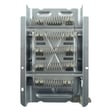
- Dryer operating thermostat WP3387134 (controls normal temperature cycling)
- Dryer high-limit thermostat WP3977767 (backup temperature limit)
- Dryer element 279838 (electric heat source on electric models)
By design, a thermal fuse prevents unsafe overheating. Replacing the fuse without fixing restricted airflow often leads to another blown fuse, longer dry times, and unnecessary part costs.
Last updated: January 2026
Will a dryer still run if the thermal fuse is blown?
On the Kenmore dryer model 11064722400, a blown thermal fuse typically stops the dryer from running at all because it cuts power to prevent overheating. On some designs, the drum may still tumble but the dryer will not heat; either way, treat it as an airflow and safety issue.
- Unplug the dryer; let it cool completely.
- Clean the lint screen and the lint screen housing.
- Inspect the vent hose for kinks, crushing, or heavy lint buildup.
- Check the outside vent hood for a stuck flap, lint blockage, or a bird nest.
- Make sure the blower area is moving air; weak airflow often points to a vent restriction.
| What the dryer does | Most likely meaning | What to do next |
|---|---|---|
| Won’t start at all | Thermal fuse opened or another safety circuit opened | Verify airflow, then test fuse and related thermostats |
| Runs but no heat | Heating circuit interrupted (fuse, thermostat, heater wiring) | Check heater circuit components and connections |
| Runs, then stops mid-cycle | Overheating from restricted airflow | Correct venting, then test safety devices |
If airflow is restricted, the dryer can overheat and open a safety device. Depending on your symptoms, these model-compatible parts are often involved:
- Dryer operating thermostat WP3387134
- Dryer high-limit thermostat WP3977767
- Dryer element 279838
- Dryer heating element wire kit 279457
A thermal fuse blowing is usually a result, not the root cause. Fixing the venting and airflow prevents repeat failures, improves dry times, and reduces overheating risk.
For model-specific access panels, test points, and safety notes, follow the 11064722400 manual.
Last updated: January 2026