 Installation guide
 Error Codes



How to figure out a Frigidaire dishwasher model?
Your Frigidaire dishwasher model number is printed on the appliance ID label inside the door area. On the Frigidaire FDB700BFC2, check the inner door frame or tub opening (door jamb) first; you may need to slide out the lower rack for a clear view. For installation-related label locations and access, use the installation guide.
Where to look (most common spots)
- Along the left or right inner door frame (door jamb)
- On the tub lip around the door opening
- On the tub wall just inside the door
- Behind the kickplate area (less common for the model label, but common for components)
How to find it quickly
- Open the door fully and scan the perimeter of the opening
- Pull the lower rack out to improve visibility
- Use a flashlight and look for an alphanumeric code (letters and numbers)
- Wipe the label gently with a damp cloth if it is dusty or spotted
What the model number looks like
Model numbers are typically a short block of letters and numbers. For this dishwasher, the model number format matches FDB700BFC2.
| What you might see | What it means | What to do with it |
|---|---|---|
| Model number | Identifies the exact dishwasher version | Use it to match parts and diagrams |
| Serial number | Identifies your specific unit | Helpful for service history and age |
| Product code/type | Internal manufacturing identifier | Record it if present, but prioritize model number |
Why it matters
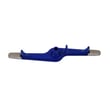
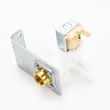
Using the exact model number helps us match the correct Frigidaire dishwasher parts (like a spray arm, door gasket, or water inlet valve) and avoid ordering a similar-looking part that will not fit.
Last updated: February 2026
What are the dimensions of a Frigidaire dishwasher?
Most Frigidaire built-in dishwashers, including model FDB700BFC2, are designed for a standard 24-inch-wide cabinet opening; typical overall size is about 24 inches wide by 34 to 35 inches high by about 24 inches deep. For installation-critical measurements and connection locations, use the installation guide.
Standard built-in dishwasher dimensions (what to expect)
For a 24-inch built-in dishwasher like the Frigidaire FDB700BFC2, these are the common planning dimensions:
- Width: about 24 inches (fits a standard 24-inch opening)
- Height: typically 34 to 35 inches (adjustable leveling legs)
- Depth: typically 24 inches to the door (more with the door open)
- Electrical: 120V, 60 Hz on a dedicated 15 to 20 amp circuit
Model-specific installation measurements we use for planning
The FDB700BFC2 installation instructions call out a 34-inch cabinet opening height as the baseline, with leveling-leg adjustments for slightly taller openings.
| Cabinet opening height | Leveler adjustment guidance |
|---|---|
| 34" (86.4 cm) | 0 turns |
| 34 1/8" (86.7 cm) | 2 turns |
| 34 5/16" (87.2 cm) | 6 turns |
| 34 1/2" (87.6 cm) | 9 turns |
Why it matters
Dishwasher “dimensions” affect more than fit; they also determine whether the unit can be leveled correctly under the countertop and whether the drain hose, hot water line, and electrical supply can route cleanly without kinks or interference.
Quick measuring checklist before you buy or install
- Measure the opening width at the front and back (look for about 24 inches).
- Measure countertop underside to floor (target 34 to 34 1/2 inches for easiest leveling).
- Confirm you have hot water supply and adequate water pressure for filling.
- Plan routing so drain, water, and electrical lines do not cross in front of the motor/frame.
- Verify the dishwasher is on a grounded 120V circuit (15 to 20 amp).
Last updated: February 2026
What is the most common problem with Frigidaire dishwashers?
The most common problem we see with Frigidaire dishwashers like model FDB700BFC2 is poor cleaning (dishes come out gritty or still dirty). The usual causes are restricted water flow from clogged spray arms, a dirty sump area, or loading that blocks spray patterns.
Quick checks that fix most “not cleaning” complaints
- Make sure nothing is blocking the lower spray arm from spinning.
- Clear debris from the bottom of the tub (around the sump area).
- Run hot water at the sink until it is hot, then start the cycle (helps fill temperature).
- Use the right amount of detergent; too much can leave residue, too little can under-clean.
- Load so tall items do not “shadow” the spray (especially on the lower rack).
If the lower spray arm is cracked, warped, or its jets are plugged beyond cleaning, replacement is a common, high-impact fix: dishwasher spray arm 5304517203.
Other common Frigidaire dishwasher problems (and what they point to)
| Symptom | Most likely cause | What to check first |
|---|---|---|
| Leaks at the door | Door seal or splash protection issue | Inspect the lower door seal area for gaps or damage |
| Won’t fill well | Water supply restriction or inlet valve screen clogged | Verify hot water supply and look for kinks in the water line |
| Won’t drain | Drain path restriction or drain pump issue | Check for kinks and make sure the drain hose routing is correct |
For leaks, the lower door seal is a frequent wear item on many dishwashers: gasket 809006501.
Installation issues that create “performance” problems
Even when the dishwasher itself is fine, installation details can cause symptoms that look like a failure. In the installation instructions for this model, we call out that kinked water or drain hoses can cause problems, and the drain hose loop needs to be routed high (at least 32 inches from the floor) to support proper drainage. See the installation guide.
Why it matters
Poor cleaning is usually a water movement problem. When spray arms cannot spin freely or water flow is restricted, the dishwasher cannot deliver enough pressure to wash and rinse, so food soil stays on dishes and detergent can leave residue.
Last updated: February 2026





