Owner’s manual
 Error Codes


What is the bottom part of a refrigerator called?
On a Whirlpool GI6FARXXY00 bottom-mount refrigerator, the “bottom part” most people mean is the base area behind the base grille, where the leveling screws and rollers are located; the compressor is also commonly located in the lower rear section of the cabinet. See the owner's manual for the exact component locations on your unit.
What you can find at the bottom of the refrigerator
Depending on whether you mean the front bottom or the back bottom, these are the most common parts and areas:
- Base grille (front kickplate area)
- Front leveling screws and front rollers (used to stabilize the cabinet)
- Compressor compartment area (typically lower rear)
- Condenser fan and condenser coils area (typically lower rear)
- Drain pan area (often near the compressor compartment)
Quick guide: “bottom front” vs “bottom back”
| If you mean... | It’s usually called... | What it does |
|---|---|---|
| Bottom front (under the doors) | Base grille area | Covers access to leveling screws and components |
| Bottom front corners | Leveling screws/rollers | Helps the refrigerator sit level and doors close properly |
| Bottom back | Compressor compartment | Houses the compressor and related cooling components |
Why it matters
Knowing which “bottom part” you mean helps you troubleshoot correctly. For example, door-closing issues often relate to leveling at the base, while cooling or humming issues more often point to the compressor area.
Helpful tip for this model: leveling at the base
Your GI6FARXXY00 uses adjustable front leveling screws (one on each side). If the refrigerator feels unsteady or the doors do not close easily, adjust the leveling screws as described in the owner's manual.
Last updated: February 2026
How to put bottom grill on whirlpool refrigerator?
On your Whirlpool GI6FARXXY00 bottom-mount refrigerator, the bottom grille (base grille) installs by lining it up with the openings at the front base and pressing it straight on until it snaps into place. The grille is designed to pull toward you for removal and push back on for reinstallation.
Steps to reinstall the bottom grille
- Unplug the refrigerator if you will be working near wiring or cleaning the condenser behind the grille.
- Position yourself in front of the refrigerator base.
- Align the grille’s tabs/ends with the slots along the lower front of the cabinet.
- Push the grille straight toward the refrigerator until it seats evenly.
- Press along the length of the grille to ensure all clips are fully engaged.
- Confirm the grille is flush and not rubbing the floor or catching on the leveling legs.
Quick checks if it will not snap in
- Make sure the grille is right-side up (tabs aligned with the cabinet slots).
- Check that the front leveling screws are not set so low that the grille hits the floor.
- Look for bent tabs or cracked clip points on the grille.
- Verify nothing is blocking the grille area (pet hair buildup, packaging, or a misplaced toe-kick insulation strip).
Leveling screws and grille fit (common cause)
Your GI6FARXXY00 has adjustable front leveling screws. If the refrigerator is tilted too far forward or the feet are set too low, the grille can bind.
| What you see | Likely cause | What to do |
|---|---|---|
| Grille won’t seat at one end | Cabinet not level side-to-side | Adjust the front leveling screw on that side |
| Grille rubs the floor | Leveling screws too low | Raise the front slightly |
| Grille pops back off | Clips not engaged or tabs bent | Re-align and press firmly; inspect tabs |
Why it matters
The base grille helps protect the condenser area and keeps airflow where it belongs. Removing it is also the first step for tasks like cleaning the condenser for better cooling efficiency.
For the exact removal wording and related leveling guidance for this model, use the GI6FARXXY00 owner's manual.
Last updated: February 2026
What's the average lifespan of a whirlpool refrigerator?
Most Whirlpool refrigerators, including the Whirlpool GI6FARXXY00 bottom-mount refrigerator, typically last 10 to 15 years with normal household use. With consistent maintenance (cleaning, good airflow, and timely part replacement), it’s common to reach the upper end of that range.
Typical lifespan and what affects it
A refrigerator’s life is mostly determined by compressor workload, airflow, and how well the doors seal.
- Maintenance habits: clean condenser area, keep vents clear, don’t overload shelves
- Door sealing: worn gaskets cause longer run times and moisture issues
- Room conditions: hot garages and tight cabinets shorten life by trapping heat
- Water and ice use: heavy ice maker use increases wear on valves and ice maker components
- Power quality: frequent outages or surges can stress the control board and compressor start components
Quick “repair vs. replace” guide
Use this as a practical rule of thumb for GI6FARXXY00 when deciding whether a repair makes sense.
| If your refrigerator is… | Usually worth repairing when… | Usually time to consider replacing when… |
|---|---|---|
| Under 8 years old | Cooling is good and the issue is a single part | Sealed-system cooling is weak and repairs repeat |
| 8 to 15 years old | It’s a door seal, ice maker, or water valve issue | Multiple major parts fail close together |
| Over 15 years old | It’s a low-cost, simple fix | Compressor or control board replacement is needed |
Maintenance that extends lifespan (high impact)
These steps reduce run time, prevent temperature swings, and protect key parts.
- Vacuum dust from the condenser area regularly
- Keep at least a small gap around the cabinet for airflow
- Set temps to about 37°F fresh food and 0°F freezer
- Keep doors closed as much as possible; avoid propping doors open during loading
- Replace worn door gaskets if you feel air leaks or see condensation
Why it matters
When a refrigerator runs longer to hold temperature, it puts extra strain on the compressor, control board, and fans. Small maintenance items (like airflow and door sealing) directly translate into fewer breakdowns and a longer service life.
For model-specific care and operating guidance, follow the Whirlpool GI6FARXXY00 owner's manual.
Last updated: February 2026
What is the most common problem with whirlpool refrigerators?
The most common Whirlpool refrigerator problem is a cooling complaint (not cold enough, warm fresh food section, or temperature swings). On the Whirlpool GI6FARXXY00, the most frequent root causes are airflow and maintenance issues (dirty condenser coils, frost buildup, or a fan problem), followed by ice maker and water system issues.
Most common symptoms and what they usually point to
- Fresh food warm, freezer OK: restricted airflow, evaporator fan issue, or frost/defrost problem
- Both sections warm: dirty condenser coils, compressor start components, or control issue
- Ice maker not making ice: water supply restriction, inlet valve issue, or ice maker assembly failure
- Noisy operation: fan blade rubbing, failing fan motor, or compressor-related noise
- Water under the refrigerator: clogged/iced defrost drain or water line leak
Quick checks we recommend first (GI6FARXXY00)
Use these steps before replacing parts; they solve a large share of “not cooling” and “ice maker not working” calls.
- Confirm the refrigerator is plugged into a grounded outlet and the controls are turned on (see the owner's manual).
- Clean the condenser coils and make sure airflow around the cabinet is not blocked.
- Check door gaskets for gaps and make sure doors close fully.
- Listen for the evaporator fan; it should run when cooling is needed.
- If the ice maker is slow or empty, verify the household water supply valve is fully open.
Common parts involved when the issue is not maintenance-related
If basic checks do not restore normal temperatures or ice production, these model-matched parts are often involved:
| Problem area | What fails | Example part for GI6FARXXY00 |
|---|---|---|
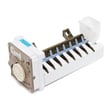
| Ice production | Ice maker module/assembly | Refrigerator ice maker assembly WPW10300024 |
| Water fill to ice maker | Water inlet valve | Refrigerator water inlet valve WPW10498990 |
| Cooling control | Main electronic control | Refrigerator electronic control board WPW10226427 |
| Sealing | Door gasket not sealing | Refrigerator gasket panel (gray) W10830055 |
Why it matters
Cooling and airflow problems can cause food spoilage quickly and can also make the refrigerator run longer than normal. Fixing simple causes (coils, door seal, airflow) first helps avoid unnecessary part replacement and gets temperatures stable faster.
Last updated: February 2026