Installation guide
 Owner’s manual


How to hard reset a Kenmore dryer?
For the Kenmore 1106192311 electric dryer, a hard reset is a power reset: unplug the dryer (or switch the breaker off) for about 2 minutes, then restore power and try a cycle again. This clears many control glitches and is the first step before deeper troubleshooting.
Hard reset steps (power reset)
- Turn the dryer OFF.
- Unplug the power cord, or turn both dryer breakers off (most electric dryers use a 2-pole breaker).
- Wait 2 minutes.
- Restore power.
- Close the door firmly and select a timed cycle, then press Start.
- If the drum was moving when you stopped it, wait until it fully stops before reaching inside (safety).
If it still will not start or heat
A reset will not fix a failed safety device or airflow problem. Check these common causes next:
- Clean the lint screen; the guide calls for cleaning it before or after each load.
- Check the vent path for restrictions; lint buildup can trigger overheating protection.
- Confirm the door closes and latches; a misaligned catch can prevent operation.
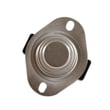
- If the dryer runs but does not heat, test heat-protection parts such as the thermal cut-off and thermostats.
- If the dryer hums but will not tumble, inspect the belt and idler pulley.
Parts that commonly relate to “won’t start” or “no heat” symptoms
| Symptom | Common part to check | Example part for this model |
|---|---|---|
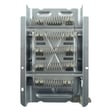
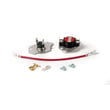
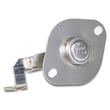
| Runs but no heat | Thermal cut-off, operating thermostat, high-limit thermostat, heating element | Dryer thermal cut-off fuse kit 279816, dryer operating thermostat WP3387134, dryer high-limit thermostat WP3977767, dryer element 279838 |
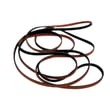
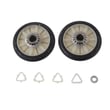
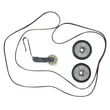
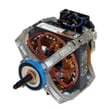
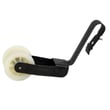
| Hums, won’t tumble | Belt, idler pulley, motor | Belt 341241, dryer idler pulley WP691366, drive motor 279827 |
Why it matters
A hard reset is safe and fast, but repeated shutdowns usually point to airflow restriction or a heat-safety trip. Fixing venting and lint buildup helps prevent overheating, nuisance shutdowns, and longer dry times.
For model-specific operating and safety guidance, follow the 1106192311 owner’s manual.
Last updated: February 2026
What does PF stand for on a Kenmore dryer?
PF on a Kenmore dryer means Power Failure; it shows up when the electrical supply to your Kenmore 1106192311 electric dryer is interrupted during a cycle, so the dryer stops and the cycle may need to be restarted. Check your home power and the dryer’s power cord connection, then run the cycle again.
What to do when you see PF
- Press Pause/Cancel (or Stop) to clear the display, then restart the cycle.
- Confirm the dryer is plugged in firmly and the outlet is not loose.
- Check the home breaker; this dryer typically uses a dedicated 30-amp circuit.
- Avoid using an extension cord; it can cause voltage drop and repeat PF events.
- If PF happens repeatedly, have an electrician check the outlet, cord, and supply wiring.
Quick checks (power and installation)
Your installation requirements matter because an unstable or incorrect electrical connection can trigger PF.
| Check | What “good” looks like | What to fix if not |
|---|---|---|
| Circuit | Dedicated 30-amp, time-delay fuse or breaker | Move dryer to correct circuit or correct wiring |
| Cord/outlet | Tight fit, no heat marks, no wobble | Replace worn outlet/cord; tighten connections |
| Connection type | Correct 3-wire or 4-wire setup for your location | Rewire per code and instructions |
For the correct electrical connection method (3-wire vs 4-wire) and safety notes, follow the 1106192311 installation guide.
Why it matters
A PF code is usually a power supply issue, not a failed heating element or thermostat. Fixing the power interruption prevents mid-cycle shutdowns, reduces nuisance stops, and helps protect the dryer’s electronic controls.
Last updated: February 2026
How do I know if my Kenmore dryer thermal fuse is blown?
If your Kenmore electric dryer model 1106192311 won’t start or runs but won’t heat, a blown thermal fuse (or thermal cut-off) is a top suspect. We confirm it by unplugging the dryer and checking the fuse for continuity with a multimeter; no continuity means it has failed.
Quick symptoms to look for
- Dryer will not start even though the door is closed and you press Start
- Dryer tumbles but there is no heat
- Cycle runs unusually long and the cabinet feels hotter than normal (often tied to poor venting)
- You recently had a restricted or crushed vent hose behind the dryer
- The problem appeared suddenly after a hot load
The definitive test (continuity check)
- Unplug the dryer (electric shock hazard).
- Access the thermal fuse or thermal cut-off area (location varies by design); follow the access steps in the 1106192311 installation guide.
- Remove at least one wire from the fuse terminal.
- Set your multimeter to continuity or the lowest ohms setting.
- Test across the fuse terminals.
Results:
| Meter result | What it means | What to do next |
|---|---|---|
| Beep or near 0 ohms | Fuse is good | Keep troubleshooting heat or start circuit |
| No beep or OL/infinite | Fuse is blown | Replace the failed safety device and fix the airflow issue |
Parts that commonly get replaced together
On many Kenmore 110-series electric dryers, overheating from restricted airflow can take out a thermal cut-off and related safety parts. If your diagnosis points there, the dryer thermal cut-off fuse kit 279816 is a common repair approach.
- Replace the failed fuse or thermal cut-off (do not bypass it)
- Clean the lint screen and lint duct
- Inspect the entire vent run to the outside for clogs, kinks, or crushed sections
- Confirm strong airflow at the exterior vent hood
- Recheck heat after restoring airflow
Why it matters
The thermal fuse and thermal cut-off are safety devices designed to stop heat (and sometimes operation) if the dryer overheats. Replacing the fuse without correcting vent restriction often leads to repeat failures and longer dry times.
Last updated: February 2026
What model Kenmore dryer do I have?
If you’re on this Kenmore dryer parts page, your dryer model is Kenmore 1106192311. To confirm on the appliance, we look for the model and serial tag on the cabinet (most often inside the door opening); matching that exact number ensures you get the right parts and installation specs.
Where to find the model number tag
We typically see the model/serial label in one of these spots:
- Inside the dryer door opening on the front frame
- On the back panel of the dryer cabinet
- Near the lint screen housing (varies by design)
- On the side panel edge near the door opening
What the model number tells us (and why it matters)
The full model number (for example, 1106192311) is what we use to match:
- Correct replacement parts (belt, heating element, thermostats)
- Wiring and grounding requirements for an electric dryer
- Venting and installation requirements
- Diagrams and service procedures
For model-specific installation and electrical connection details, use the 1106192311 installation guide.
Quick check: model number vs. serial number
Use this table to avoid common mix-ups:
| What you see on the tag | What it’s used for | Example format |
|---|---|---|
| Model number | Parts lookup and correct documentation | 1106192311 |
| Serial number | Production tracking and service history | Letters and numbers |
If the tag is missing or unreadable
When the label is damaged, we use a few practical checks to narrow it down:
- Check your purchase paperwork or delivery receipt for the full model number
- Look for a tech sheet stored inside the cabinet (often behind the control panel or lower front panel)
- Compare your control panel layout and door style to the diagrams in the 1106192311 owner’s manual
Why it matters
Kenmore model numbers can look similar, but small differences change fit and wiring. Confirming 1106192311 prevents ordering the wrong dryer element, drive motor, or thermal cut-off fuse kit.
Last updated: February 2026
What is the OEM part number 279838?
OEM part number 279838 is the dryer heating element used in Kenmore electric dryer model 1106192311. It is the electric resistance heater that warms the airflow so clothes dry properly; when it fails, the dryer typically tumbles but does not heat.
What this part does (and common symptoms)
The heating element sits in the heater housing and turns 240V power into heat.
Common signs it needs replacement:
- Dryer runs but produces no heat
- Heat is weak and cycles off too quickly
- Dry times are much longer than normal
- Burning smell from lint buildup or restricted venting (stop using and inspect venting)
- Element tests open (no continuity) with a multimeter
Related parts that are often checked at the same time
A no-heat complaint is often caused by a safety device opening due to poor airflow.
| What to check | What it affects | Example part for this model |
|---|---|---|
| Heating element | Creates heat | Dryer element 279838 |
| Thermal cut-off / safety fuse | Shuts heat down if overheating occurs | Dryer thermal cut-off fuse kit 279816 |
| Operating thermostat | Regulates normal heat cycling | Dryer operating thermostat WP3387134 |
| High-limit thermostat | Backup overheat protection | Dryer high-limit thermostat WP3977767 |
Why venting matters before replacing the element
Restricted exhaust airflow is a top reason dryers overheat and repeatedly blow thermal cut-offs. We follow the installation guidance to use a proper exhaust setup; flexible venting can collapse, trap lint, and block airflow.
Quick airflow checklist:
- Clean the lint screen before every load
- Inspect and clean the vent duct to the outside
- Use rigid or heavy metal venting where possible
- Confirm the outside damper opens freely
- Avoid crushed or excessively long vent runs
Where to confirm the correct part for your exact configuration
We match parts by model and component location. Use the 1106192311 installation guide to confirm venting and installation requirements, and the 1106192311 owner’s manual for operating and care details.
Last updated: February 2026
How much does it cost to replace a heating element in a Kenmore dryer?
For the Kenmore 1106192311 electric dryer, replacing the heating element typically costs $50 to $120 for the part plus $100 to $250 for labor, so most total repairs land around $150 to $350 depending on access, venting condition, and whether additional heat-safety parts are replaced at the same time.
Typical cost breakdown
- Heating element part: commonly $50 to $120 (this model’s listed element is dryer element 279838)
- Service call / diagnostic: often $75 to $125
- Labor to replace element: commonly $75 to $200
- Optional related parts (sometimes needed): thermal cut-off, high-limit thermostat, operating thermostat
| Scenario | What you pay for | Typical total |
|---|---|---|
| DIY element only | Part only | $50 to $120 |
| DIY plus safety parts | Element + thermal/thermostat parts | $90 to $200 |
| Pro repair (most common) | Diagnostic + labor + parts | $150 to $350 |
| Pro repair with airflow fixes | Repair + vent cleaning/repairs | $200 to $450 |
What can raise the price
- Restricted venting or heavy lint buildup; overheating can damage the element and blow safety fuses
- Multiple failed heat components (element plus a thermal cut-off or thermostat)
- Hard-to-access installation (tight closet, long vent run, stacked setup)
- Electrical supply issues; electric dryers can run but not heat if one leg of power is missing
Why it matters
A new heating element can fail early if the dryer is overheating from poor airflow. The installation instructions emphasize keeping the exhaust area clear and checking for heat after the dryer runs for about 5 minutes; if there’s still no heat, power supply and protection devices need to be checked. Use the 1106192311 installation guide for the correct electrical and venting requirements.
Quick checks before you buy parts
- Confirm the dryer is on a dedicated 30-amp circuit
- Check both household fuses/breakers (electric dryers often use two)
- Clean the lint screen and verify strong airflow at the outside vent
- If the drum turns but there’s no heat, test the element and thermal devices with a meter
Last updated: February 2026
How to fix E1 error on dryer?
On the Kenmore 1106192311 electric dryer, an E1 error is commonly cleared by resetting power; if it returns, focus on basic start-up checks and airflow because overheating and control sensing issues are often triggered by poor venting or a failed safety thermostat.
Step 1: Do a safe reset
- Turn the dryer OFF.
- Unplug the power cord (or switch both dryer breakers OFF if hardwired).
- Wait 1 full minute.
- Restore power and run a timed heat cycle.
For control and cycle details specific to this model, follow the reset and test steps in the 1106192311 owner's manual.
Step 2: Confirm the dryer can start and run
Use this quick checklist (it solves a lot of “error code” situations):
- Door fully closed and latch engaging
- Start button pressed firmly
- Cycle set to a running setting (not Air/Fluff if you are checking for heat)
- Power supply on; two fuses/breakers can feed an electric dryer
- Drum turns freely by hand (with power disconnected)
Step 3: Fix airflow first (most important)
Restricted venting can overheat the heater housing and trip safety devices.
- Clean the lint screen before every load
- Inspect and clean the vent run to the outside
- Avoid crushed or kinked venting behind the dryer
- Use clamps on vent joints; avoid screws that protrude into the duct
If you are reinstalling or checking vent routing, follow the venting requirements in the 1106192311 installation guide.
When a part is likely involved
If the reset works briefly but E1 returns, these parts are common suspects on electric dryers:
| Symptom you notice | Most likely area | Example part for this model |
|---|---|---|
| Dryer runs, then stops or errors; very hot cabinet | Overheat protection | Dryer high-limit thermostat WP3977767 |
| No heat (or heat cuts in and out) | Heating circuit | Dryer element 279838 |
| Long dry times, weak airflow noise | Air movement | Dryer blower wheel WP694089 |
Why it matters
E1-type faults often show up when the dryer cannot control temperature correctly. Restoring proper airflow protects the heating element, reduces drying time, and helps prevent repeat shutdowns.
Last updated: February 2026