Owner’s manual
 Error Codes


What is the average lifespan of a GE Refrigerator?
GE refrigerators typically last 10 to 16 years. For your GE GSS25GSHECSS side-by-side refrigerator, reaching the higher end of that range usually comes down to steady cooling performance, clean airflow, and staying ahead of common wear items (especially the water and ice system). See the GSS25GSHECSS owner's manual for model-specific care and operating guidance.
Typical lifespan by refrigerator type
Most households see these averages when the refrigerator is installed correctly and maintained:
| Refrigerator type | Typical lifespan |
|---|---|
| Top-freezer | 14 to 20 years |
| Side-by-side (like GSS25GSHECSS) | 10 to 16 years |
| French door | 10 to 15 years |
What helps a GE refrigerator last longer
These steps reduce compressor run time, prevent icing issues, and protect the sealed system:
- Keep condenser airflow clear; vacuum dust from the grille and surrounding area regularly.
- Maintain stable temperatures (about 37°F fresh food, 0°F freezer).
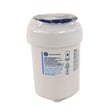
- Replace the water filter on schedule to protect the dispenser and ice maker; use the GE refrigerator water filter MWFP.
- Avoid overpacking; blocked vents cause warm spots and longer run times.
- Keep door gaskets clean and sealing tightly to prevent moisture and frost buildup.
- Level the refrigerator so doors close fully and the door alarm does not trigger.
Signs your refrigerator is nearing end-of-life
A single symptom is not definitive, but repeated issues often point to an aging unit:
- Food temperatures drift even after adjusting controls
- Loud or frequent compressor cycling
- Heavy frost buildup or recurring defrost problems
- Water leaks or recurring dispenser/ice maker failures
- Rising energy use compared to prior years
Why it matters
A refrigerator that is running longer than normal to hold temperature puts extra stress on the compressor and control system. Simple maintenance (airflow, seals, filter changes) often adds years of reliable service and helps prevent expensive cooling-system repairs.
Last updated: January 2026
How to reset GE side by side refrigerator not cooling?
For a GE GSS25GSHECSS side-by-side refrigerator that is not cooling, a reset means restoring power and clearing any control glitches; it will not fix a failed fan, defrost problem, or sealed-system issue. Start with a power reset, then verify airflow and temperatures before replacing parts.
Reset steps (safe, effective)
- Set both temperature controls back to their normal mid settings.
- Unplug the refrigerator (or switch off the breaker) for 1 full minute.
- Restore power and wait 5 to 10 minutes for the compressor and fans to start.
- Allow 24 hours for temperatures to stabilize after any reset or setting change.
- Confirm the doors are fully closing and the door alarm is not being triggered.
Use the GSS25GSHECSS owner’s manual for the exact control locations, recommended temperature settings, and any model-specific control reset guidance.
Quick checks that matter more than a reset
- Condenser airflow: Clean dust from the condenser area so heat can dissipate.
- Evaporator fan sound: If the freezer is cold but the fresh food section is warm, the evaporator fan may not be moving air.
- Frost buildup: Heavy frost on the freezer back wall points to a defrost problem.
- Door seal and loading: Gaps in the gasket or overpacked shelves can block vents.
- Room temperature: Very hot rooms can slow recovery after a reset.
Common causes and the parts that match them
| Symptom | Most likely area | Sears PartsDirect part to consider |
|---|---|---|
| Warm fridge, freezer OK | Airflow from freezer | Refrigerator evaporator fan motor WR60X10307 |
| Frosted freezer back panel | Defrost system | Refrigerator defrost heater WR51X10055 and refrigerator defrost bi-metal thermostat WR50X10065 |
| No water dispensing or ice issues after warm-up | Water supply control | Refrigerator water valve WR57X33326 |
Why it matters
A reset only clears temporary control issues. If cooling does not return, the fastest path to a real fix is identifying whether the problem is airflow (fan/vents), defrost (ice blocking airflow), or temperature sensing/control.
Last updated: January 2026
What is the most common problem with a GE Refrigerator?
For the GE GSS25GSHECSS side-by-side refrigerator, the most common service issues we see are cooling problems (warm fridge or freezer) and ice maker or dispenser problems. These usually trace back to restricted airflow, dirty condenser coils, a defrost problem, or a water supply or filtration issue.
Most common symptoms and what they usually mean
- Fridge warm, freezer OK: blocked air vents, evaporator fan issue, or frost buildup from a defrost failure
- Freezer warm, fridge warm: dirty condenser coils, condenser fan issue, or sealed-system/compressor problem
- Ice maker not making ice: low water pressure, frozen fill tube, clogged filter, or bad inlet valve
- Water dispenser slow/no water: clogged filter, air in the line, or frozen reservoir line
- Frost on back wall of freezer: defrost heater/thermostat problem
Quick checks you can do first (no parts swapping)
- Confirm temperatures: set freezer near 0°F and fresh food near 37°F.
- Check airflow: make sure packages are not blocking vents in either compartment.
- Clean condenser coils: dust buildup commonly causes poor cooling and long run times.
- Inspect door seals: gaps or torn gaskets let warm air in and create frost.
- Check water supply: verify the shutoff valve is fully open and the supply line is not kinked.
Parts that commonly solve these problems on this model
| Problem area | Common fix | Example part for GSS25GSHECSS |
|---|---|---|
| Water/ice issues | Replace clogged filter | Refrigerator water filter MWFP |
| Warm temps or erratic temps | Check sensor and airflow | GE profile refrigerator temperature sensor WR55X10025 |
| No water to dispenser/ice maker | Diagnose inlet valve | Refrigerator water valve WR57X33326 |
| Frost buildup (defrost failure) | Test heater and thermostat | Refrigerator defrost heater WR51X10055 and refrigerator defrost bi-metal thermostat WR50X10065 |
Why it matters
Cooling and ice maker complaints often share the same root cause: airflow and temperature control. Fixing the basics (coil cleaning, vent clearance, correct settings) prevents food spoilage, reduces frost, and helps the ice maker fill and harvest normally.
Helpful model-specific resources
- Use the GSS25GSHECSS manual for temperature setting guidance, control features, and care and cleaning steps.
- For dispenser and ice maker troubleshooting steps, follow how to prevent water dispenser and ice maker problems.
Last updated: January 2026