Owner’s manual


How to hard reset kenmore washer?
To hard reset the Kenmore washer model 11018532790, unplug the power cord for 2 minutes, then plug it back in and restart a cycle. This clears many temporary control and cycle issues without disassembly; use the 11018532790 owner's manual for the exact stop/restart steps for this timer-style washer.
- Turn the Cycle selector (timer) knob to Off.
- Push the timer knob in to stop the washer (if it is running).
- Unplug the washer for 2 minutes.
- Plug the washer back into a grounded outlet.
- Select a cycle and pull the timer knob out to start.
This model uses a mechanical timer knob for stopping and restarting.
- Stop: push the Cycle selector (timer) knob in.
- Wait about 30 seconds.
- Restart: pull the knob out.
| Symptom | Hard reset helps? | What to check next |
|---|---|---|
| Washer will not start after a power flicker | Often | Lid switch function, timer setting |
| Cycle seems paused or “hung” | Often | Timer knob pushed in, load balance |
| Won’t drain or spins poorly | Sometimes | Drain pump, drive system |
| Leaking | No | Hoses, tub seal, inlet valve |
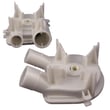
If the washer powers up but still will not drain or complete a cycle after a reset, a common next step is checking the drain system for a blockage or a weak pump. For this model, the replacement part is the washer drain pump WP3363394.
- Listen for the pump running during drain.
- Check the drain hose for kinks or clogs.
- Look for coins, socks, or debris at the pump inlet.
- If the motor runs but the tub does not agitate or spin, inspect the drive coupling.
A hard reset is the fastest way to clear a temporary interruption (power surge, paused timer, incomplete cycle) before you spend time diagnosing parts like the inlet valve, motor coupling, or gear case.
Last updated: January 2026
What is the capacity of a Kenmore 11018532790 washer?
The Kenmore washer model 11018532790 is typically considered an extra-large capacity, top-load, agitator-style washer; most Kenmore 110 direct-drive washers of this style are around 3.2 cu. ft. For the exact rated capacity for your specific unit, confirm it in the 11018532790 owner's manual.
Capacity is usually listed in the specifications section of the manual, and sometimes on the model and serial number plate.
- Check the specifications pages in the 11018532790 owner's manual
- Look for the model and serial number plate on the washer cabinet (often under the lid or along the rim)
- Compare your tub size and agitator style to the manual illustrations
- If you are matching replacement parts, use the full model number 11018532790 to avoid fit issues
A 3.2 cu. ft. top-load washer is designed for everyday family loads and larger mixed loads when you use the correct water level and cycle.
| Load type | Typical fit in a ~3.2 cu. ft. top-load washer | Best practice |
|---|---|---|
| Small | A few shirts, underwear, light items | Use a lower water level |
| Medium | Mixed clothing for 1 to 2 people | Distribute evenly around the agitator |
| Large | Towels or a larger mixed load | Do not pack tightly; allow items to move |
Knowing the capacity helps us choose the right cycle settings, avoid overloading (which can reduce cleaning and cause out-of-balance spinning), and select correct replacement parts for your Kenmore washer.
Last updated: January 2026
When I press start on a washing machine, nothing happens.?
On the Kenmore 11018532790 washer, “nothing happens” is usually a start-control issue: the timer knob is not pulled out, the timer is not lined up, or the washer has no power. Follow the start steps in the Kenmore 11018532790 owner's manual and use the checks below.
- Confirm the power cord is fully plugged into a working outlet (no extension cord).
- Check the home breaker or fuse; reset the breaker or replace the fuse if needed.
- Turn the timer knob slightly to the right to line it up, then pull the knob out to start.
- Make sure the lid is fully closed.
- If you selected Permanent Press, wait about 2 minutes; that cycle can pause briefly.
- Reduce the load size if the tub is packed; overloading can stop operation.
The manual’s basic start sequence is:
- Add detergent and load clothes.
- Close the lid.
- Set water level and water temperature.
- Set the cycle on the timer.
- Pull the timer knob out to start.
| What you notice | Likely cause | What to do |
|---|---|---|
| No lights, no sound | No power to washer | Verify outlet power, reset breaker, avoid extension cords |
| Timer turns but washer stays off | Timer not aligned or knob not pulled | Nudge timer slightly right; pull knob out |
| Stops during Permanent Press | Normal pause | Wait about 2 minutes for cycle to resume |
| Hums but will not drain/spin | Drain system issue | Check for a clog; inspect the washer drain pump WP3363394 if draining is weak |
A washer that will not start is often a simple control or power issue. Doing these checks first prevents unnecessary part replacement and helps you pinpoint whether the problem is electrical, timer-related, or a drain/spin problem.
Last updated: January 2026
How to unclog drain hose on Kenmore washer?
To unclog the drain hose on a Kenmore washer model 11018532790, we unplug the washer, drain any standing water, then remove and flush the drain hose to clear lint or debris. Reinstall the hose correctly so it does not kink, leak, or siphon.
- Unplug the washer.
- Turn off both water faucets.
- Have towels and a shallow pan ready.
- Keep a bucket nearby for hose water.
- If the washer is full of water, bail out as much as possible before moving it.
- Access the drain hose: Pull the washer forward enough to reach the hose connection at the back and the standpipe or laundry tub.
- Check for simple restrictions first:
- Straighten kinks.
- Make sure the hose is not pushed too far down into the standpipe (it needs an air gap).
- Remove the hose and clear the clog:
- Loosen the clamp at the washer end.
- Twist the hose back and forth while pulling it off the drain connector.
- Flush the hose with hot tap water; push out lint with a flexible brush or a small drain snake.
- Reinstall the hose correctly (important for this model): Follow the clamp placement and “twist and push” method in the 11018532790 washer manual so the hose seats fully against the ribbed stop and the clamp is positioned properly.
- Test drain and spin: Run a short drain/spin cycle and watch for leaks.
- Drain hose height: Keep the drain hose below about 96 inches above the floor.
- Standpipe fit: The hose should fit loosely; do not tape or seal it.
- Pump blockage or failure: If the hose is clear but draining is weak or noisy, inspect or replace the washer drain pump WP3363394.
| Symptom | Most likely cause | What we do next |
|---|---|---|
| Hums but will not drain | Pump jammed or failing | Check/replace drain pump |
| Drains slowly | Lint clog in hose | Remove and flush hose |
| Cycle stuck draining | Hose sealed/tight in standpipe | Create air gap, loosen fit |
| Wet loads after cycle | Kinked/clogged hose or oversudsing | Clear hose, use less detergent |
A partially clogged drain hose can prevent proper draining and spinning, leaving clothes wet and increasing the chance of leaks. Correct hose routing and clamp placement also helps protect floors from water damage.
Last updated: January 2026