Owner’s manual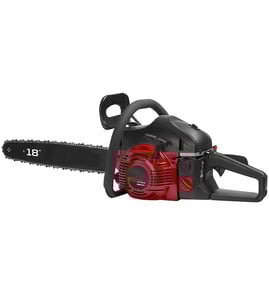







Is 40 1 or 50 1 better for chainsaws?
For the Craftsman 358350670 gas chainsaw, 40:1 is the correct fuel mix; it provides the lubrication this engine is designed for. Using 50:1 in this model reduces oil in the mix and can increase wear and overheating risk, especially under heavy cutting.
What to use for Craftsman 358350670
Follow the fueling instructions in the owner's manual. For this model:
- Mix 40:1 (gasoline:2-cycle oil)
- That equals 3.2 oz of 2-cycle oil per 1 gallon of unleaded gasoline
- Use synthetic 2-cycle air-cooled engine oil (not automotive or marine oil)
- Shake the fuel container after mixing so oil is evenly blended
- Refill bar oil whenever you refill fuel (the saw typically uses about one tank of bar oil per tank of fuel)
40:1 vs 50:1 at a glance
| Mix ratio | Oil content | Typical result | Best use case |
|---|---|---|---|
| 40:1 | Higher | More lubrication, slightly more smoke | What this Craftsman model specifies |
| 50:1 | Lower | Cleaner burn, less lubrication | Only when a saw is explicitly rated for 50:1 |
Why it matters
Two-cycle chainsaw engines rely on the oil mixed into the fuel for crankshaft, piston, and cylinder lubrication. If the mix is too lean on oil for the way the engine was designed, internal parts can run hotter and wear faster.
Quick safety and handling reminders
We recommend these basics any time you mix fuel or run the saw:
- Refuel outdoors or in a well-ventilated area, away from sparks or flames
- Wear eye protection, hearing protection, gloves, and chainsaw chaps
- Keep bystanders at least 30 feet away when starting and cutting
- Stop the engine before adjusting the chain or servicing the bar area
Last updated: February 2026
What kind of gas do you put in a Craftsman chainsaw?
For the Craftsman 358350670 gas chainsaw, we use unleaded gasoline mixed with synthetic 2-cycle (air-cooled) engine oil at a 40:1 ratio. That equals 3.2 oz of 2-cycle oil per 1 gallon of gas; this premix protects the engine and helps it start and run correctly.
Correct fuel mix for model 358350670
Use fresh, clean unleaded gas and a quality synthetic 2-cycle oil made for air-cooled engines.
- Mix 40:1 (gas:oil)
- 3.2 oz oil + 1 gallon gas
- Shake the fuel container briefly after mixing to fully blend the oil and gas
- Do not use automotive oil or marine/boat oil (those can damage a 2-cycle chainsaw engine)
- Use the same 40:1 2-cycle oil if you oil the cylinder for storage prep
For the exact fueling and safety steps for your saw, follow the owner's manual.
Quick mix chart (40:1)
| Gasoline amount | 2-cycle oil to add |
|---|---|
| 1 gallon | 3.2 oz |
| 2 gallons | 6.4 oz |
| 1/2 gallon | 1.6 oz |
Why it matters
A 2-cycle engine relies on oil mixed into the fuel for lubrication. If the mix is too lean (not enough oil), the engine can overheat and wear quickly; if it is too rich (too much oil), it can smoke, foul the spark plug, and run poorly.
Related maintenance tips while you are fueling
These steps prevent common “won’t start” and “runs rough” problems:
- Fill bar and chain oil whenever you fill the fuel tank
- Use proper bar oil (or SAE 30 oil temporarily if needed)
- Replace cracked or hardened fuel lines if you see leaks or air getting into the fuel system
- If the primer bulb is cracked or won’t fill, replace it
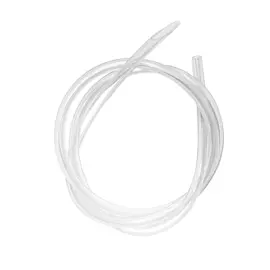
Helpful parts often used for fuel issues include the poulan lawn & garden equipment fuel line, small 530069247 and the ayp lawn & garden equipment engine carburetor primer bulb 530047721.
Last updated: February 2026
What company makes Craftsman chainsaws?
Craftsman is a brand name, not a single chainsaw manufacturer. For the Craftsman 358350670 gas chainsaw, the original maker and many service parts align with the Poulan/AYP parts ecosystem; other Craftsman chainsaws (different model numbers and years) can be built by different companies.
How to tell who made your specific Craftsman chainsaw
The most reliable way is to match the model number and the parts breakdown.
- Use the exact model number on the data plate: 358350670
- Check the parts list and diagrams in the owner's manual
- Compare common service parts (fuel line, primer bulb, carburetor) to what your saw uses
- If your saw shares Poulan/AYP-style parts, it typically follows that design family
- If the model prefix differs (for example, not starting with 358), it may be a different manufacturer
What we know for model 358350670
Your manual identifies this unit as a Craftsman 2-cycle gas chainsaw with a 16-inch bar, and it uses standard serviceable components like fuel lines, primer bulb, air filter, and carburetor parts. That matches the common Poulan/AYP-style layout used across many Craftsman 358-series saws.
Examples of parts that fit this model
| Part type | Example part on this model | What it affects |
|---|---|---|
| Fuel line | Poulan lawn & garden equipment fuel line, small 530069247 | Fuel delivery, starting, idle quality |
| Primer bulb | Ayp lawn & garden equipment engine carburetor primer bulb 530047721 | Priming fuel for easier starts |
| Air filter | Mcculloch lawn & garden equipment engine air filter 530057925 | Airflow, power, plug fouling prevention |
Why it matters
Knowing the maker family behind your Craftsman chainsaw helps you choose compatible replacement parts (bar, chain, carburetor, fuel system) and follow the correct maintenance specs like the 40:1 fuel mix and bar oil guidance listed in the owner's manual.
Last updated: February 2026
How to adjust L and H on a chainsaw?
On the Craftsman 358350670 gas chainsaw, we only adjust the idle speed (T) screw as part of normal tuning; the goal is simple: the engine idles smoothly and the chain does not move. For L and H mixture screws, use the settings and procedure shown in the owner's manual for your exact carburetor.
What you can adjust on this model (and what it does)
The manual for this saw calls out the idle speed (T) adjustment and emphasizes that the chain must not move at idle.
- T (idle speed) screw: raises or lowers idle RPM
- L (low-speed mixture): affects idle to mid-range acceleration (if equipped)
- H (high-speed mixture): affects full-throttle power and engine temperature (if equipped)
- Chain moving at idle: indicates idle speed is set too high (or clutch issues)
Idle speed (T) adjustment steps (manual-based)
- Start the saw and let it idle.
- If the chain moves, idle is too fast.
- Turn the T screw counterclockwise to decrease engine speed.
- If the engine stalls, idle is too slow.
- Turn the T screw clockwise to increase engine speed.
Quick targets
- Engine runs steadily at idle
- Chain stays completely still
L and H adjustment: safe, practical guidance
Many chainsaws have L and H mixture screws, but the correct baseline turns and final tuning depend on the carburetor design and limiter caps. Use these rules to avoid damage:
- Make very small changes (about 1/8 turn at a time)
- Tune only with a clean air filter and fresh fuel mix
- Never tune for a screaming, no-load full-throttle sound
- Stop immediately if the chain moves at idle; correct T first
- If fuel lines are cracked or soft, replace them before tuning (air leaks mimic bad carb settings)
Common causes that feel like “bad L/H settings”
| Symptom | Most common cause | What to check first |
|---|---|---|
| Won’t idle | Idle speed too low, dirty carb | T screw setting, primer bulb |
| Bogging on throttle | Fuel delivery issue | Fuel lines, air filter |
| Chain creeps at idle | Idle too high, clutch drag | T screw, clutch |
Why it matters
Running too lean at high speed can overheat the engine; running too rich can foul the spark plug and reduce power. Setting idle correctly also prevents unsafe chain movement.
Helpful DIY: Tips for a hard to start chainsaw
Last updated: February 2026
What are common chainsaw problems?
Common problems on the Craftsman 358350670 gas chainsaw include hard starting, rough running, smoking, poor cutting, and bar and chain issues like a loose chain or inadequate lubrication. Many of these trace back to basic maintenance items covered in the owner's manual.
Most common problems (and what usually causes them)
- Won’t start or runs rough: stale fuel, dirty air filter, carburetor/primer issues
- Smokes excessively or runs hot: incorrect fuel mixture, restricted airflow (dirty filter), carbon buildup at the muffler spark arresting screen
- Chain is loose, clatters, or cuts roughly: chain tension incorrect, cutters dull or damaged, chain installed backward
- Saw cuts crooked or must be forced: dull chain, guide bar rail wear or burrs, uneven rails
- Poor bar and chain lubrication: empty oil tank, clogged bar oil holes or bar groove
Quick checks we recommend before buying parts
- Set the ON/STOP switch to STOP before inspecting anything.
- Check chain tension; do not operate with a sagging chain.
- Check chain sharpness; a sharp chain makes chips, a dull chain makes fine sawdust.
- Inspect the guide bar; clean the bar groove and oil holes regularly.
- Confirm fuel mix is correct; an incorrect mix can cause smoking and overheating.
Common symptoms and best next step
| Symptom | What to check first | Typical fix |
|---|---|---|
| Chain won’t rotate by hand | Chain too tight | Loosen adjuster slightly, then retighten bar nuts |
| Chain sags under guide bar | Chain too loose | Adjust tension; do not run until corrected |
| Cuts slowly, makes sawdust | Chain dull | Sharpen or replace chain |
| Cuts to one side | Guide bar rails uneven or chain unevenly sharpened | Dress rails, sharpen correctly |
| Oil not reaching bar/chain | Oil tank empty or bar oil holes clogged | Fill oil; clean bar groove and oil holes |
Parts that commonly solve these problems
If your issue points to fuel delivery or airflow, these model-compatible parts are frequent fixes:
- Engine air filter 530057925 (restricted airflow can cause rough running and smoking)
- Engine carburetor primer bulb 530047721 (cracked bulb can make starting difficult)
- Fuel line, small 530069247 and fuel line, large 530069216 (leaks or restrictions can cause hard starting)
Why it matters
Chainsaw problems are not just performance issues; incorrect chain tension, a dull chain, or poor lubrication increases wear and raises the risk of kickback. Keeping the chain sharp and properly tensioned, and keeping the bar oil passages clean, helps the saw cut straight and run safer.
Last updated: February 2026