Owner’s manual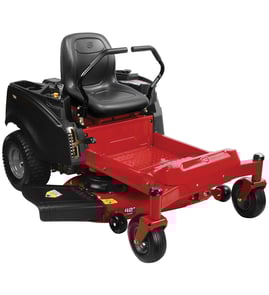

Are Snapper lawn mowers any good?
Snapper rear-engine riders like the Snapper 301320BE are a solid choice when you want a dedicated mower that is easy to maintain and dependable over time. The key to keeping performance “good” is following the maintenance schedule and using the correct replacement parts listed in the 301320BE owner's manual.
A well-running 301320BE typically delivers consistent cut quality, predictable handling, and reliable starting when routine service is kept up.
Common strengths owners value:
- Tight, easy maneuvering for trimming around trees and beds
- Straightforward maintenance access compared with many larger tractors
- Strong cut performance when blades are sharp and the deck is kept clean
- Long service life when oil changes, belts, and blades are handled on schedule
The manual emphasizes routine service intervals (including an initial oil change after the first 5 hours) and safe service steps like stopping the engine, removing the key, and disconnecting the spark plug wire before working on the mower.
Top items to stay on top of:
- Engine oil level checks and oil changes
- Air cleaner and pre-cleaner service
- Spark plug replacement
- Fuel system upkeep (including fuel filter and fuel line condition)
- Deck cleaning and blade sharpening
| Symptom | Most common cause | First action |
|---|---|---|
| Poor cut quality | Dull blades, dirty deck, belt tension | Clean deck, sharpen blades, inspect belt |
| Uneven cut | Tire pressure, deck level | Set tires to spec, level deck |
| Weak drive or slipping | Drive belt or friction components | Inspect belt and drive system |
Using the correct parts for the 301320BE helps prevent fit issues and repeat repairs.
Examples of commonly replaced items on this model:
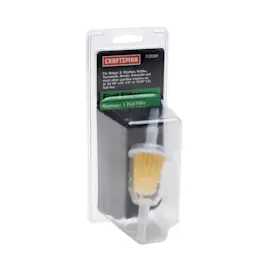
- Snapper filter 394358S (routine service item)
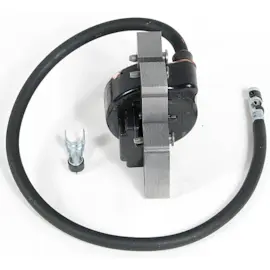
- Snapper hose 791766 (fuel line related)
- Snapper friction rim 7600135YP (drive system wear item)
Rear-engine riding mowers depend on basic upkeep for safety and performance. For example, the blade brake should stop the blade within about 3 seconds after disengagement; keeping systems adjusted and maintained helps protect you and improves cut results.
Last updated: January 2026
Does Snapper still make rear engine mowers?
Snapper has a long history of rear-engine riding mowers, and the best way to confirm what applies to your equipment today is to identify your exact model and support documentation. For the Snapper 301320BE rear-engine riding mower, we support maintenance and parts using the information in the 301320BE owner's manual.
The Snapper documentation for the 301320BE focuses on safe operation, routine service, and using genuine replacement parts; it also notes that engine-specific details are covered in a separate engine owner’s manual.
Key takeaways from the manual:
- Follow the pre-start checklist before each use (tires, guards, oil level).
- Perform routine maintenance at the recommended intervals.
- Use genuine Snapper replacement parts for service and repairs.
- Refer to the separate engine manual for engine-specific service details.
Model names can look similar across years, so we recommend verifying the exact model number and serial number on the mower you are considering, then matching it to the correct manual and parts list.
Use this quick check:
- Locate the model and serial tag on the mower frame
- Confirm the mower is a rear-engine rider (engine behind the seat)
- Match the model number to the correct documentation
- Compare the parts list to what is actually installed
Even if you are mainly asking about current production, most rear-engine riders share similar service needs. For the 301320BE, a common service item is the fuel filter; the manual shows a fuel filter replacement procedure.
| Maintenance item | What it affects | Example part for this model |
|---|---|---|
| Fuel filter | Fuel flow, starting, surging | Snapper filter 394358S |
| Fuel line | Fuel delivery, leaks | Snapper hose 791766 |
| Ignition key | Starting and security | Snapper switch key 7011138YP |
Rear-engine riding mowers are very model-specific for belts, fuel system routing, and safety shields. Confirming the exact model (like 301320BE) helps you get the right Snapper parts and follow the correct service steps.
Last updated: January 2026
How do I find the model number on my 301320BE?
The model number for your Snapper rear-engine riding lawn mower is on the mower’s model and serial number label. Once you locate that label, match the printed model to 301320BE so you can pull the correct parts diagrams and service information in the 301320BE owner's manual.
On rear-engine riders like the Snapper 301320BE, the model and serial number label is typically on the tractor frame in an easy-to-see service area. Check these common spots:
- Under the seat on the seat pan or frame rail
- On the rear frame near the engine or transaxle area
- Along the left or right side of the chassis near the footrest
- Near the steering column support under the dash area
Record both numbers exactly as shown; they are used for correct part fit and service.
- Model number (example: 301320BE)
- Serial number (unique to your mower)
- Series designation (the manual groups models by series)
Use this quick check to confirm you are reading the right information from the label.
| Item on label | What it tells you | Why it matters |
|---|---|---|
| Model number | Exact mower configuration | Ensures correct parts diagrams and adjustments |
| Serial number | Production run details | Helps match the right revisions of parts |
| Deck size/engine info | Basic configuration | Helps avoid ordering the wrong components |
Snapper’s operator manual notes that you should always mention the model and serial number when identifying the correct replacement parts and service information. Having the exact model number prevents mismatched items like tires, steering parts, or fuel system components.
Last updated: March 2026