Owner’s manual
 Error Codes



What is the average lifespan of a Samsung dryer?
A Samsung dryer typically lasts 10 to 15 years with normal household use. For your Samsung DVE54M8750W, consistent airflow maintenance (lint removal and vent cleaning) and avoiding overloads are the biggest factors that push lifespan toward the high end; see the DVE54M8750W owner’s manual for model-specific care guidance.
What most affects dryer lifespan
- Airflow restrictions (lint buildup in the screen, housing, or vent) increase heat stress on components.
- Overloading strains the drum belt, idler, and motor.
- Long run times from poor venting can overheat thermostats and fuses.
- Moisture-sensing performance (Sensor Dry) can change cycle length based on load type and size.
- Routine cleaning reduces wear and nuisance shutdowns.
Typical lifespan expectations (what to plan for)
| Usage pattern | Typical lifespan | What usually wears first |
|---|---|---|
| Light (few loads/week) | 12 to 15 years | Belt, rollers/idler, door switch |
| Average (most households) | 10 to 15 years | Heating system safeties, belt/idler |
| Heavy (daily loads) | 8 to 12 years | Motor, belt/idler, thermostats |
Maintenance that extends life on DVE54M8750W
- Clean the lint screen every load.
- Inspect and clean the vent path regularly to keep drying times normal.
- Dry similar fabrics together and avoid tightly packed loads.
- If drying times suddenly increase, address airflow first before replacing parts.
Why it matters
A dryer can keep running past 10 years, but restricted airflow and overheating shorten the life of high-heat safety parts (like thermal cut-offs and high-limit thermostats) and can also accelerate wear on the motor and belt.
Last updated: February 2026
How to find part number for Samsung dryer?
To find the correct part number for your Samsung dryer, we match parts to the exact model number first. On Samsung model DVE54M8750W, the model and serial tag is typically on the front frame behind the door; if it’s missing or unreadable, check the back of the cabinet next.
Where to look for the model and serial tag
Check these common locations on Samsung dryers:
- Front frame behind the dryer door opening (most common)
- Back panel of the dryer cabinet
- Side panel near the rear edge (less common)
- Your purchase receipt or delivery paperwork (sometimes lists the model)
For diagrams and model-specific identification details, use the DVE54M8750W manual.
How to get the right part number once you have the model
After you confirm the model number, use the part category that matches the symptom or area you’re working on (heating, drum, door, controls, wiring).
- Start with the symptom (no heat, won’t start, noisy, long dry times)
- Identify the system involved (heat, airflow, drum drive, door switch)
- Compare the part name and manufacturer part number before ordering
- If multiple similar parts appear, match by location in the diagram and description
- Replace related safety parts together when applicable (for example, thermal cut-off components)
Common examples for this model
| Symptom | Part type to check | Example part for DVE54M8750W |
|---|---|---|
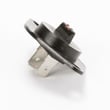
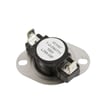
| Dryer won’t heat or overheats | High-limit thermostat / thermal cut-off | Dryer high-limit thermostat DC47-00018A |
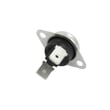
| Dryer runs but shuts off | Thermal cut-off thermostat | Dryer thermal cut-off thermostat DC47-00016A |
| Dryer tumbles poorly or squeals | Drum belt / idler | Drum belt (manufacturer part number 6602-001655) |
Why it matters
Samsung dryers can use different parts across close-looking model variants. Using the exact model number (and revision, if shown on the tag) prevents ordering a heating element, thermostat, belt, or door switch that does not fit.
Last updated: February 2026
Is it worth replacing a heating element in a Samsung dryer?
Yes; for Samsung model DVE54M8750W, replacing the heating element is usually worth it when the dryer runs but won’t heat, because the part cost is typically far less than replacing the entire dryer. It’s only a bad value if another issue (like airflow restriction or a blown safety fuse) is the real cause.
Quick decision checklist (before you buy parts)
We recommend confirming the symptom and checking the common “look-alike” failures first:
- The drum tumbles normally but clothes stay cold or damp
- The lint screen and vent path are clean (poor airflow can overheat and trip safeties)
- No burning smell or repeated shutdowns (often points to venting problems)
- You’re comfortable using a multimeter for continuity checks
- You can follow the disassembly steps in the DVE54M8750W owner’s manual
What else can mimic a bad heating element?
On this model, several heat-related safety parts can fail and produce “no heat” symptoms.
| Symptom | Common cause | Typical fix path |
|---|---|---|
| Runs, no heat | Thermal cut-off opened | Test and replace if open; correct airflow issue |
| Runs, heat cuts in and out | High-limit thermostat cycling | Check venting; test thermostat |
| Over/under-heats | Temperature sensor issue | Test sensor resistance; replace if out of range |
| Long dry times | Restricted exhaust duct or lint buildup | Clean venting and lint housing |
Model-matched parts we commonly see involved in “no heat” diagnosis include the dryer thermal cut-off thermostat DC47-00016A, dryer high-limit thermostat DC47-00018A, and dryer thermistor DC32-00007A.
Why it matters
Replacing the heating element without fixing airflow or a failed safety device can lead to repeat failures, longer dry times, and overheating. The manual’s troubleshooting section also calls out basics like cleaning the lint filter and addressing load size and venting, which directly affects heating performance.
Last updated: February 2026