Owner’s manual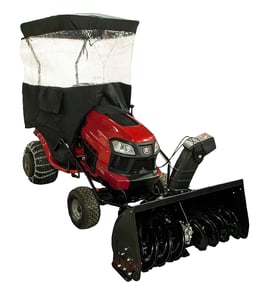


What is the life expectancy of a snowblower?
A typical snowblower lasts 10 to 20 years with normal residential use and consistent maintenance. For your Craftsman 486248400 snow thrower attachment, lifespan depends most on keeping wear items (belt, skid shoes, shear bolts) in good shape and lubricating the moving points as outlined in the owner's manual.
Typical lifespan (what to expect)
Most snowblowers and snow thrower attachments fall into these ranges:
| Equipment type | Typical life expectancy | What usually ends it first |
|---|---|---|
| Gas snowblower | 15 to 20 years | Engine wear, corrosion, neglected maintenance |
| Electric corded snowblower | 8 to 12 years | Motor wear, switch/cable damage |
| Battery snowblower | 5 to 10 years | Battery capacity loss, electronics |
| Tractor snow thrower attachment (like 486248400) | 10 to 20 years | Belt wear, bearings, auger/impeller damage |
Maintenance that extends life the most
The manual emphasizes routine checks, cleaning, and lubrication. We recommend:
- Check for loose fasteners and tighten before each season.
- Inspect for worn or damaged parts (especially auger area and chute controls).
- Clean after use to reduce rust and packed snow buildup.
- Lubricate pivot points and idler arms; oil pivot points and use spray lubricant where specified.
- Treat control cables with penetrating oil so chute and trigger controls stay smooth.
Wear parts that commonly limit performance
On the 486248400 attachment, these parts often determine whether it keeps throwing snow effectively:
- Skid shoes and scraper plate wear; replace before wear gets excessive to protect the housing.
- Auger drive belt stretches, cracks, or slips; replace when you see glazing or loss of drive.
- Shear bolts break after hitting ice chunks, gravel, or debris (they are designed to fail first).
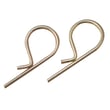
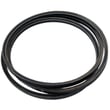
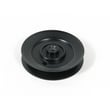
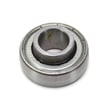
If you are replacing common wear items, these model-matched parts are available:
Why it matters
A snowblower that is still “running” can lose throwing distance and clog more often when the belt slips, skid shoes are worn, or lubrication is neglected. Staying ahead of those wear points keeps performance consistent and prevents bigger repairs.
Last updated: February 2026
Why do I keep breaking shear pins on my snowblower?
On the Craftsman 486248400 snow thrower attachment, repeatedly breaking shear pins (shear bolts) happens when the augers hit a foreign object or get ice-jammed, or when the auger system is binding and putting extra load on the shear bolts. Fix the cause of the jam and replace the correct shear bolts so the gearbox stays protected.
What to check first (most common causes)
- Hidden obstructions: rocks, gravel, chunks of ice, sticks, or a frozen newspaper in the intake.
- Ice jam in the spiral augers: wet snow refreezes and locks the auger to the housing.
- Ground speed too fast: feeding snow too aggressively increases shock loads.
- Belt issues: a loose or damaged auger drive belt can cause surging engagement that snaps shear bolts.
- Worn support points: rough bearings or misalignment can make the auger bind.
Quick troubleshooting steps
- Shut the tractor off, remove the key, and wait for all moving parts to stop.
- Clear the auger housing and discharge chute completely.
- Inspect the auger flighting and auger shaft for bends, rub marks, or packed ice.
- Check belt routing and tension; the manual shows how the belt sits in the V pulleys and how preset tension is set with the tensioning chain.
- Replace any sheared hardware with the specified shear bolt and lock nut.
Use the correct shear hardware
The manual specifies shear bolts designed to fail first when the auger jams. For this attachment, use the correct shear bolt (part number 710-0890A) and matching lock nut.
| Item | What it does | Why it matters |
|---|---|---|
| Shear bolt | Sacrificial fastener for the auger | Prevents gearbox and auger shaft damage |
| Hex lock nut | Keeps the shear bolt secured | Reduces loosening and uneven loading |
Recommended replacement part:
- Snowblower shear bolt 42849 (part number 710-0890A)
Why it matters
Shear bolts are supposed to break when the auger hits something or ice jams the augers. If they keep breaking, the attachment is repeatedly seeing shock loads or binding; correcting the root cause improves throwing performance and helps prevent bigger drivetrain damage.
For model-specific belt routing, tensioning, and auger clutch adjustment details, use the owner's manual.
Last updated: February 2026
What's the difference between a snowblower and a snow thrower?
A snow thrower is commonly used to describe a single-stage machine that uses an auger to pull in snow and throw it out the chute, while snow blower is often used as a broad term that includes heavier two-stage (or three-stage) machines that use an auger to feed an impeller for longer throwing distance. Your Craftsman 486248400 is labeled a snow thrower in the owner's manual.
How the stages differ (simple breakdown)
- Single-stage (often called “snow thrower”): auger does the intake and throwing
- Two-stage (often called “snow blower”): auger feeds snow to a fast-spinning impeller
- Three-stage: adds an accelerator to move snow faster into the impeller
- More stages typically mean better performance in deep, wet, or packed snow
- Fewer stages typically mean lighter weight and simpler maintenance
What that means for your Craftsman 486248400 attachment
This attachment uses spiral augers to feed snow to an impeller fan at the center of the housing, and it discharges through an upper and lower chute system. That layout matches the “auger feeds impeller” concept you see in multi-stage designs, even though the manual calls it a snow thrower.
Quick comparison
| Feature | “Snow thrower” (common usage) | “Snow blower” (common usage) |
|---|---|---|
| Typical stages | 1-stage | 2-stage or 3-stage |
| Best for | Light to moderate snow | Deep, wet, heavy, icy snow |
| Throwing distance | Shorter | Farther |
| Weight/size | Lighter, smaller | Heavier, larger |
Why it matters
The name on the box is less important than the stage design and conditions you need to clear. For tractor-mounted attachments like the Craftsman 486248400, performance depends heavily on engine RPM, ground speed, traction, and shear-bolt protection.
Practical tips when choosing or using either type
- Run at high engine RPM for best discharge performance
- Slow down ground speed in deep or wet snow
- Use rear wheel weights and tire chains for traction
- If the chute clogs, shut off the tractor and clear it with a stick (not your hands)
- Keep spare shear bolts on hand; use the correct type such as snowblower shear bolt 42849
Last updated: February 2026
Should I spray my snowblower with WD-40?
Yes, you can spray a light coat on your Craftsman 486248400 snow thrower attachment to help prevent rust and reduce snow sticking, but use it only on cold, non-moving metal surfaces. For routine upkeep, follow the lubrication and storage steps in the owner's manual.
Where to spray (and where not to)
Use a light, even coat and wipe off excess so it does not attract grit.
Good places to spray (cold, clean metal):
- Inside the discharge chute and chute ring (to help snow slide)
- Auger housing interior (light coat, then wipe)
- Exterior bare metal spots after cleaning (rust prevention)
- Control cable ends after cleaning (light protectant)
Avoid spraying:
- Belts, pulleys, and idler areas (it can cause slipping)
- Bearings that are meant to run dry or are sealed (spray can wash out protection)
- Any rotating parts while they are moving
- Any hot surfaces or areas where overspray can reach traction surfaces
Best practice for this model’s maintenance
Your manual calls out regular lubrication and off-season protection: oil pivot points, apply penetrating oil to control cables, and coat exposed bare metal with light oil for storage. Use this routine as your baseline.
- Oil pivot points on the snow thrower
- Oil the pivot points of the idler arms on the clutch/idler assembly
- Apply penetrating oil to the discharge chute control cables
- Clean off salt deposits; then protect bare metal before storage
Parts that commonly wear (and why it matters)
If snow starts packing or the attachment rides too low, worn wear parts can be the real cause, not lack of spray.
| Symptom | Likely wear item | What to check |
|---|---|---|
| Scraping on pavement or poor clearing | Skid shoes | Uneven wear, thin edges |
| Auger stops suddenly after hitting debris | Shear bolt | Broken bolt, missing hardware |
| Weak throwing distance | Auger drive belt | Glazing, cracking, looseness |
Model-matched parts we stock include the snowblower attachment skid shoe 24279BL1, snowblower shear bolt 42849, and belt 47846.
Why it matters
Using the right lubricant in the right place helps prevent chute clogging and corrosion, but keeping belts dry, wear parts in good shape, and cables lubricated is what protects performance and prevents damage.
Last updated: February 2026
How to tell year of Craftsman snowblower by serial number?
For Craftsman snow thrower attachment model 486248400, the year is determined by decoding the serial number on the decal attached to the snow thrower. Use the location guidance in the owner's manual to find the decal, then interpret the serial format used on your unit.
Where to find the serial number on model 486248400
The model and serial numbers are on the attachment itself (not the tractor).
- Check the snow thrower frame or housing for a decal
- Look near the hitch or mounting area where it connects to the tractor
- Clean off packed snow, salt, and grime so every character is readable
- Record the full serial number exactly as printed
How to decode the year from the serial number
Craftsman serial numbers use more than one format. Match your serial to the pattern that fits what you see.
- All-numeric start: the first 6 digits often contain a date-style block (month/day/year or year/month/day)
- Mixed letters and numbers: letters can be plant/line codes; a 2-digit year is commonly embedded in the string
- Letter-coded year: some formats use a letter to represent the year, followed by month/day digits
Quick check table
| What your serial looks like | What it usually means | What to do |
|---|---|---|
| Starts with 6 digits | Date block near the beginning | Try reading the first 6 digits as a date |
| Letters + numbers | Codes plus a date segment | Look for a 2-digit year or year-letter |
| Worn or incomplete | Missing characters change the result | Clean the decal and re-check in bright light |
Why it matters
The build year helps you match the correct parts and revisions for your 486248400 attachment, especially wear items like the snowblower shear bolt 42849 and belt 47846.
Last updated: February 2026