Error Codes



What is the average lifespan of a KitchenAid dishwasher?
A KitchenAid dishwasher typically lasts 10 to 14 years with normal household use and basic care. For the KitchenAid KUDI01ILBL4, consistent cleaning, correct loading, and fixing small leaks or drain issues early are the biggest factors that help it reach the high end of that range.
What affects dishwasher lifespan the most
- Water quality: hard water speeds up mineral buildup on spray arms, seals, and the pump.
- Drain performance: slow draining strains the pump and can leave debris behind.
- Door sealing: a worn door seal can cause leaks that damage components over time.
- Cleaning and maintenance: routine filter area cleaning reduces motor and chopper load.
- Usage patterns: multiple heavy loads daily shortens life compared to 3 to 5 loads per week.
Maintenance that helps KUDI01ILBL4 last longer
- Run a monthly cleaning cycle and wipe the door edges and gasket area.
- Keep the spray arm holes clear and remove labels, bones, and glass shards from the tub.
- Use the right detergent amount; too much can cause excess suds and poor rinsing.
- Address draining problems quickly (kinks, clogs, or a failing drain path).
- Fix leaks early; a small seep at the door can become a bigger failure.
Parts that commonly relate to “end-of-life” symptoms
| Symptom | Common area involved | Example part for this model |
|---|---|---|
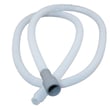
| Not draining, water left in tub | Drain path, hose | Dishwasher drain hose 8269144A |
| Leaking at the door | Door seal/gasket | Gasket W11196317 |
| Poor cleaning, grinding noise | Chopper, pump | Dishwasher chopper assembly W10083957V |
| No run or intermittent power | Electrical protection | Fuse 8193762 |
Why it matters
Dishwashers often get replaced due to leaks, poor cleaning, or repeated drain failures, not because the tub “wears out.” Preventing buildup and catching seal or drain issues early is the most reliable way to extend service life.
Last updated: January 2026
What is the most common problem with a KitchenAid dishwasher?
For KitchenAid dishwasher model KUDI01ILBL4, the most common problems we see are poor cleaning (food left on dishes) and drain-related issues (water left in the tub). These are usually tied to spray circulation, a clogged chopper/filter area, or a restricted drain path.
Most common symptoms and what they usually point to
- Dishes still dirty or gritty: clogged spray arm holes, chopper area blocked, or weak wash circulation
- Standing water after the cycle: kinked/blocked drain hose, drain path restriction, or pump issue
- Leaking at the door: worn door seal or gasket not seating evenly
- Loud grinding or rattling: debris in the chopper area or pump
- Won’t start or stops mid-cycle: door latch not closing fully, power interruption, or control issue
Quick checks we recommend first (no parts guessing)
- Confirm the spray arms spin freely and the holes are clear.
- Remove debris from the sump area (common cause of noise and poor cleaning).
- Check the drain hose routing for kinks and make sure the high loop/air gap setup is correct.
- Run hot water at the sink before starting a cycle to improve wash performance.
- If the unit shows a fault pattern, use the KitchenAid-specific guide: KitchenAid he dishwasher error codes.
Parts that commonly solve these problems on KUDI01ILBL4
| Symptom | Common part to inspect | What it affects |
|---|---|---|
| Poor cleaning, weak spray | Pump motor W10782773 | Wash pressure and circulation |
| Grinding, debris issues | Dishwasher chopper assembly W10083957V | Breaks up food to protect the pump |
| Not draining, slow drain | Dishwasher drain hose 8269144A | Drain flow to disposer/standpipe |
| Door leaks | Gasket W11196317 | Door sealing to prevent water escape |
Why it matters
Poor cleaning and poor draining often share the same root cause: restricted water flow. Fixing the circulation or drain restriction early helps prevent repeat clogs, odors, and pump strain.
Last updated: January 2026
How do I find the model number on my KUDI01ILBL4?
The model number for your KitchenAid dishwasher is printed on a rating label attached to the dishwasher cabinet. On KUDI01ILBL4 units, you will typically see it when you open the door and look along the inner door frame or the tub opening.
Where to look on a KitchenAid dishwasher
Check these common label locations first:
- Along the left or right inner door frame (around the tub opening)
- On the top edge of the tub opening, just under the countertop
- On the side of the inner door panel (visible with the door open)
- Near the bottom edge of the door opening, close to the toe panel area
What the label should show
The rating label usually includes more than just the model number. Look for:
- Model: KUDI01ILBL4
- Serial number: used to identify production run and date
- Electrical ratings: voltage and amperage
- Brand: KitchenAid
Quick ID table
| Label item | What it’s used for | When you need it |
|---|---|---|
| Model number | Ensures correct diagrams and parts match | Any time you order parts |
| Serial number | Helps narrow down version changes | When parts vary by production run |
| Electrical ratings | Confirms power requirements | Troubleshooting power issues |
Why it matters
KitchenAid dishwashers can have small design changes within a model series. Using the exact model number helps us match the correct parts and diagrams for KUDI01ILBL4, such as the dishwasher drain hose 8269144A or the dishwasher door hinge W11612302.
Last updated: March 2026