Owner’s manual
 Error Codes


How many cubic feet is a Samsung RFG297ABRS?
The Samsung RFG297ABRS bottom-mount refrigerator has a total capacity of about 28.5 cubic feet. For the exact capacity breakdown (refrigerator vs. freezer) and how Samsung measures usable space, check the RFG297ABRS owner's manual.
Capacity details you can expect
Total capacity is the combined storage volume of the fresh food compartment and the freezer. On a refrigerator this size, capacity is typically split like this:
- Fresh food section holds the larger share of space
- Freezer section holds the smaller share of space
- Door bins and drawer layouts affect usable storage more than the number alone
- Ice maker and ice bin reduce usable freezer volume
Quick reference
| Spec | What it means | What to use it for |
|---|---|---|
| Total capacity | Combined refrigerator + freezer volume | Comparing models and overall size |
| Usable space | What you can actually load | Planning shelves, bins, and bulk storage |
| Layout impact | Drawers, ice storage, door bins | Deciding if the configuration fits your habits |
Why it matters
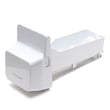
Capacity helps you compare refrigerators, but layout and features (like an in-door ice maker) determine how much food you can comfortably store day to day. If you are troubleshooting ice storage space or ice production, the ice system components can also affect how the freezer area is used.
Related parts that affect usable space
- Ice maker assembly and ice bin take up freezer room
- Door bins and shelves change how you organize groceries
- Drawer trays and covers can limit tall-item clearance
Last updated: February 2026
What is the life expectancy of a Samsung refrigerator?
Most Samsung refrigerators, including the Samsung RFG297ABRS bottom-mount refrigerator, last 10 to 15 years with normal household use and basic maintenance. Keeping airflow clear, doors sealing tightly, and temperatures stable helps you reach the upper end of that range; see the RFG297ABRS owner's manual for care guidance.
Typical lifespan and what affects it
A refrigerator’s service life depends more on operating conditions than brand alone.
- Usage load: frequent door openings and warm food loads increase run time
- Ventilation: blocked condenser airflow raises compressor stress
- Door seal condition: air leaks cause longer run cycles and frost issues
- Power quality: repeated outages or surges can damage electronics
- Cleaning habits: dusty coils and clogged drain paths create avoidable failures
Quick maintenance checklist (best ROI)
These steps help extend life expectancy and reduce common cooling and ice issues.
- Set temps to typical targets: 37°F fresh food, 0°F freezer
- Keep vents inside the compartments unblocked
- Clean condenser area and ensure the condenser fan area stays clear
- Check door closing and gasket contact; correct sagging doors or obstructions
- If you see water under the fridge, address drainage early (a drain issue can lead to icing)
Common “end-of-life” symptoms vs fixable problems
| Symptom | Often fixable? | Common next step |
|---|---|---|
| Warm fridge/freezer but lights work | Yes | Check airflow, fans, frost buildup, controls |
| Loud buzzing/clicking from rear | Sometimes | Inspect condenser fan, start components |
| Water pooling under unit | Yes | Clear/repair drain system |
| Ice maker stops producing | Yes | Troubleshoot water supply, ice maker, temps |
Why it matters
A 10 to 15 year lifespan is realistic when the sealed system stays healthy. Many “old fridge” complaints are actually airflow, defrost, drainage, or ice maker issues that are repairable and can add years of reliable service.
Last updated: February 2026
What is the most common problem with Samsung refrigerators ice?
The most common ice problem we see on Samsung refrigerators like model RFG297ABRS is the ice maker stopping or slowing because water cannot fill the ice mold correctly. The usual causes are a restricted water supply (often a clogged filter), a frozen fill tube, or ice buildup that prevents normal cycling.
Quick checks that fix most “no ice” complaints
- Confirm the ice maker is turned ON and the ice bin is seated fully.
- Dispense water at the door (if equipped); weak flow points to a supply or filter restriction.
- Look for a frozen fill tube above the ice maker; thaw it with a hair dryer on low (keep heat moving).
- Empty the bin and break up clumps; a jam can stop harvesting.
- Set temps to typical targets: 0°F freezer, 37°F fresh food.
- Check the door seals for gaps; warm air leaks drive frost and ice buildup.
Most common causes and what they look like
| Symptom | Most likely cause | What to do first |
|---|---|---|
| No ice, water dispenses slowly | Clogged filter or low supply pressure | Replace filter, verify shutoff valve is fully open |
| Ice maker has ice block, won’t dump | Ice maker freeze-up or jam | Thaw, clear bin, restart ice maker |
| Small/hollow cubes | Restricted water flow | Replace filter, check line for kinks |
| Frost near ice room/ice maker | Door not sealing, frequent openings | Inspect gasket, reduce humidity exposure |
When a part is likely needed
If you have good water flow and correct temperatures but the ice maker still will not cycle, the ice maker assembly can be the failure point on this model. Use the refrigerator ice maker assembly da97-07365g when you need a complete replacement.
Why it matters
Ice issues usually start as a simple water-flow restriction, but repeated freeze-ups can lead to heavy frost, poor cooling, and more wear on the ice maker components. Following the model-specific steps in the RFG297ABRS owner's manual helps you confirm settings and reset procedures before replacing parts.
For deeper troubleshooting, we use the same proven steps in why your Samsung fridge stopped making ice and how to fix it.
Last updated: February 2026