Owner’s manual


Where is the model number on Kenmore Elite dryer?
On the Kenmore Elite dryer model 79691072310, the model number is printed on the rating label, most often on the cabinet frame just inside the dryer door opening. If it is not there, check the back of the dryer near the top. See the 79691072310 owner's manual for the exact label location and what the label looks like.
- Open the door and look on the cabinet frame (door opening) on the left or right side
- Check the inside edge of the door itself
- Look on the back panel near the top
- For some installations, check the side panel near the rear edge
The rating label typically includes several identifiers. Use the model number (not the serial number) when ordering Kenmore parts or looking up diagrams.
| Label item | What it’s used for | Example format |
|---|---|---|
| Model number | Matching parts and diagrams | 79691072310 |
| Serial number | Manufacturing date tracking | Letters and numbers |
| Electrical or gas info | Installation and troubleshooting | Volts, amps, BTU |
Using the exact model number helps us match the correct Kenmore Elite dryer parts for your configuration, especially for components that can vary by revision (like a control board, door switch, or drum belt).
Last updated: February 2026
What size is a Kenmore model 79691072310 dryer?
Kenmore Elite dryer model 79691072310 is a full-size dryer; most dryers in this class measure about 27 inches wide, 38 to 39 inches tall, and 30 to 32 inches deep. For the exact cabinet dimensions and door-clearance needs, use the specs listed in the 79691072310 owner's manual.
When you are measuring a laundry space, we recommend allowing room for the cabinet plus airflow and hookups.
- Width (cabinet): typically ~27 inches
- Height (to top): typically ~38 to 39 inches
- Depth (cabinet): typically ~30 to 32 inches
- Extra space needed: behind for venting and cord or gas line, plus front for door swing
- Measure the opening width at the front and back (some closets taper).
- Measure depth from the back wall to the front edge of the space.
- Confirm door swing clearance (door open fully without hitting a wall or washer).
- Leave space for the exhaust duct to avoid crushing the vent.
- If stacked or on a pedestal, confirm the overall height requirement.
| What you are measuring | What to use | What to add |
|---|---|---|
| Closet width | ~27 in dryer width | 1 to 2 in for wiggle room |
| Closet depth | ~30 to 32 in dryer depth | 4 to 6 in for vent and hookups |
| Front clearance | Door swing | Enough to load and unload |
Correct sizing prevents crushed venting (long dry times), makes installation easier, and avoids door-clearance problems. If your dryer is taking longer to dry after a move, checking vent routing and airflow is a smart first step.
Last updated: February 2026
How much does it cost to replace a heating element in a Kenmore dryer?
For Kenmore Elite dryer model 79691072310, replacing a heating element typically runs $20 to $120 for the part and about $100 to $350 total when a technician supplies labor. Your exact cost depends on whether you replace only the element or a larger heater assembly and any related thermostats or fuses.
- DIY part-only: $20 to $120 (element or heater assembly)
- DIY extras (common add-ons): thermal fuse, cycling thermostat, high-limit thermostat
- Professional labor: often 1 to 2 hours, plus service call
- Total installed (common range): $100 to $350
| Replacement approach | What you pay for | Typical total cost |
|---|---|---|
| DIY (you install) | Part(s) only | $20 to $150 |
| Pro repair | Parts + labor | $100 to $350 |
- Dryer type: Electric dryers use a heating element; gas dryers use an igniter, gas valve, and sensors.
- What failed: A blown thermal fuse or thermostat can mimic a bad element.
- Access time: Some dryers require more disassembly to reach the heater housing.
- Parts replaced together: Many people replace wear items at the same time to avoid repeat tear-down.
- Confirm the dryer has proper airflow (a clogged vent can overheat and damage heater components).
- If the drum turns but there is no heat, test the thermal fuse and thermostats first.
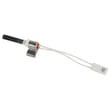
- If the dryer is gas and not heating, focus on ignition parts such as the lg dryer burner igniter 5318EL3001A and heat-sensing components.
Replacing the correct heat-related part the first time saves money and prevents repeat overheating issues that can shorten the life of thermostats, fuses, and wiring. For model-specific disassembly and testing guidance, use the 79691072310 owner's manual.
Last updated: February 2026
How do I know if my Kenmore dryer thermal fuse is blown?
If your Kenmore Elite dryer model 79691072310 suddenly will not start or runs but produces no heat, the thermal fuse is a top suspect. The sure way to know is a continuity test with a multimeter after unplugging the dryer; a blown fuse reads open (no continuity).
- Dryer will not start (no motor run)
- Dryer runs but does not heat (clothes stay damp)
- Cycle ends early because heat never comes on
- You recently had poor airflow (long dry times, very hot cabinet)
- Unplug the dryer (or switch off the breaker).
- Access the fuse location using the disassembly steps in the 79691072310 owner's manual.
- Pull at least one wire off the fuse terminal (so you are not reading through the circuit).
- Set your multimeter to continuity or the lowest ohms setting.
- Touch probes to the fuse terminals.
| Meter result | What it means | What to do next |
|---|---|---|
| 0 to 1 ohm or beeps | Fuse is good | Keep troubleshooting heat or start circuit |
| OL, open, no beep | Fuse is blown | Replace the fuse and fix the airflow problem |
A thermal fuse usually blows because the dryer overheated from restricted airflow. Before running the dryer again, we recommend:
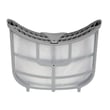
- Clean the lint screen and lint screen housing; replace a damaged screen such as lg dryer lint screen ADQ73373201
- Inspect and clean the vent duct behind the dryer
- Check the outside vent hood for a stuck flap, lint buildup, or a crushed duct
- Confirm the blower area is clear; a damaged fan can reduce airflow (inspect the dryer blower wheel 5835EL1002A)
- If overheating continues, test safety controls like the dryer high-limit thermostat 6931EL3003C
The thermal fuse is a one-time safety device. If we replace it without correcting the venting restriction or overheating condition, the new fuse can blow again and the dryer can keep drying poorly.
Last updated: February 2026
What year did the Kenmore Elite come out?
Kenmore Elite is a premium Kenmore line that first appeared in the late 1990s; the exact “year” for your Kenmore Elite dryer model 79691072310 is the unit’s manufacture date, which you determine from the serial number on the rating label using the date-code format shown in the 79691072310 owner's manual.
- Locate the rating label (model and serial tag). It’s commonly on the door opening, door frame, or inside the cabinet.
- Write down the full serial number exactly as shown.
- Use the serial date-code instructions in the 79691072310 owner's manual to translate the serial into a production year (and often a week or month).
- Unplug the dryer before removing any panels to access labels.
- Confirm the model number reads 79691072310 (not a similar 796-series number).
- Record both the serial number and any revision codes.
- If the label is worn, take a clear photo and zoom in to read characters.
- Keep the serial number with your receipts for future parts lookups.
Kenmore Elite is a product line sold over many years, and Kenmore appliances were produced by different manufacturers depending on the model. That means the launch timeframe of the Elite line does not tell you when a specific dryer was built.
| What you’re trying to do | Best info to use | Why it matters |
|---|---|---|
| Identify the dryer’s age | Serial-number manufacture year | Helps with maintenance planning and expected wear items |
| Order the right replacement part | Full model number 79691072310 | Parts vary by revision even within the same series |
| Diagnose a display message | Kenmore elite dryer error codes | Error codes point to likely failed components and checks |
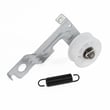
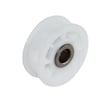
Knowing the manufacture year helps you judge normal wear on common dryer components such as the drum support rollers, idler pulley, and thermostats, and it helps you decide whether a noise, no-heat, or long-dry-time symptom is age-related or a venting issue.
Last updated: February 2026
What model number is the Kenmore Elite 79691072310 dryer?
The model number for this Kenmore Elite dryer is 79691072310. You will see this number on the appliance’s model and serial tag, and it is the number we use to match the correct Kenmore parts, diagrams, and troubleshooting information for your dryer.
Check the model and serial tag in one of these common locations:
- Inside the door opening on the cabinet frame
- Along the door opening edge (near the lint screen housing on some designs)
- On the back panel of the dryer
- On the side panel near the top or bottom edge
If the tag is hard to read, use the cleaning tips and tag-location notes in the 79691072310 owner's manual.
Kenmore Elite dryers often look similar across multiple model series, but parts can differ by revision. Using 79691072310 helps ensure you get the correct fit for items like the belt, rollers, and sensors.
- Drum belt length and rib profile
- Drum support roller style
- Thermistor and thermostat temperature ratings
- Control board and user interface versions
- Door switch and door assembly fit
| What you see | What it means | Use it to order parts? |
|---|---|---|
| 79691072310 | Full dryer model number | Yes |
| Serial number | Production identifier | No |
| Part number (example: 4400EL2001D) | Identifies a specific replacement part | Yes (for that part only) |
If you are looking up a fault code on the display, use our Kenmore elite dryer error codes reference to match the code to likely causes and next steps.
A correct model number prevents wrong-part returns and speeds up repairs, especially for common wear items like the dryer drum belt 4400EL2001D and drum support components.
Last updated: February 2026
What are common problems with Kenmore dryers?
Common problems we see with Kenmore dryers like model 79691072310 include no heat, long dry times, the drum not turning, and unusual noises. Most of these issues trace back to airflow restrictions (lint and venting) or normal wear on drive and temperature-sensing parts; check the 79691072310 owner's manual for model-specific checks.
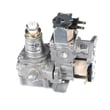
- Dryer will not heat: failed igniter, gas valve issue, bad thermistor, or a safety thermostat opening
- Long drying times: clogged lint screen, restricted vent, weak airflow from a blower issue
- Drum not turning: worn belt, idler pulley failure, seized drum rollers, motor problem
- Loud squealing, thumping, or rumbling: worn drum rollers or idler pulley, damaged belt
- Dryer will not start: door switch not closing, control issue, motor problem
If your symptom matches, these are frequently replaced parts for this model:
| Symptom | Common part to check | Example part for this model |
|---|---|---|
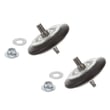
| Loud rumble or thump | Drum support rollers | Dryer drum support roller 4581EL2002H |
| Drum not turning | Drum belt | Dryer drum belt 4400EL2001D |
| No heat or poor heat control | Thermistor | Dryer thermistor AGM30045804 |
| No start when door closes | Door switch | Dryer door switch EBF61496102 |
- Clean the lint screen and confirm it is seated correctly
- Inspect the vent path for kinks, crushed flex duct, or heavy lint buildup
- Run a timed dry cycle and confirm the drum tumbles and airflow feels strong at the exhaust
- Listen for squealing or grinding that points to rollers or the idler pulley
- If the dryer is gas, confirm the gas supply valve is fully open and other gas appliances work
Airflow and temperature control directly affect drying performance and safety. A restricted vent can cause long dry times and overheating, which can trip thermostats and make a “no heat” problem look like a failed igniter or sensor.
If the display shows a code, use our Kenmore elite dryer error codes guide to match the code to the most likely failed component and the right next test.
Last updated: February 2026
What are the codes for Kenmore Elite dryer?
Kenmore Elite dryer error codes are the letters or “F” numbers shown on the display when the control detects a problem (power, keypad, heating, or temperature sensing). For Kenmore Elite model 79691072310, use the code list in the 79691072310 owner's manual to match the code to the most likely failed system.
These are some of the most common codes you may see on Kenmore Elite dryers and what they typically indicate:
- PF: Power failure or an interrupted power supply during a cycle
- F:01: Main electronic control board problem
- F:02: Keypad or user interface problem
- F:20: Heater relay circuit problem (heating control)
- F:22 / F:23: Outlet thermistor (temperature sensor) problem
- F:24 / F:25: Inlet thermistor (temperature sensor) problem
Before replacing parts, we recommend these steps because they solve many PF and heat related codes:
- Reset power: unplug the dryer (or switch off the breaker) for 2 minutes, then restore power
- Confirm the dryer is on a dedicated, stable power supply (avoid loose plugs or shared outlets)
- Clean the lint screen and check airflow at the outside vent hood
- Inspect the vent path for crushing, kinks, or heavy lint buildup
- Run a timed dry cycle to see if the code returns consistently
If your code points to temperature sensing or overheating, these model-compatible parts are often involved:
| Symptom or code family | Common system involved | Example model-compatible part |
|---|---|---|
| F:22, F:23 (outlet temp sensing) | Outlet temperature sensing | Dryer thermistor AGM30045804 |
| Overheating, shuts off, long dry times | Safety temperature limit | Dryer high-limit thermostat 6931EL3003C |
| Heat cycles oddly, temperature swings | Blower housing temperature control | Dryer blower thermostat 6931EL3002M |
Using the correct error code meaning helps you avoid replacing good parts. On model 79691072310, codes tied to thermistors and thermostats often trace back to restricted venting, which can also cause overheating, longer dry times, and repeat shutdowns.
For a broader code list and troubleshooting flow, use our Kenmore elite dryer error codes reference alongside the 79691072310 owner's manual.
Last updated: February 2026