


How do I tell what model my Kenmore dryer is?
Your Kenmore dryer’s model number is printed on the appliance’s ID label; for this dryer, the model number format looks like 11086983110. We use that exact number to match the correct parts, diagrams, and troubleshooting info for your specific electric dryer.
Where to find the model number label
Check these common locations on Kenmore dryers:
- Inside the door opening on the front panel (most common)
- On the door itself (edge or inner surface)
- On the back panel of the dryer cabinet
- Near the lint screen housing (you may need to pull the lint screen out to see the area)
- On the side of the cabinet opening (around the door frame)
What to write down (and why)
Record the full model number exactly as shown, plus the serial number if it’s listed.
| What to capture | Example | Why it matters |
|---|---|---|
| Model number | 11086983110 | Ensures parts fit your exact Kenmore dryer configuration |
| Serial number | (varies) | Helps identify production run details when parts changed mid-series |
| Type | Electric dryer | Confirms you are shopping the correct heating and wiring parts |
Quick tips to avoid common mix-ups
- Use the full model number, not just the first three digits (for example, don’t stop at “110”).
- Don’t use numbers from the control panel or cycle chart; those are not the model ID.
- If the label is worn, take a clear photo and zoom in; even one missing digit can pull the wrong parts list.
Why it matters
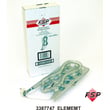
Kenmore dryers often share similar cabinets and controls across multiple series, but internal components can differ. Using the exact model number helps us match critical items like the dryer heating element WP3387747 and safety parts such as the dryer thermal fuse WP3390719 to your dryer.
Last updated: February 2026
What size is a Kenmore Model 11086983110 dryer?
Most Kenmore electric dryers like model 11086983110 are full-size units that measure about 27 inches wide, 27 to 29 inches deep, and 43 to 44 inches tall. For a perfect fit (especially depth with the vent and door swing), we recommend measuring your specific dryer and comparing it to typical clearances.
Typical dimensions and what to measure
Measure your Kenmore 11086983110 in three places: width across the cabinet, depth from the back panel to the front (not including the door handle), and height from floor to the top.
- Width: side-to-side across the cabinet
- Depth: back panel to front edge (then add space for venting)
- Height: floor to top of cabinet
- Door swing: allow extra space in front for loading
- Venting: allow extra space behind for the exhaust duct
Fit planning: quick reference table
| Measurement | Typical full-size range | What can change it |
|---|---|---|
| Width | ~27 in. | Usually fixed by cabinet size |
| Depth | ~27 to 29 in. | Vent connection, wall clearance |
| Height | ~43 to 44 in. | Leveling legs, pedestal (if used) |
Why it matters
Correct sizing prevents crushed venting (slow drying and overheating risk), avoids door clearance problems, and helps ensure you can service common wear parts like the belt drive and blower area.
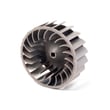
If you are troubleshooting long dry times while checking fit and venting, a clogged lint path or weak airflow is common; inspecting the lint screen and blower area can help (see screen W10120998 and dryer blower wheel WP697772).
For additional Kenmore dryer help, we also use the troubleshooting references in Kenmore 110 series electronic control model dryer error codes.
Last updated: February 2026
What is the average lifespan of 11086983110?
A Kenmore electric dryer like model 11086983110 typically lasts 13 years with normal household use and basic maintenance. Keeping airflow strong (lint screen and venting) and fixing wear parts early helps this dryer reach its full service life.
Typical lifespan and what affects it
Most electric dryers fall into a predictable range; the biggest difference is maintenance and load habits.
- Airflow care: clean the lint screen every load and keep the exhaust vent clear
- Heat stress: restricted venting overheats components and shortens life
- Mechanical wear: belts, pulleys, and seals wear faster with heavy loads
- Electrical health: loose or damaged wiring can cause intermittent heating or shutdowns
- Timely repairs: replacing a failed safety part prevents repeat damage
Parts that commonly impact longevity
If your dryer is not heating, runs hot, or stops mid-cycle, these model-compatible parts are common fixes:
| Symptom | Common part to check | What it does |
|---|---|---|
| No heat, dryer runs | Dryer thermal fuse WP3390719 | Shuts off heat (or the dryer) if overheating occurs |
| Weak heat or overheating | Dryer high-limit thermostat WP3390291 | Limits heater temperature to prevent overheating |
| Long dry times | Dryer blower wheel WP697772 | Moves air through the drum and vent |
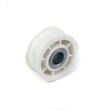
| Squealing, thumping | Dryer idler pulley 279640 | Maintains belt tension for smooth drum rotation |
Why it matters
A dryer that takes longer to dry or runs hotter than normal uses more energy and puts extra strain on the heating circuit, motor, and safety devices. Restoring airflow and replacing worn parts early is the simplest way to protect the heater and extend the life of your Kenmore 11086983110.
Last updated: March 2026