Owner’s manual


How do I tell what model my Kenmore dryer is?
Your Kenmore dryer’s model number is printed on the appliance ID tag; for Kenmore model 11076132411, the model format typically starts with 110. and is used to match the correct parts list, wiring, and cycle features. Confirm the full model number exactly as shown on the tag.
Where to find the model number tag
On most Kenmore dryers (including many 110-prefix models), we typically see the model and serial tag in one of these spots:
- Along the door opening on the dryer cabinet (door jamb)
- On the inside rim of the dryer door
- Behind the lower front access panel (on some versions)
- On the back panel (less common)
For model families covered by this guide, the model format may look like 110.76132*410; your full model number will include additional digits that identify the exact version. See the owner's manual for the model family list and general identification details.
How to read the number so you get the right parts
Write the model number exactly, then compare it to the parts list for your dryer.
- Include every digit; do not drop leading numbers
- Ignore spaces; keep the same order of digits
- If you see a dot (example: 110.7613...), record it as printed
- Use the full model number (example: 11076132411) when ordering parts
Quick examples
| What you see on the tag | What it means for parts lookup |
|---|---|
| 110.76132*410 | Model family/series shown in the manual |
| 11076132411 | Full model number used to match exact parts |
Why it matters
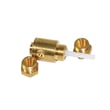
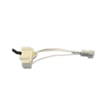
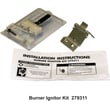
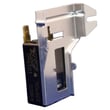
Kenmore uses multiple design platforms across different years. The correct model number ensures you get parts that fit and function correctly, such as a dryer door switch WP3406107, igniter 279311, or dryer gas valve coil kit WPW10328463 for Kenmore gas dryer model 11076132411.
Last updated: February 2026
What size is a Kenmore Model 11076132411 dryer?
Kenmore gas dryer model 11076132411 is a full-size 27-inch class dryer. Most dryers in this Kenmore 110 series measure about 27 inches wide, 27 to 29 inches deep, and 43 to 44 inches high; use the exact dimensions listed in the 11076132411 owner's manual for your installation planning.
Typical exterior dimensions you can plan around
These are the common cabinet-size ranges we see for Kenmore 110-series (Whirlpool-built) dryers like model 11076132411:
- Width: ~27 inches
- Height: ~43 to 44 inches (to the top of the cabinet)
- Depth: ~27 to 29 inches (varies with door style and controls)
- Vent size: 4-inch diameter duct (standard)
Measure your space the right way
For the most accurate fit, we recommend measuring your actual dryer and the space:
- Measure width at the widest cabinet points (left to right).
- Measure height from the floor to the top rear of the cabinet.
- Measure depth from the back panel to the front-most point (often the door handle).
- Add room for the gas line and vent connection behind the dryer.
- Confirm the dryer sits level; leveling affects clearances and door alignment.
Clearance checklist (why it matters)
Even when the cabinet fits, airflow and service access matter for drying performance and safety.
| Area | What to allow | Why it matters |
|---|---|---|
| Front | At least ~1 inch of breathing room | Helps airflow and prevents rubbing/vibration |
| Rear | Often ~5 inches in many installs | Space for venting and gas hookup |
| Closet door | Openings at top and bottom | Prevents overheating and long dry times |
(Exact clearance requirements depend on your installation style; confirm in the 11076132411 owner's manual.)
If you are stacking or building into a closet
A tight closet install is where exact dimensions matter most. If drying times are long after installation, the most common cause is restricted venting. A damaged blower wheel can also reduce airflow; if you hear rattling or poor airflow, check the dryer blower wheel WP694089.
Last updated: February 2026
What are common problems with Kenmore dryers?
Common problems with the Kenmore 11076132411 gas dryer are: it will not start, it runs but will not heat, it takes too long to dry, or it makes unusual noises. Most of these issues trace back to airflow restrictions (lint buildup), a door switch problem, or normal wear in drum support parts; see the owner's manual troubleshooting section for model-specific checks.
Most common symptoms and what usually causes them
- Dryer will not run: door not fully closed, START/PAUSE not held long enough, or a tripped breaker/blown fuse.
- Runs but no heat: gas supply valve closed, airflow restriction causing overheating, or a failed ignition or flame-sensing component.
- Long dry times: clogged lint screen, crushed/kinked vent, blocked exterior hood, or a weak blower wheel.
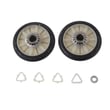
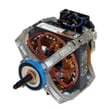
- Loud thumping/squealing/grinding: worn drum rollers, idler components, or motor pulley.
- Rattling/vibration: small object in the drum or cabinet, or loose mounting hardware.
Quick checks we recommend first (fast, no parts)
- Clean the lint screen and confirm strong airflow at the outside vent hood.
- Confirm the dryer door closes firmly and the latch engages.
- Verify the gas supply line valve is fully open (handle parallel to the pipe).
- If the dryer will not start, check both household fuses/breakers (many dryers use a 2-breaker setup).
- Listen for the sequence: motor runs, igniter glows, then flame. A break in that sequence points to the burner system.
Parts that commonly fix these problems on model 11076132411
| Symptom | Common part to check/replace | What it affects |
|---|---|---|
| Won’t start when door is shut | Dryer door switch WP3406107 | Confirms the door is closed so the motor can run |
| No heat or intermittent heat | Igniter 279311 | Lights the gas burner |
| No heat after a few minutes | Dryer gas valve coil kit WPW10328463 | Opens gas valves once coils heat up |
| No flame even though igniter glows | Dryer radiant sensor WP338906 | Detects igniter heat and helps trigger gas valve |
| Long dry times, weak airflow | Dryer blower wheel WP694089 | Moves air through the drum and vent |
Why it matters
A Kenmore gas dryer that is not venting well can overheat, shut down on safety devices, and dry slowly. Keeping airflow strong protects key components like the thermistor and thermal cut-off system and helps clothes dry faster with less wear.
Last updated: February 2026