Owner’s manual


Is Kenmore Elite high end?
Yes. Kenmore Elite is Kenmore’s premium appliance line; for the Kenmore Elite washer model 11023012102, that typically means stronger build quality, more cycle and speed options, and longer-term durability features compared to standard Kenmore models. For model-specific features and cycle details, use the owner's manual.
What “high end” means for this Kenmore Elite washer
On this three-speed automatic washer platform, “Elite” generally shows up as better performance and longer-life components, plus more refined controls and cycle choices.
Common high-end traits you’ll notice:
- More wash and spin speed selections for better fabric care
- Better load handling and balance control for smoother spinning
- More durable drive and basket system compared to entry-level units
- Serviceable design with widely available replacement parts
Quick comparison: Kenmore vs Kenmore Elite (typical)
| Feature area | Standard Kenmore (typical) | Kenmore Elite (typical) |
|---|---|---|
| Cycles and options | Basic | More choices and flexibility |
| Performance | Good | Stronger cleaning and spin results |
| Durability focus | Standard duty | More long-life design emphasis |
| Parts support | Good | Good (often more serviceable) |
Why it matters
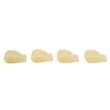
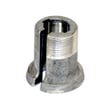
If you’re deciding whether to repair or keep this washer, “Elite” usually means it is worth maintaining when the issue is a common wear part. For example, agitation and spin complaints are often solved with parts like the agitator dog 80040 or the washer motor coupling 285753A instead of replacing the whole washer.
How to confirm what your specific washer includes
We recommend checking the feature list and cycle chart for model 11023012102:
- Review cycle descriptions and speed selections
- Match symptoms to the troubleshooting section
- Use the parts diagrams to identify the exact component name before ordering
Last updated: February 2026
How to force a Kenmore Elite washer to drain?
To force your Kenmore Elite washer model 11023012102 to drain, use the built-in Drain and Spin function: set rinse to One Rinse, choose a spin speed, turn the timer to a Spin setting, then pull the knob out so the washer drains and spins. See the owner's manual for the exact control positions.
Fastest way to drain (Drain and Spin)
Use this when the washer is full of water but still powers on.
- Set Rinse Options to One Rinse
- Set Speeds:
- Heavy Duty for fast spin
- Delicate for slow spin
- Push in the Cycle Selector (Timer) knob and turn it clockwise to any Spin setting
- Pull the knob out; the washer drains, then spins
If it will not drain: quick checks that fix most clogs
A no-drain problem is usually a kinked hose, a blocked pump, or a failed lid switch.
- Make sure the drain hose is not kinked or crushed behind the washer
- Confirm the drain hose is installed with the correct hooked end and an air gap (not shoved tight into the standpipe)
- Check for a clog at the tub-to-pump hose and pump inlet
- If the washer will not spin or drain with the lid closed, test the lid switch; a failed switch can stop draining
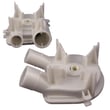
- If you hear the motor running but water does not move, the pump impeller may be jammed; replace the washer drain pump WP3363394
What to expect (normal vs. not normal)
| What you see | Usually means | What we recommend |
|---|---|---|
| Drains, then spins | Normal operation | No repair needed |
| Hums but will not drain | Pump jam or blockage | Check hoses, then replace pump if needed |
| Won’t drain and won’t spin | Lid switch or drive issue | Check lid switch first |
| Slow drain | Partial clog or restricted hose | Clear restriction, verify hose routing |
Why it matters
Forcing a drain the right way protects the gear case, clutch, and drive system from strain. It also prevents standing water that can cause odors and leave clothes overly wet.
Last updated: February 2026
How to hard reset kenmore washer?
For Kenmore Elite washer model 11023012102, a “hard reset” is a simple power reset: unplug the washer (or switch off the breaker) for 1 minute, then restore power and restart the cycle. This clears many temporary control and cycle issues without changing your wash settings.
Quick reset steps (safe for most situations)
- Turn the Cycle Selector (timer) knob to Off.
- Unplug the washer for 60 seconds.
- Plug it back in.
- Close the lid fully.
- Select a cycle and pull out the Cycle Selector (timer) knob to start.
If you need the exact start/stop procedure for your timer-style controls, follow the steps in the owner's manual.
If the washer still will not start after a reset
These checks solve the most common “no start” complaints on this style of Kenmore top-load washer:
- Confirm the lid is closing firmly; a failed lid switch can prevent agitation or spin.
- Make sure the timer knob is pulled out fully (pushed in stops the washer).
- Verify the outlet has power (test with a lamp).
- Check that the load is not severely off-balance; an unbalanced load can stop or limit spinning.
- If the washer drains but will not spin or agitate, inspect the drive system components.
Common parts related to “won’t start” or “won’t spin” symptoms
| Symptom you see | Common cause | Part on this model page |
|---|---|---|
| No spin or intermittent operation with lid closed | Lid switch not closing circuit | Washer lid switch WP8054980 |
| Drains slowly or will not drain | Pump issue or obstruction | Washer drain pump WP3363394 |
| Agitates poorly or makes ratcheting noise | Worn agitator dogs | Agitator dog 80040 |
Why it matters
Resetting power is a fast way to clear a stuck timer position or a temporary electrical glitch. If the problem returns right away, it usually points to a mechanical issue (lid switch, drain pump, coupling, clutch) that a reset will not fix.
Last updated: February 2026
What is the average lifespan of a Kenmore washer?
Most Kenmore washers last 10 to 15 years. Your Kenmore Elite washer model 11023012102 is built for long-term use, and regular care (proper loading, cleaning, and keeping it level) is what most often determines whether it reaches the high end of that range.
Typical lifespan and what affects it
A washer’s service life is mainly driven by how hard it’s used and how well it’s maintained.
- Loads per week: more cycles equals more wear on the drive system and pump
- Overloading: strains the motor, coupling, clutch, and gearcase
- Out-of-balance spinning: accelerates wear on suspension and basket components
- Water quality: sediment can shorten valve and pump life
- Preventive care: cleaning and hose checks reduce leaks and failures (see the owner's manual)
What “end of life” usually looks like
These symptoms often show up as a washer approaches the end of its typical lifespan:
- Won’t spin or agitates weakly
- Loud grinding or banging during spin
- Leaks from the tub area or pump
- Won’t drain consistently
- Burning smell or repeated tripped breaker
Quick symptom-to-part map (common on top-load designs)
| Symptom | Common area to check | Example part on this model page |
|---|---|---|
| Agitator slips or won’t “grab” | Agitator dogs/agitator | Agitator dog 80040 |
| Won’t drain or drains slowly | Drain pump, hoses | Washer drain pump WP3363394 |
| Motor runs but won’t agitate/spin | Motor coupling/drive | Washer motor coupling 285753A |
| Loud noise, poor spin, oil leak | Gearcase/drive train | Gear case 3360629 |
Why it matters
Knowing the 10 to 15 year average helps you decide whether to repair or plan a replacement. If your 11023012102 is within that range and the issue is a common wear part (like a coupling, drain pump, or agitator dogs), repairs often restore normal washing performance.
Last updated: February 2026
Is it worth repairing a Kenmore washing machine?
Yes; repairing a Kenmore Elite washer like model 11023012102 is worth it when the fix restores reliable washing and spinning for less than replacing the machine. Common wear items (agitator, coupling, drain pump, lid switch) are straightforward repairs that often extend the washer’s usable life.
How we decide if repair makes sense
We use a simple cost and condition check:
- If the washer cabinet and tub are solid (no major rust-through or structural damage), repair is usually the best value.
- If the problem is a common wear part, repair is typically cost-effective.
- If multiple major systems are failing at once (drive system plus leaks plus controls), replacement can make more sense.
Quick rule of thumb
- Repair when the total repair cost is less than about 50% of the cost of a comparable replacement washer.
- Replace when the repair involves multiple high-cost assemblies and the washer has other symptoms (noise, leaks, poor spin).
Repairs that are commonly “worth it” on this model
These parts often fix the most common complaints (no agitation, won’t drain, won’t spin, lid won’t sense closed):
- Agitator dog 80040 (stripped dogs can cause weak or no agitation)
- Washer motor coupling 285753A (broken coupling can stop agitation and spin)
- Washer drain pump WP3363394 (clogs or pump failure can cause no-drain)
- Washer lid switch WP8054980 (failed switch can prevent spin or drain)
Repair impact comparison
| Symptom | Likely area | Typical outcome after repair |
|---|---|---|
| Agitator moves poorly | Agitator components | Restores normal wash action |
| Won’t spin or agitate | Drive coupling | Restores drive function |
| Won’t drain | Drain pump or hose | Restores drain and spin |
| Stops when lid closes or won’t start | Lid switch | Restores cycle operation |
Why it matters
A targeted repair can restore performance and prevent secondary damage. For example, a no-drain issue can leave water in the tub and strain the drive system during spin attempts.
What to check before you buy parts
Use the troubleshooting and care sections in the owner's manual to confirm symptoms and safe service steps.
- Unplug the washer before accessing internal parts.
- Verify the lid closes and latches normally.
- Check for standing water (drain issue) versus no agitation (drive/agitator issue).
- Look for oil leaks or loud grinding (gear case concerns).
Last updated: February 2026