Owner’s manual
 View engine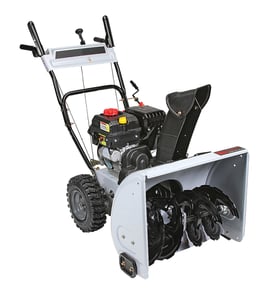




How to find model number on snowblower?
On the Craftsman snow thrower model 536885211, the model number is printed on the rating label (model tag). On many units like this, the label is typically on the rear of the machine between the wheels or on the side of the frame near the auger housing; confirm the exact location using the Craftsman 536885211 owner’s manual.
Where to look on the machine
Check these common tag locations first:
- Rear of the snowblower between the wheels
- Side of the frame near the auger housing
- Near the engine area under or near the top cover
- On the handle support area (uprights)
- On the auger housing (side panel)
What to write down (so you get the right parts)
For Craftsman equipment, we recommend recording:
- Model number (for this unit: 536885211)
- Any serial number on the same label (if present)
- Engine information from the engine label (helpful for engine-specific parts)
| Item | Example | Why it matters |
|---|---|---|
| Model number | 536885211 | Matches the correct parts diagrams and part fit |
| Serial number | Varies by unit | Helps identify production run differences |
| Engine label info | Varies by engine | Helps match tune-up and engine components |
Why it matters
Snowblower parts can vary even when machines look similar. Using the exact model number helps us match the correct auger, belt, ignition switch, and hardware so you avoid ordering a part that does not fit.
Last updated: January 2026
Is it cheaper to repair or replace a snowblower?
For the Craftsman snow thrower model 536885211, it’s usually cheaper to repair when the problem is a normal wear item (belt, cable, scraper, ignition switch) and the machine is otherwise solid; it’s usually smarter to replace when the engine or major drive components need repeated, high-cost work.
A practical cost rule we use
A good decision point is the 50% rule:
- If the total repair estimate is under ~50% of the cost of a comparable new snowblower, repair is typically the better value.
- If repairs are over ~50%, replacement usually makes more financial sense.
Repairs that are typically worth doing
These are common, lower-cost fixes that often restore performance on this model:
- Replace a worn scraper or rubber contact parts (improves clearing and self-propel action)
- Fix chute control issues (binding, misadjustment, worn guide)
- Replace a worn idler pulley or related hardware
- Replace an ignition switch if starting is inconsistent
- Replace a stretched or damaged control cable
Model-specific help: the 536885211 owner’s manual includes troubleshooting and service steps like belt cover removal, chute adjustment, and auger control cable adjustment.
When replacement is usually the better choice
Consider replacing the snowblower if you’re seeing any of these patterns:
- Frequent breakdowns (multiple repairs per season)
- Major engine problems (hard starting plus low power, severe vibration, internal damage)
- Structural wear (auger housing damage, excessive rust-through, repeated fastener failures)
- Multiple systems failing at once (drive, auger, chute, and starting)
Quick comparison
| Situation | Usually cheaper | Why |
|---|---|---|
| One worn part, otherwise runs well | Repair | Parts and labor stay predictable |
| Repeated issues each season | Replace | Downtime and cumulative cost add up |
| Major engine or drive overhaul needed | Replace | High labor and uncertain long-term reliability |
Why it matters
A well-timed repair can keep your Craftsman 536885211 clearing snow reliably for years; but once you’re paying for major work repeatedly, replacement often lowers your total cost per season.
Last updated: January 2026
What is the lifespan of a snowblower?
A gas snowblower like the Craftsman 536885211 typically lasts 15 to 20 years with normal residential use and consistent maintenance. The biggest lifespan drivers are off-season storage (fuel care), keeping fasteners tight, and replacing wear items before they cause bigger damage; see the Craftsman 536885211 owner’s manual.
What most affects lifespan (and what we recommend)
- Use fresh, properly mixed fuel for this 2-cycle model (40:1 fuel/oil mix).
- Clear packed snow and slush off the auger housing after each use to prevent freeze-up.
- Tighten loose screws and nuts regularly.
- Keep the chute controls lubricated as directed.
- Address vibration immediately; it often points to loose hardware or damaged rotating parts.
Typical lifespan ranges
| Snowblower type | Typical lifespan | Notes |
|---|---|---|
| Gas (single-stage or two-stage) | 15 to 20 years | Longest life when fuel system is protected during storage |
| Corded electric | 10 to 15 years | Motor and switch wear are common end-of-life drivers |
| Battery electric | 10 to 15 years | Tool can last; batteries often need replacement sooner |
Wear items that can shorten life if ignored
Even a strong engine can be taken out early by neglected wear parts. On the Craftsman 536885211, common examples include:
- Ignition and starting components (intermittent no-start issues)
- Cables and controls (poor engagement, creeping auger)
- Bearings and rotating supports (noise, wobble, vibration)
- Rubber paddles/scraper system (reduced clearing performance on single-stage units)
If you are chasing a no-start or intermittent shutoff, the ignition switch 56992MA is one of the model-specific parts we often see replaced when the key switch fails.
Why it matters
A snowblower that is maintained for storage and kept properly adjusted usually costs less over time because it avoids fuel-system problems, belt or auger damage from overload, and vibration-related failures that can cascade into larger repairs.
Last updated: January 2026
How to tell if a snowblower auger belt is bad?
On the Craftsman snow thrower model 536885211, a bad auger drive belt usually shows up as slipping (auger slows or stops under load) or visible belt damage after you remove the belt cover. If the unit won’t discharge snow well or you smell burning rubber, inspect the belt and belt path using the 536885211 owner’s manual.
Quick signs the auger belt is failing
- Auger turns slowly, stops, or surges when you squeeze the auger control bar
- Snow discharge is weak even with the engine running normally
- Burning rubber smell or belt squeal during operation
- Belt looks glazed (shiny), cracked, frayed, or has missing chunks
- Belt is stretched and rides low in the pulleys (more slip)
What to check on this model (belt cover off)
The 536885211 uses an auger drive belt system with an idler pulley, brake pad, and belt guide. With the engine off and key removed, remove the belt cover and check:
- Belt condition and tension (no glazing, cracks, or heavy fraying)
- Idler pulley spins smoothly and isn’t wobbly (a seized pulley can burn a belt)
- Belt guide clearance and alignment
- Brake pad gap and contact (a dragging brake can cause slip and heat)
If the idler pulley is noisy, stiff, or loose, replacing the idler pulley 48924MA is often part of a complete belt-failure fix.
Symptom-to-cause cheat sheet
| What you notice | Most likely belt-related cause | What we recommend |
|---|---|---|
| Auger won’t turn at all | Belt broken or off pulleys | Inspect belt routing and replace belt if damaged |
| Auger turns but won’t throw snow | Belt slipping or stretched | Inspect for glazing and tension issues |
| Burning smell | Belt slipping, brake dragging, or pulley issue | Inspect belt, brake pad gap, and idler pulley |
| Auger “creeps” after releasing control | Cable out of adjustment (not always belt) | Adjust auger control cable per manual |
Why it matters
A slipping auger belt reduces throwing distance and can overheat, which can damage the belt, glaze pulleys, and accelerate wear on the idler pulley and brake components.
Last updated: January 2026