Can a front tine tiller break new ground?
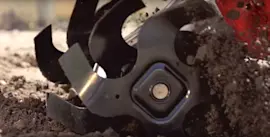
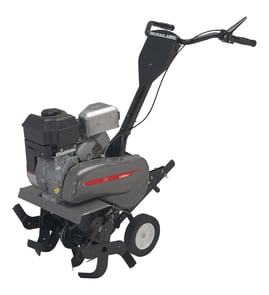
Yes, a front-tine tiller like the Noma F1016-110 can break new ground, but it is slower and more physically demanding than using a rear-tine tiller. In hard, grassy, or compacted soil, front tines often “walk” or bounce forward instead of digging deep on the first pass.
Best way to break new ground with a front-tine tiller
Use a step-down approach so the tines can gradually cut and mix soil instead of trying to reach full depth immediately.
- Mow or knock down tall weeds first; remove rocks, wire, and roots you can see.
- Start at the shallowest depth setting; make 1 to 2 passes.
- Make the next passes slightly deeper each time until you reach your target depth.
- Work in short sections; overlap each pass a few inches.
- If it jumps forward, reduce depth and slow your forward push.
- For sod, consider slicing strips with a shovel first, then till in stages.
What results to expect (typical)
Front-tine tillers are great for gardens that are already somewhat workable; for brand-new sod, expect multiple passes.
| Soil condition | What you will see | What to do next |
|---|---|---|
| Loose or previously worked soil | Steady digging and mixing | Increase depth gradually |
| Dry, compacted soil | Skipping, bouncing, shallow churn | Water lightly, then till shallow first |
| Thick sod / heavy roots | Tines grab and the unit surges | Cut sod, remove roots, till in stages |
| Rocky soil | Sudden stops, poor mixing | Rake out rocks between passes |
Why it matters
Breaking new ground too aggressively can cause poor till depth, uneven seedbeds, and extra wear on belts, tines, and the drive system. A gradual approach protects your tiller and produces a better planting bed.
Helpful DIY reference
If you are also troubleshooting electrical no-start issues (common after storage), use how to tell if a fuse is blown to quickly rule out a simple power problem before deeper diagnostics.
Last updated: February 2026
What tiller is made in the USA?
Several tiller brands build at least some models in the USA, but it varies by model and production run. For a Noma F1016-110 front-tine tiller, the most reliable way to confirm origin is to check the ID plate and any original paperwork that came with your specific unit.
USA-made tiller brands you can check
These brands are commonly associated with USA manufacturing for certain tillers or cultivators (always confirm on the exact model you are buying):
- Mantis: lightweight tillers and cultivators
- MacKissic (Merry Tiller): heavier-duty garden tillers
- Northwest Tillers: heavy-duty farm and acreage tillers
- Power Dog: garden and commercial-style tillers
How to confirm “Made in USA” on a specific tiller
We recommend verifying using the machine itself, not just a brand name.
- Look for a data plate on the frame, engine mount area, or handle support
- Check for a country-of-origin statement on the plate or decal
- Match the model number and serial number to your paperwork
- If the engine is separate-branded (common on tillers), check the engine tag too
- If you are shopping, look for the origin statement on the carton or spec label
What “Made in USA” can mean (quick guide)
Country-of-origin wording is not always the same across brands.
| Label wording you may see | What it usually indicates | What to do next |
|---|---|---|
| Made in USA | Built in the USA (may still include some imported parts) | Confirm on the model’s ID plate |
| Assembled in USA | Final assembly in the USA | Ask where major components are made |
| Made in USA with global materials | USA build using domestic and imported parts | Decide if assembly location is your priority |
Why it matters
Country of origin can affect parts sourcing, hardware standards, and long-term serviceability. For older equipment like the Noma F1016-110, confirming the exact model and serial helps us match the right belts, tines, and drive components.
For help identifying your exact model information before ordering, use how to find your appliance model number (and what it means for parts).
Last updated: February 2026
How to get a tiller to start?
To start your Noma F1016-110 front-tine tiller, set the engine switch to ON, use CHOKE for a cold engine, and prime the carburetor before pulling the starter rope. Most no-start issues come from stale fuel, incorrect choke/prime settings, or a fouled spark plug.
Quick start steps (cold engine)
- Move the tiller to a clear, level spot; keep tines off the ground.
- Turn the engine switch to ON.
- Move the choke lever to CHOKE/CLOSED.
- Press the primer bulb 3 to 5 times (stop if fuel is visible in the primer line/bulb).
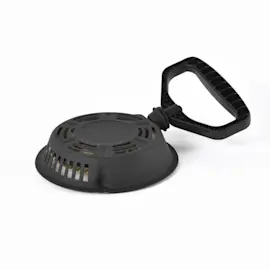
- Pull the recoil starter briskly.
- As the engine fires, move choke toward RUN/OPEN gradually.
If it still will not start
- Fuel: Drain old gas and refill with fresh fuel (most small engines run best on fuel less than 30 days old). Open the fuel shutoff valve if equipped.
- Spark plug: Remove and inspect; clean or replace if the tip is black/wet. Reconnect the plug wire firmly.
- Flooded engine: Set choke to RUN/OPEN, do not prime, hold throttle open (if equipped), and pull the starter several times.
- Air filter: Check for heavy dirt or oil saturation; a clogged filter can prevent starting.
- Ignition switch/wiring: Make sure the stop switch is not shorting to ground; look for loose or damaged wires.
Fast checks by symptom
| What you notice | Most likely cause | What to do |
|---|---|---|
| No pop at all | Switch OFF, bad plug, kill wire issue | Verify ON, check plug and wire connections |
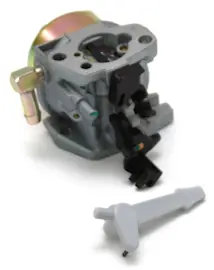
| Starts then dies | Choke left on, stale fuel, dirty carb | Open choke, replace fuel, clean carburetor |
| Strong fuel smell | Flooded | Choke OPEN, no prime, pull to clear |
Why it matters
Correct choke and priming settings get the right fuel-air mix for starting. Using fresh fuel and a clean spark plug prevents hard-starting, backfiring, and repeated pull-start wear.
For more DIY help with electrical checks, use our guide: how to use a multimeter to test electrical parts video.
Last updated: February 2026
Why won't my tiller tines turn?
If your Noma F1016-110 tiller engine runs but the tines will not turn, the problem is usually in the drive system: a broken or loose belt, a failed shear pin/drive pin, or internal damage in the tine drive (coupler or gearbox). Fixing the drive path restores tine rotation.
Quick checks (most common causes)
- Shut the engine off and remove the spark plug wire before inspecting anything near the tines.
- Confirm the tine engagement control is actually moving the engagement linkage.
- Check for a missing, bent, or sheared tine drive pin (some designs use a shear pin to protect the gearbox).
- Inspect the drive belt for breakage, glazing, or slipping (burnt rubber smell is a strong clue).
- Look for debris wrapped around the tine shaft (wire, roots, twine) that can jam rotation.
- Check for abnormal play in the tine shaft (wobble or back-and-forth movement can indicate a damaged coupler or gearbox).
What to inspect based on symptoms
| Symptom | Most likely cause | What we recommend |
|---|---|---|
| Tines never move, no noise | Broken belt or missing shear pin | Inspect belt path and tine shaft pin first |
| Tines try to move, then stop | Belt slipping or jammed tines | Clear debris; check belt tension and condition |
| Grinding/clicking from tine area | Gearbox or coupler damage | Stop using it; inspect drive housing for damaged gears |
| Tines move by hand with engine off too easily | Coupling failure or stripped drive | Check coupler/gearbox connection to tine shaft |
Why it matters
A front-tine tiller drive is designed to sacrifice a shear pin or slip a belt before expensive parts fail. Continuing to run the engine with a slipping belt or damaged gearbox can quickly turn a small repair into a larger one.
Parts and repair planning
Because we do not have model-specific part pages listed here for the F1016-110, match parts by confirming what your tiller uses (belt size, pin diameter, gearbox style) and then search by model number on Sears PartsDirect. For electrical checks on any safety switches or wiring (if equipped), use a meter and follow safe testing practices in how to use a multimeter to test electrical parts video.
Last updated: February 2026
What would cause a tiller to not start?
A Noma F1016-110 front-tine tiller usually won’t start because it’s missing spark, fuel delivery, or compression. Start with the fast checks (kill switch, fresh fuel, spark test), then move to carburetor, air intake, and engine mechanical issues.
Quick checks first (most common)
- Confirm the engine stop/kill switch is in the RUN/ON position.
- Make sure the fuel is fresh (old fuel can prevent starting even if the carburetor looks clean).
- Set the choke for a cold start; open it gradually as the engine tries to fire.
- Verify the throttle is set to START/FAST (if equipped).
- Check the oil level; some small engines have low-oil shutdown systems.
Spark problems (ignition)
If the engine cranks but never “catches,” verify spark:
- Remove the spark plug, reconnect the plug wire, ground the plug to metal, and crank.
- No spark often points to a bad spark plug, ignition coil, damaged plug wire, or a grounded kill-switch wire.
Fuel problems (carburetion)
Even with a cleaned carburetor, these issues stop starting:
- Clogged fuel cap vent (creates vacuum in the tank)
- Cracked fuel line or blocked fuel filter (if equipped)
- Stuck float/needle or plugged main jet in the carburetor
- Water in fuel (causes sputter or no-start)
Air and compression checks
- A heavily clogged air filter can flood the engine; try starting briefly with the filter removed (then reinstall).
- If it has spark and fuel but still won’t start, check for low compression (worn rings, stuck valve, head gasket leak).
Symptom-to-cause guide
| What you see | Most likely cause | What to do next |
|---|---|---|
| No pop at all | No spark, kill switch grounded | Test spark, inspect kill wire |
| Starts on starting fluid then dies | Fuel delivery/carb issue | Check fuel flow, clean carb jets |
| Strong fuel smell, wet plug | Flooded engine | Open choke, dry/replace plug |
| Pull cord feels “too easy” | Low compression | Compression test, inspect valves |
Why it matters
A no-start is almost always a simple “spark vs. fuel vs. compression” diagnosis. Doing the quick checks in order prevents unnecessary carburetor work and helps you target the right repair.
For help identifying the correct replacement parts by exact model labeling, use how to find your appliance model number (and what it means for parts).
Last updated: February 2026