Owner’s manual
 Error Codes


What size is Kenmore refrigerator model 79578554800?
Kenmore refrigerator model 79578554800 is a Kenmore Elite bottom-freezer refrigerator in the 795.7854* model family. The exact exterior dimensions (width, depth, height) are listed in the 79578554800 owner's manual; this model family is commonly a 33-inch class cabinet with roughly 22 to 23 cu. ft. capacity.
How to confirm the exact dimensions for 79578554800
Use the model-specific specs section in the 79578554800 owner's manual. When measuring at home, we recommend checking both the cabinet and the “installed” footprint.
- Measure width at the widest point (often the hinge side)
- Measure height from floor to top of hinge cover
- Measure depth in two ways: cabinet only, and to the front of handles
- Allow clearance for door swing and drawer pull-out
- Confirm the opening is level; an unlevel floor changes door alignment and fit
Typical size ranges for this Kenmore Elite bottom-freezer style
These ranges help with planning when you do not have the spec page in front of you.
| Measurement | Typical range | What can change it |
|---|---|---|
| Width | 32 7/8 to 33 inches | hinge caps, trim |
| Height | 67 to 70 inches | leveling legs, hinge cover |
| Depth | 30 to 35 inches | handles, door curvature |
| Capacity | 22 to 23 cu. ft. | model variation within series |
Why it matters
Correct sizing prevents delivery surprises and helps avoid airflow and door-clearance problems that can reduce cooling performance and cause noise or vibration.
Last updated: January 2026
What is the bottom part of a refrigerator called?
On Kenmore Elite model 79578554800, the bottom area is commonly called the machine compartment (or base area). It houses key cooling and airflow components and is also where you will find the base grille area and space underneath the cabinet.
Common names you may hear
Depending on what you are pointing to, the “bottom part” can mean a few different things:
- Machine compartment: the lower rear area where major cooling components live
- Base grille: the vented grille at the bottom front that helps with airflow
- Toe grille / kick plate: another common name for the base grille
- Drain pan area: the space underneath where defrost water can evaporate
- Bottom freezer section: on a bottom-mount unit, this is the freezer drawer area
For model-specific diagrams and terminology, use the 79578554800 owner's manual.
What’s typically located in the bottom area
Most bottom-mount refrigerators place several important parts low in the cabinet for cooling efficiency and service access.
- Compressor (part of the sealed refrigeration system)
- Condenser coil and condenser fan (heat removal)
- Drain pan (collects defrost water)
- Base grille and air passages (helps ventilation)
Quick reference: “bottom part” by location
| If you mean… | Common name | What it does |
|---|---|---|
| Bottom front vent | Base grille / toe grille | Lets air in and out for proper cooling |
| Bottom rear behind cover | Machine compartment | Holds compressor and other cooling components |
| Under the cabinet | Drain pan area | Collects and evaporates defrost water |
| Bottom drawer | Freezer drawer | Stores frozen food |
Why it matters
Using the right name helps you find the correct diagram, cleaning steps, or replacement part faster. It also matters for safety because the manual warns to keep hands and objects out of the base grille and bottom area while the refrigerator is powered.
Last updated: January 2026
Why is my Kenmore Elite refrigerator leaking water out of the bottom?
On Kenmore Elite model 79578554800, water leaking from the bottom is usually caused by defrost water not draining correctly (a clogged or frozen defrost drain) or a leak in the water supply/dispenser tubing or valve connections. Use the steps below and confirm access points in the 79578554800 owner's manual.
Most common causes (and what to check first)
- Clogged defrost drain: Meltwater backs up, then spills into the fresh food section or down to the floor.
- Cracked or loose water tubing: Leaks can run down the cabinet and appear as a bottom leak.
- Leaking inlet valve or fittings: A slow drip at the rear connection can pool underneath.
- Drain tube issue: A split or misrouted drain tube can dump water near the base.
Quick diagnostic checklist
- Look at the water source: Is it clear water (often water line) or does it appear after a defrost cycle (often drain issue)?
- Inspect the back lower area: Check the water line connection and valve area for moisture.
- Check the drain pan: A normal amount of water in the pan is expected; overflowing usually points to a drain problem.
- Check door sealing and frost: Heavy frost can indicate airflow or defrost issues that lead to drain freezing.
Parts that commonly relate to bottom leaks on this model
| Symptom you see | Likely area | Example part for model 79578554800 |
|---|---|---|
| Water appears after defrosting, ice buildup near rear floor | Defrost drain path | Refrigerator drain tube 5251JA3003D |
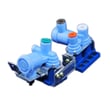
| Water near rear bottom, especially when dispenser/ice maker is used | Water supply system | Lg refrigerator water inlet valve 5221JB2006K |
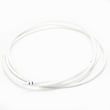
| Drips or wetness along tubing runs | Water line/tubing | Refrigerator water tubing MJU62070602 |
Why it matters
A small leak can quickly turn into floor damage, ice buildup in the freezer, or intermittent ice maker and water dispenser problems. Fixing the drain path or tightening a fitting early usually prevents repeat leaks.
Safety and setup notes we follow
- Unplug the refrigerator before inspecting electrical components.
- Turn off the household water supply before disconnecting any tubing.
- After reconnecting, turn water back on and tighten any connections that leak (the manual emphasizes checking for leaks during water line connection).
Last updated: January 2026
What are the common problems with Kenmore Elite refrigerators?
Common problems on the Kenmore Elite 79578554800 bottom-mount refrigerator include weak or no cooling, frost buildup in the freezer, water leaks (often from a drain issue), doors not sealing or closing correctly, and unusual fan or compressor noises. Many fixes start with cleaning, leveling, and checking airflow per the 79578554800 owner's manual.
Most common symptoms and what usually causes them
- Not cooling well: dirty condenser coils, evaporator fan issue, blocked vents, or door left ajar
- Frost or ice crystals on food: door not closing properly or frequent door openings (warm, humid air entering)
- Water puddles: clogged or misrouted drain path; damaged drain tube
- Door won’t close or pops open: refrigerator not level, bins or shelves out of position, sticky/dirty gaskets
- No interior light or light stays on: door switch problem
Quick checks we recommend first (fast, no parts)
- Confirm door closure: push doors firmly shut; rearrange food packages and bins so nothing blocks the door.
- Clean condenser coils: dirty coils reduce heat transfer and make the compressor work harder (the manual calls this out in Care and Cleaning).
- Level the refrigerator: an unlevel cabinet can cause door alignment and sealing problems.
- Inspect and clean door gaskets: clean the gasket and the surface it touches; if sticking, the manual recommends a thin coat of paraffin wax after cleaning.
Parts that commonly relate to these problems (for this model)
| Symptom | Likely area | Example part for 79578554800 |
|---|---|---|
| Light issues or door-ajar behavior | Door switch | Lg refrigerator door switch 6600JB1010A |
| Water dispenser or ice maker not filling | Water inlet valve | Lg refrigerator water inlet valve 5221JB2006K |
| Water leaking inside or under unit | Drain system | Refrigerator drain tube 5251JA3003D |
| Frost buildup, warm temps | Defrost system | Lg refrigerator defrost heater 5300JK1005D |
Why it matters
Cooling and frost complaints often trace back to airflow and door sealing. Fixing simple issues like dirty condenser coils, poor leveling, or a door that is not fully closed can restore normal temperatures and reduce compressor run time.
Last updated: January 2026