 Owner’s manual


How do I reset my Kenmore Elite dryer?
Unplug your Kenmore dryer model 11060012002 for 5 minutes, then plug it back in and try a cycle. This power reset clears many temporary control and motor-start issues; if it still will not run, use the troubleshooting steps in the 11060012002 owner's manual.
Quick reset and restart checklist
- Turn the dryer OFF.
- Unplug the power cord (or switch the breaker OFF).
- Wait 5 minutes.
- Restore power.
- Close the door fully, then press PUSH TO START firmly.
- If it is coin-operated, confirm the meter-case service door is closed and locked.
If it still will not start (most common causes)
A reset will not fix an open safety switch, blown thermal device, or a drive problem. Check these items next:
- Door not registering closed: test the door switch; replace if it fails continuity testing.
- Overheating safety opened: inspect venting and test the thermal cut-off components.
- No airflow restriction check: clean the lint screen area and confirm the exhaust vent is not crushed or clogged.
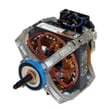
- Drive system jammed: a seized roller or idler can prevent the motor from starting.
Parts that commonly solve “won’t start” after a reset
| Symptom | What to check | Example part for this model |
|---|---|---|
| Push-to-start does nothing, door must be shut | Door switch | Door switch WP3406105 |
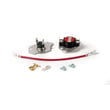
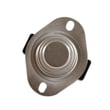
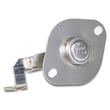
| Runs briefly then stops, or overheats | Thermal cut-off/high-limit circuit | Dryer thermal cut-off fuse kit 279816 |
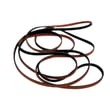
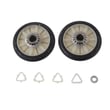
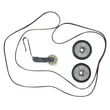
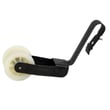
| Hums but drum will not turn | Belt and idler/rollers | Dryer drum belt 341241 or dryer repair kit 4392065 |
Why it matters
On a commercial Kenmore dryer like 11060012002, a simple power reset is a fast first step, but repeated no-start problems usually point to a safety device (door switch, thermal cut-off) or airflow/drive wear. Fixing the root cause prevents downtime and repeat shutdowns.
Last updated: February 2026
How to find the exact model of dryer on a dryer?
To find the exact model of your Kenmore dryer, look for the model and rating label on the appliance itself (not the owner’s manual). On model 11060012002, the label is typically on the back of the dryer cabinet; write the full number exactly as shown, including all digits.
Where to look on the dryer
Check these common label locations first:
- Back of the dryer cabinet (often near the center or upper area)
- Inside the door opening on the cabinet frame
- Behind the lower access panel (if your unit has one)
- Inside the meter-case area on commercial/coin models (after opening the access door)
For diagrams and access details specific to this commercial dryer, use the 11060012002 owner's manual.
How to record the model number correctly
Use this quick checklist so you get the right parts the first time:
- Copy the model number exactly (for example, 11060012002, not a shortened version)
- Also record the serial number from the same label
- Take a clear photo of the label in case the print is worn
- If the label is hard to read, use a flashlight and wipe dust off gently
Model number vs. other numbers (what to ignore)
| What you see | What it is | Use it for parts? |
|---|---|---|
| Model number (example: 11060012002) | Exact dryer identity | Yes |
| Serial number | Production identifier | Sometimes |
| Timer/coin box key number | Key/lock identifier | No |
| Part numbers on components | Individual part IDs | No |
Why it matters
Kenmore dryers often share a similar look across multiple model numbers, but parts like a door switch, thermal cut-off, or drum belt can vary by model. Using the exact model number ensures the correct match for items such as the dryer drum belt 341241 and other drive or heating components.
Last updated: February 2026
What causes dryer heating element failure?
In the Kenmore 11060012002 commercial dryer, heating element failure is most often caused by restricted airflow (lint-clogged exhaust), overheating from poor cycling control, or an electrical problem such as a broken element wire or a grounded/shorted circuit. Use the wiring and heat checks in the 11060012002 owner's manual to pinpoint the cause.
Common causes (and what to check first)
- Blocked exhaust vent or lint buildup: A clogged vent makes the heater run hotter and longer than designed.
- Lint accumulation inside the cabinet (blower or motor area): Reduces airflow and raises internal temperatures.
- Failed temperature control: A bad operating thermostat or high-limit thermostat can cause overheating or improper cycling.
- Broken element wire or loose connection: The manual specifically calls out checking for a broken element wire.
- Grounded wiring or component: A grounded control panel or harness can create abnormal current flow and damage heater circuits.
Quick diagnostic path for “no heat”
- Confirm airflow: Clean the lint screen; inspect the full exhaust run for blockage or crushed ducting.
- Verify power supply: Check line fuses/switches; many electric dryers can run but not heat if one leg of power is lost.
- Inspect heater wiring: Look for burnt terminals, loose spade connectors, or a broken element wire.
- Test thermostats for continuity: The manual procedure commonly uses a continuity test (or a temporary jumper test during diagnosis).
- Check for grounding/shorts: Inspect the main wiring harness at the element terminals for signs of rubbing, scorching, or contact with metal.
Parts that commonly relate to overheating and heater damage
| Symptom | Most likely area | Example part for this model |
|---|---|---|
| No heat, dryer runs | Heater circuit safety opened | Dryer thermal cut-off fuse kit 279816 |
| Overheats, cycles oddly | Temperature regulation | Dryer operating thermostat WP3387134 |
| Shuts heat down too late | Safety limit control | Dryer high-limit thermostat WP3977767 |
Why it matters
A heating element usually fails as a result of another problem, especially airflow restriction. Fixing the root cause (venting, lint buildup, thermostat cycling, wiring condition) helps prevent repeat element and fuse failures and reduces fire risk.
Last updated: February 2026
What does E1 mean on a Kenmore Elite dryer?
On Kenmore dryers like model 11060012002, an E1 code points to an exhaust temperature problem (the dryer senses the exhaust air temperature is out of the normal range). The most common causes are a restricted venting system or a failing temperature sensor circuit.
What to check first (fast, most common fixes)
- Clean the lint screen and confirm strong airflow at the outside vent hood.
- Inspect the entire vent run for kinks, crushed flex duct, lint buildup, or a stuck vent flap.
- Make sure the dryer is not pushed too tightly against the wall (it can pinch the exhaust).
- If installed in a closet or recessed area, confirm the installation clearances and venting match the requirements in the 11060012002 owner’s manual.
- Run a timed dry cycle with the vent disconnected briefly (only long enough to test airflow); if the code stops, the house venting is the issue.
Parts that commonly relate to exhaust temperature sensing
If airflow is good and E1 returns, the temperature control parts in the heater/exhaust circuit are the next place to look.
- Operating thermostat: regulates normal cycling temperature (see dryer operating thermostat WP3387134).
- High-limit thermostat: opens if the heater area overheats.
- Thermal cut-off: opens if severe overheating occurs.
Quick symptom guide
| What you notice | Most likely issue | What to do |
|---|---|---|
| Weak airflow, long dry times, hot cabinet | Vent restriction | Clean/shorten venting, replace crushed duct |
| E1 appears soon after start, airflow seems normal | Sensor/thermostat circuit issue | Test thermostats and wiring with a meter |
| Dryer overheats, then stops heating | Safety device opened | Check venting first, then test safety parts |
Why it matters
E1 is often the dryer warning you that heat is not being carried out correctly. Fixing venting and temperature-control issues helps prevent repeated shutdowns, long dry times, and overheating stress on the heater and motor.
Last updated: February 2026
What size is a Kenmore Model 11060012002 dryer?
The Kenmore commercial dryer model 11060012002 is a full-size, 27-inch class dryer. Most dryers in this design family measure about 27 inches wide, about 27 to 29 inches deep, and about 43 to 44 inches tall; confirm the exact cabinet dimensions in the 11060012002 owner's manual.
Typical dimensions you can expect
These are the most common exterior size ranges for a Kenmore 110-style (Whirlpool-built) dryer like model 11060012002:
- Width: ~27 inches
- Depth: ~27 to 29 inches (often deeper with the vent elbow installed)
- Height: ~43 to 44 inches (to the top of the cabinet)
- Exhaust outlet: rear outlet location (affects depth and clearance planning)
How to confirm the exact size for your installation
Use these quick checks so your dryer fits the space and vents correctly:
- Check the model and rating plate for clearance notes (commonly on the back of the dryer).
- Measure width, height, and depth at the widest points (include knobs and door edge).
- Add space for the power cord and vent connection behind the cabinet.
- Plan for side and rear clearances listed for the unit.
- If the dryer sits in a closet or recessed area, follow the spacing guidance in the manual.
Space planning cheat sheet
| What you are sizing | What to measure/include | Why it matters |
|---|---|---|
| Cabinet width | Left-to-right at the widest point | Fit between walls/cabinets |
| Cabinet depth | Front-to-back plus vent elbow | Prevents crushed/kinked venting |
| Cabinet height | Floor to top of cabinet | Fit under shelves and counters |
| Rear clearance | Space for vent and cord | Airflow, safety, easier service |
Why it matters
Correct sizing is not just about fitting the opening; it also helps you route the exhaust with fewer bends and less crushing or kinking, which supports better airflow and more consistent drying performance.
Last updated: February 2026








