Owner’s manual
 Error Codes


Does the GEW9250PW0 have a lint filter?
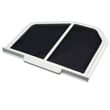
Yes. The Whirlpool GEW9250PW0 dryer uses a lint screen (lint filter) that collects lint during the drying cycle, and we recommend cleaning it before or after every load to keep airflow strong and drying times normal. See the cleaning steps in the GEW9250PW0 owner's manual.
On this Whirlpool dryer, the lint screen is part of normal operation and should be removed, cleaned, and reinstalled each cycle.
- Remove the lint screen and peel lint off with your fingers
- If residue builds up, wash the screen with warm water and a soft brush; dry it completely
- Reinstall the screen fully before starting the dryer
- Keep the area around the exhaust outlet free of lint and dust
- Have the interior cabinet and venting cleaned periodically by qualified service personnel
Lint on the load usually points to airflow restriction, sorting issues, or overdrying (static).
| Symptom | Most common cause | What to do first |
|---|---|---|
| Clothes take too long to dry | Lint screen or vent restriction | Clean lint screen; check outside hood airflow |
| Lint on dark items | Mixed fabrics (lint givers with lint takers) | Sort towels/chenille away from synthetics/cotton blends |
| Lint plus very hot cabinet | Crushed or kinked vent | Straighten or replace vent with heavy or flexible metal |
A clean lint filter protects airflow through the blower wheel and heat duct, which helps the heating system run correctly and prevents long dry times, overheating, and excess lint on clothing.
Last updated: February 2026
How to find part number on whirlpool dryer?
On your Whirlpool GEW9250PW0 dryer, the model and serial label is located at the top inside the dryer door well. Use the full model number and serial number from that label to look up the correct replacement part number and ensure the part matches your exact version.
Check these common spots in this order:
- Open the dryer door and look along the top edge inside the door opening (door well)
- Look for a sticker or metal tag labeled Model and Serial
- Write down the complete model number (GEW9250PW0) and the serial number
- Use that model number when searching parts so you get the right diagrams and part listings
For the official location and other identification details, use the GEW9250PW0 owner's manual.
You will usually see more than one identifier. Here is how to use them:
| What you see | Example | What to do with it |
|---|---|---|
| Model number | GEW9250PW0 | Use this to find the correct parts list and diagrams |
| Serial number | (varies) | Use this to confirm production range when parts change by series |
| Part number | (on the part) | Use this to order the exact replacement |
These steps prevent the most common mismatches:
- Match parts to GEW9250PW0, not just “Whirlpool Duet” or “Whirlpool dryer”
- Compare the part name and function (example: a heater vs. a thermostat)
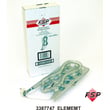
- If your dryer is not heating, confirm whether you need a heater or a sensor; the Dryer Heating Element is a common replacement on electric models like this one (example part: dryer heating element WP3387747)
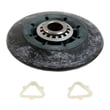
- If your dryer is noisy or squealing, a roller or idler is often involved (example: support WPW10314173)
- If you see an error code, use the Whirlpool duet dryer error codes guide to narrow down the likely failed component
Whirlpool sometimes uses different parts within the same product line, and the model and serial label is the fastest way to match the correct heating, drum support, and control-related parts to your exact GEW9250PW0 configuration.
Last updated: February 2026
Is GEW9250PW0 a washer or dryer?
GEW9250PW0 is a Whirlpool electric dryer model, not a washer. The GEW9250PW0 documentation identifies it as an “electronic electric dryer,” and the parts list for this model includes common dryer components such as a heating element, thermal cut-off fuse kit, and drum support rollers (see the GEW9250PW0 owner's manual).
- Check the model tag on the dryer cabinet (commonly inside the door opening).
- Look for dryer-specific parts such as a lint screen and exhaust vent connection.
- Confirm it uses a 240-volt electric supply (typical for electric dryers).
- Match your parts to GEW9250PW0 listings, such as the dryer heating element WP3387747.
Whirlpool model numbers that start with GEW are commonly used on electric dryer platforms (often in the Duet family). That aligns with the GEW9250PW0 manual sections for venting, electrical requirements, and dryer operation.
| Part type | What it does | Example part for this model |
|---|---|---|
| Heating system | Produces heat for drying | Heating element |
| Drum support | Helps the drum roll smoothly | Support roller |
| Temperature sensing | Helps control heat and cycle results | Thermistor |
| Safety cut-off | Stops heat if overheating occurs | Thermal cut-off fuse kit |
Washer and dryer parts are not interchangeable. Confirming GEW9250PW0 is a dryer helps you choose the correct Whirlpool dryer parts (like a heating element, idler pulley, or blower wheel) and follow the right electrical and venting requirements.
Last updated: February 2026
What are common problems with Whirlpool Duet steam dryers?
Common problems on a Whirlpool Duet steam dryer like model GEW9250PW0 include no-heat or poor drying (often tied to airflow restrictions), control or sensor-related error codes, and wear items that cause noise or the drum not turning. We use the GEW9250PW0 owner’s manual to confirm venting requirements and recommended setup.
- Long dry times or clothes still damp: restricted venting, crushed exhaust, lint buildup, or a weak airflow path
- No heat or low heat: heating circuit issues (element, thermal cut-off, high-limit thermostat) or airflow overheating protection
- Dryer shuts off mid-cycle: overheating from poor venting, thermal cut-off opening, or control sensing abnormal temps
- Squealing, thumping, or rumbling: worn drum support rollers, idler pulley, or belt components
- Error codes or unresponsive controls: electronic control or sensor inputs (thermistor, moisture sensor) triggering a fault
- Clean the lint screen and confirm the screen housing is not packed with lint.
- Verify proper vent material and routing: the manual calls for 4-inch (10.2 cm) heavy metal venting exhausted outdoors; avoid plastic or foil vent.
- Check airflow at the outside hood: weak flow usually means a blockage or excessive vent length.
- Confirm the load and cycle match: heavy items need more time; mixed loads can confuse moisture sensing.
- If the drum is noisy: inspect wear parts and consider a rebuild kit.
| Symptom | Common part to inspect | Example part for this model |
|---|---|---|
| Squeal or drum drag | Idler pulley, rollers | Dryer idler pulley 279640 and drum support rollers (repair kit also common) |
| No heat | Heating element, thermal cut-off, thermostat | Heating element and thermal cut-off kit are frequent checks |
| Erratic drying | Thermistor, moisture sensor | Thermistor and moisture sensor are common culprits |
Most “dryer problems” on Duet-style machines come down to airflow and temperature control. Correct venting prevents overheating, reduces error codes, and restores normal dry times.
For code-specific help, use our Whirlpool duet dryer error codes reference alongside the manual’s troubleshooting section.
Last updated: February 2026
What is the average lifespan of a Whirlpool dryer?
Most Whirlpool dryers, including model GEW9250PW0, last 10 to 13 years with normal household use and basic maintenance. Keeping airflow strong (proper venting and lint removal) and avoiding overloads are the biggest factors that push a dryer toward the high end of that range.
- Venting and airflow: Use a 4-inch heavy metal vent and exhaust outdoors; restricted airflow drives heat stress and failures.
- Lint control: Clean the lint screen every load and keep the exhaust path clear.
- Load size: Overloading strains the drive motor, belt, drum rollers, and idler pulley.
- Heat management: Chronic overheating shortens the life of heating and safety components.
- Wear parts: Rollers, seals, and pulleys wear gradually; replacing them early prevents bigger damage.
| Usage pattern | Typical lifespan | What usually fails first |
|---|---|---|
| Light (1 to 3 loads/week) | 12 to 15 years | Drum support parts, belt/idler |
| Average (4 to 7 loads/week) | 10 to 13 years | Heating and airflow-related parts |
| Heavy (8+ loads/week) | 7 to 10 years | Motor, rollers, thermal safety parts |
- Confirm the vent material and routing match the venting section in the GEW9250PW0 owner’s manual.
- Inspect and clean the blower housing and wheel if airflow is weak; a worn dryer blower wheel WP697772 can reduce airflow and increase drying time.
- If the dryer overheats or stops heating, check common heat-circuit wear items such as the dryer heating element WP3387747 and the dryer thermal cut-off fuse kit 279973.
A dryer that runs hot or can’t move air efficiently works longer per load, which accelerates wear on the heating system, drum support components, and motor. Good airflow and timely replacement of wear parts are the most reliable ways to reach the expected 10 to 13 year lifespan.
Last updated: February 2026
What is the capacity of the Whirlpool Gew9250pw0?
The Whirlpool GEW9250PW0 dryer has a 7.0 cu. ft. drum capacity, which is considered a full-size residential dryer. This capacity helps you dry larger loads like towels and bedding with fewer cycles; use the cycle and dryness settings in the GEW9250PW0 owner's manual for best results.
A 7.0 cu. ft. drum is designed for typical family laundry and bulky items.
- Handles most mixed loads without overpacking
- Works well for towels, jeans, and heavier cottons
- Can dry bulkier items (comforters vary by fill and size)
- Performs best when you leave space for items to tumble
| Load type | Typical fit in a 7.0 cu. ft. dryer | Tip |
|---|---|---|
| Everyday mixed load | Yes | Avoid packing tight; tumbling is key |
| Towels | Yes | Shake towels out before loading |
| Queen comforter | Often | Use low heat if the care label recommends it |
| King comforter | Sometimes | If it balls up, split into smaller loads |
Capacity affects drying time, wrinkling, and wear. Overloading reduces airflow and tumbling, which can make the GEW9250PW0 run longer and dry unevenly.
If drying times seem long even with normal-sized loads, follow the airflow and venting checks in the dryer takes a long time to dry guide.
Last updated: February 2026