Error Codes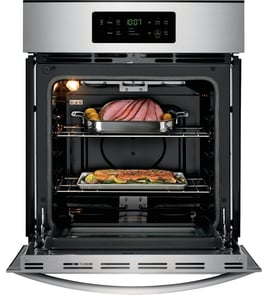





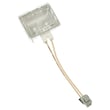
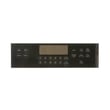

How to reset a GE wall oven?
To reset your GE JT3000SF6SS electric wall oven, we recommend power-cycling the unit: turn the oven’s circuit breaker OFF (or remove the fuse) for 1 minute, then restore power. This resets the electronic control and clears many temporary glitches.
- Set the oven controls to OFF.
- Turn the wall oven circuit breaker to OFF (or remove the fuse).
- Wait 60 seconds.
- Turn the breaker back to ON (or reinstall the fuse).
- Set the clock if it flashes or shows a default time.
- Test a simple function like Bake at 350°F for a few minutes.
A reset helps with control “lockups”, but it will not correct a failed part. Check these common causes:
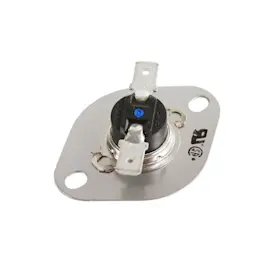
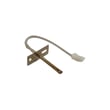
- Oven not heating or heats erratically: a failed sensor can prevent normal operation; see wall oven temperature sensor WB21X10165.
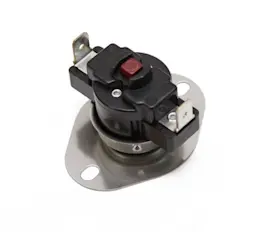
- Oven overheats or shuts down: a high-limit thermostat can open if temperatures get unsafe; see range high-limit thermostat WB24X46906.
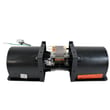
- Cooling fan runs constantly or error after cooking: the cooling fan circuit may be involved; see wall oven cooling fan assembly WB26X31060 and wall oven cooling fan sensor board WB27T11463.
- Door will not unlock after self-clean: the lock mechanism can stick or fail; see wall oven door lock assembly WB10X23814.
| Symptom after reset | Most likely area to check | Example part for JT3000SF6SS |
|---|---|---|
| No heat or wrong temp | Temperature sensing | WB21X10165 |
| Shuts off, won’t restart | Overheat protection | WB24X46906 |
| Fan issues | Cooling fan system | WB26X31060 / WB27T11463 |
| Locked door | Door lock system | WB10X23814 |
Resetting restores normal control logic after a power glitch, keypad error, or brief over-temperature event. If symptoms return quickly, it usually points to a component (sensor, thermostat, fan, or door lock) that needs testing and replacement.
Last updated: February 2026
What is the difference between a regular GE and GE profile?
GE Profile is GE’s step-up line; it typically adds more premium design, more cooking and convenience features, and more advanced controls than standard GE For a GE electric wall oven like model JT3000SF6SS, the biggest differences usually show up in feature set and user interface, not basic baking performance.
GE Profile models commonly include more of these upgrades:
- More advanced control panels and cooking modes (more presets, guided cooking, or enhanced convection options)
- More premium finishes and design details (handles, trim, glass, display styling)
- More connectivity and smart features on some models (Wi-Fi, app features, voice integration)
- More convenience features (enhanced self-clean options, temperature probe support on some models)
- More “feature density” at a higher price point
Standard GE models typically focus on:
- Core bake and broil functions with straightforward controls
- Fewer premium add-ons, often at a lower cost
- Easier, simpler interfaces depending on the series
When you are deciding between a GE and GE Profile wall oven, we recommend comparing:
- Control type: knob vs touch, display size, and menu depth
- Cooking modes: convection bake/roast, air fry (if offered), proof, warm, etc.
- Cleaning: self-clean vs steam clean options
- Rack system: standard racks vs upgraded glide/extension racks
- Serviceability: parts availability for common wear items
Many repairs are similar across GE and GE Profile because the core heating and sensing components are comparable.
| Repair area | Often similar across lines | Often different across lines |
|---|---|---|
| Temperature regulation | Oven sensor and wiring | Control logic and UI behavior |
| Heating | Bake/broil elements | Feature-specific accessories |
| Door and safety | Gaskets, hinges, locks | Cosmetic panels and overlays |
If you are troubleshooting temperature issues on JT3000SF6SS, a common starting point is the wall oven temperature sensor WB21X10165.
GE Profile usually buys you more features and a more premium experience; standard GE usually buys you simplicity and value. Knowing which line you have helps us match the right control parts, overlays, and door components for your exact model.
Last updated: February 2026
What is the life expectancy of a GE oven?
A GE electric wall oven like model JT3000SF6SS typically lasts 12 to 15 years with normal household use. With consistent cleaning, good airflow around the cabinet, and timely part replacement, it’s common to reach the upper end of that range.
- Heat stress from frequent high-temp baking or broiling
- Self-clean cycles used often (they run extremely hot)
- Door seal condition (heat leaks make components work harder)
- Cooling airflow (blocked vents can overheat controls)
- Electrical health (loose connections and damaged wiring)
- Wipe spills promptly to reduce smoke and corrosion.
- Use self-clean sparingly; choose manual cleaning when possible.
- Keep the door closing firmly; replace a worn door gasket when you notice gaps.
- Make sure the cooling fan runs after baking; a failing fan can shorten control life.
- If temperatures swing or food bakes unevenly, test and replace the sensor early.
| Category | Examples | What you’ll notice |
|---|---|---|
| Wear items | Light bulb, rack, gasket | Dim/no light, hard sliding, heat leaking |
| Heat control parts | Sensor, thermostat | Overbakes, underbakes, temp errors |
| Major components | Control board, door assemblies | Dead display, no heat, door damage |
If your oven is heating inconsistently, the wall oven temperature sensor WB21X10165 is a common fix because it directly affects how the control regulates bake and broil temperatures.
Knowing the typical 12 to 15 year lifespan helps you decide whether to invest in a repair (like a sensor, cooling fan, or gasket) versus planning for replacement when multiple major components start failing.
Last updated: February 2026