Installation guide
 Owner’s manual
 Error Codes


What is the average lifespan of a KitchenAid refrigerator?
KitchenAid refrigerators typically last 12 to 15 years on average; built-in models like KitchenAid KSSC48QVS02 often reach 15 to 20 years with consistent maintenance and timely part replacement. For model-specific care routines, follow the KSSC48QVS02 use & care manual.
What affects lifespan the most (especially on built-in units)
- Keeping condenser coils clean so the compressor runs cooler and less often
- Maintaining good door sealing to prevent warm air leaks and frost
- Replacing the water filter on schedule to protect the water system and ice maker
- Avoiding blocked air vents so temperatures stay stable
- Fixing small issues early (noises, warm spots, slow ice production)
Maintenance checklist we recommend
- Clean condenser area regularly (dust and pet hair are common causes of overheating)
- Confirm set temperatures stay near 37°F (fresh food) and 0°F (freezer)
- Keep door gaskets clean and pliable; wipe with mild soap and water
- Replace the water filter when flow drops or the indicator calls for it
- Don’t overload shelves or block vents; airflow is critical in side-by-side designs
Helpful parts that commonly support long life
If you’re doing routine upkeep on KSSC48QVS02, these model-matched parts are often involved:
| Maintenance need | Example part for this model | What it helps prevent |
|---|---|---|
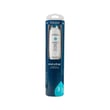
| Water quality and flow | Refrigerator water filter EDR3RXD1 | Slow dispensing, poor ice quality, valve strain |
| Cooling efficiency | Condenser coil cleaning (no part required) | Overheating, long run times |
| Temperature stability | Door gasket inspection/cleaning | Warm temps, frost, compressor overwork |
Why it matters
A built-in refrigerator is a long-term investment; keeping airflow, sealing, and the water system in good shape reduces compressor run time and helps your KitchenAid KSSC48QVS02 reach the upper end of its expected lifespan.
Last updated: January 2026
Is KitchenAid considered high end?
Yes. KitchenAid is generally considered a premium (upper-mid-range) appliance brand, and that positioning fits the built-in KitchenAid KSSC48QVS02 side-by-side refrigerator especially well because built-in models typically emphasize design, fit/finish, and feature sets over entry-level pricing.
What “high end” usually means for KitchenAid owners
KitchenAid typically sits above many mainstream lines in materials, styling, and features, but below ultra-luxury brands that focus on fully bespoke configurations.
Common “premium” traits you’ll often see:
- Built-in and integrated-style options (like KSSC48QVS02)
- Heavier-duty shelving, bins, and door hardware
- More advanced temperature management and controls
- In-door ice and water features on many models
- Strong parts and service ecosystem for long-term ownership (see KSSC48QVS02 owner’s manual)
How KitchenAid compares (simple tier guide)
| Tier | Typical positioning | Examples |
|---|---|---|
| Mainstream | Value-focused, basic features | Entry-level Whirlpool, basic Frigidaire |
| Premium | Better materials, more features, upgraded design | KitchenAid, many GE Profile models |
| Luxury | Highest price, pro-style, more customization | Brand-specific luxury lines |
Why it matters when you own a built-in refrigerator
“High end” usually translates into higher part costs and more model-specific components, but it also often means better long-term repairability when you use the correct, model-matched parts.
If you’re maintaining water and ice performance on KSSC48QVS02, staying on schedule with filtration is a good example of premium ownership basics. For compatible replacements, see the refrigerator water filter EDR3RXD1.
Practical ownership tips for KSSC48QVS02
- Keep airflow vents clear to maintain stable temperatures
- Use the recommended set points (commonly 0°F freezer, 37°F fresh food on many models)
- Replace the water filter when flow drops or the indicator calls for it
- Flush the dispenser after filter changes to clear air from the line
- Use the correct filter style for the base grille housing
For step-by-step filter help, we also recommend how to replace the water filter in a KitchenAid refrigerator.
Last updated: January 2026
What is the most common problem with a KitchenAid refrigerator?
For the KitchenAid KSSC48QVS02 built-in side-by-side refrigerator, the most common problems we see are ice and water dispensing issues (slow or no ice, weak water flow) and cooling performance problems (warm refrigerator section, frost buildup, temperature swings). Use the troubleshooting guidance in the KSSC48QVS02 use & care manual to match symptoms to checks.
Most common issues (and what usually causes them)
- Ice maker not making ice or slow ice production: ice maker turned off, low water pressure, frozen fill tube, or an ice maker module issue.
- Weak water dispenser flow: clogged water filter, air in the water line, or restriction in the filter housing.
- Refrigerator not cooling well but freezer seems OK: blocked air vents, evaporator fan airflow problem, or a defrost system issue.
- Frost buildup in freezer: door not sealing, frequent door openings, or defrost trouble.
- Noises: fan and refrigerant-flow sounds can be normal; rattles can also come from items vibrating.
Quick checks that fit KSSC48QVS02 operation
- Verify the factory recommended set points: 0°F freezer and 37°F refrigerator.
- Keep air vents clear so cold air can circulate between compartments.
- If water flow is slow, replace the base-grille filter, then flush the dispenser.
- After a filter change, discard the first three batches of ice.
- If the dispenser spurts, run several on/off dispensing cycles to purge air.
Symptom-to-part focus (examples for this model)
| Symptom | Most likely system | Example part to inspect/replace (if needed) |
|---|---|---|
| Water dispenser slow | Filtration / water supply | Refrigerator water filter EDR3RXD1 |
| Filter won’t seat or leaks at filter area | Filter mounting / housing | Refrigerator water filter housing WPW10121140 |
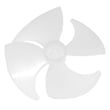
| Loud fan noise or poor airflow | Evaporator fan air movement | Refrigerator evaporator fan blade WP2169142 |
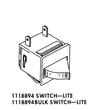
| Lights stay off or door alarm behavior seems wrong | Door/light switching | Refrigerator light switch W11384469 |
Why it matters
Ice, water, and airflow problems can look like major failures, but they often trace back to maintenance (like a clogged filter) or a single component. Fixing the root cause early helps protect food temperatures and reduces compressor run time.
Last updated: January 2026