Owner’s manual
 Error Codes


How to read Kenmore refrigerator model number?
To read a Kenmore refrigerator model number, we match the full number exactly as it appears on the rating label (for this unit: 10651759710) and use it to identify the correct parts list, Use and Care Guide, and compatible replacement parts. On most Kenmore side-by-side refrigerators, the label is inside the fresh food compartment or inside the freezer.
Where to find the model number label
We typically see the model and serial label in one of these spots:
- Inside the refrigerator compartment on a side wall
- Inside the refrigerator compartment behind or near the crisper drawers
- Inside the freezer compartment on a side wall
- Along the door frame (fresh food or freezer side)
- Behind the lower toe grille (kick plate) area
For model-specific diagrams and label locations, use the 10651759710 owner's manual.
How to interpret Kenmore model numbers (what matters for parts)
For parts lookup and troubleshooting, we focus on these details:
- Exact model number: Use every digit (example: 10651759710, not just “106.5175”)
- Prefix: Many Kenmore refrigerators use a 3-digit prefix (such as 106) that points to the manufacturing source family
- Serial number: Helps identify production run details when a part changes by revision
- Color code or suffix: Some manuals list model families with a color placeholder (often shown as an asterisk)
Quick guide: what to write down
| What to record | Example | Why it matters |
|---|---|---|
| Model number | 10651759710 | Ensures correct parts and diagrams |
| Serial number | (from label) | Helps confirm version changes |
| Brand/type | Kenmore side-by-side refrigerator | Narrows troubleshooting steps |
Why it matters
Using the exact model number prevents ordering the wrong items such as an ice maker, water inlet valve, or door bin. Even small differences in a Kenmore 106-series refrigerator can change which parts fit.
Last updated: February 2026
How to tell if a Kenmore refrigerator compressor is bad?
A bad compressor on your Kenmore side-by-side refrigerator model 10651759710 usually shows up as poor cooling with the unit running a lot, unusual clicking or buzzing, or the compressor repeatedly trying and failing to start. Before condemning the compressor, we verify airflow, condenser cleanliness, and power to the unit using the 10651759710 owner's manual.
Quick symptoms that point to a compressor problem
- Refrigerator and freezer are warm even though the unit runs for long periods
- Repeated clicking (start device trying to start the compressor) followed by silence
- Compressor is very hot to the touch after running attempts (use caution)
- You hear fans running, but temperatures do not recover after 24 hours
- Breaker trips or the unit shuts down shortly after the compressor tries to start
Rule out common look-alikes first (most important)
Many “bad compressor” calls are actually airflow, heat removal, or control issues.
- Allow time after changes: after installation or major temperature changes, allow 24 hours for full cooling
- Condenser heat removal: clean condenser coils and confirm the condenser fan (if equipped) runs
- Evaporator airflow: listen for the evaporator fan; a failed fan motor can mimic compressor failure
- Door sealing and loading: frequent door openings or a warm room can make the compressor run longer than expected
- Water line noises vs. compressor noises: buzzing/clicking can be normal when the water valve operates (ice maker fill)
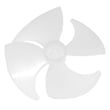
If you suspect an airflow issue, the evaporator fan motor WP2315549 and evaporator fan blade WP2169142 are common cooling-air components for this model.
What we check to confirm a failing compressor
A technician typically confirms compressor failure with electrical and sealed-system checks.
| Check | What it indicates | Who should do it |
|---|---|---|
| Compressor tries to start then clicks off | Hard-start condition, overload opening | Technician recommended |
| Amp draw at startup and while running | Locked rotor or inefficient compressor | Technician |
| Continuity to ground (short test) | Internal short | Technician |
| Frost pattern on evaporator | Sealed-system or airflow diagnosis | Technician |
Why it matters
Replacing a compressor is a major repair; confirming the real cause prevents replacing an expensive sealed-system part when the issue is actually a fan, dirty coils, or a door seal problem.
Last updated: February 2026
How wide is a Kenmore side-by-side refrigerator?
Most Kenmore side-by-side refrigerators are about 36 inches wide. For Kenmore model 10651759710, the 10651759710 owner's manual specifies a 36 inch (91.44 cm) minimum cabinet cut-out width for installation, which is the practical width you should plan around.
What to measure (so you get the right fit)
Use a tape measure and confirm these before delivery or reinstall:
- Cabinet opening width (side-to-side space between cabinets)
- Refrigerator case width (body only, doors closed)
- Door swing clearance (space needed to fully open doors)
- Depth clearance behind the unit (for airflow and water line)
- Height clearance (including hinge cover area)
Model 10651759710 clearance guidelines from the manual
The manual calls out these common spacing needs for proper ventilation and door swing:
- 1/2 inch on each side and at the top
- 2 inches behind the refrigerator
- About 2 inches minimum at the side near a fixed wall (varies by setup)
| What you are planning for | Typical number to use | Why it matters |
|---|---|---|
| Standard side-by-side width | 36 in | Fits most cabinet cutouts and door openings |
| Minimum cabinet cut-out width (10651759710) | 36 in | Ensures the refrigerator can be installed |
| Extra space behind unit | 2 in | Airflow plus room for water line connections |
Why it matters
Width is not just about sliding the refrigerator into place. If the opening is tight, you can lose door swing, crisper access, and ventilation space, which can hurt cooling performance and make service harder.
Last updated: February 2026
What are the most common problems with Kenmore refrigerators?
For Kenmore side-by-side refrigerators like model 10651759710, the most common problems are cooling issues, water or ice dispenser troubles, leaks, and unusual noises. These usually trace back to airflow restrictions, water supply or filtration problems, or a failing fan or valve; our 10651759710 owner's manual covers the key checks.
Most common issues and what they point to
- Not cooling or warm temperatures: dirty condenser coils, blocked vents, frost buildup from a defrost problem, or a failed evaporator fan.
- Refrigerator will not run at all: power supply issue (outlet, breaker, fuse) or a control problem.
- Ice maker not making ice: low water pressure, a clogged filter, a frozen fill tube, or a bad ice maker.
- Water dispenser slow or not dispensing: dispenser lock on, clogged/incorrectly installed filter, or low supply pressure (reverse osmosis can reduce pressure).
- Water leaking or dripping at the dispenser: air in the lines after installation or filter change; holding the glass under the spout too briefly can also cause drips.
- Noisy operation: fan blade hitting ice, worn fan motor, or items vibrating inside.
Quick checks we recommend first (fast, no parts)
- Confirm the unit is plugged into a grounded 3-prong outlet and the breaker is not tripped.
- After a new install or power loss, allow 24 hours for full cooling.
- Make sure vents inside both compartments are not blocked by food packages.
- If dispenser flow is weak, replace or reinstall the water filter and purge air from the lines.
- Listen for a fan noise change when doors open and close (helps narrow down fan vs. compressor).
Parts that commonly solve these symptoms on this model
| Symptom | Common suspect part | Example model-matched part |
|---|---|---|
| Warm fridge/freezer, poor airflow | Evaporator fan motor or blade | Refrigerator evaporator fan motor WP2315549, refrigerator evaporator fan blade WP2169142 |
| No ice or weak water flow | Water inlet valve | Refrigerator water inlet valve WPW10179146 |
| Ice clumps, no ice harvest | Ice maker assembly | Refrigerator ice maker assembly WPW10300022 |
Why it matters
Cooling, ice, and water problems often share the same root causes: restricted airflow or low water flow. Fixing the underlying cause protects food temperatures, prevents repeat leaks, and reduces strain on the compressor.
Last updated: February 2026
What causes a side-by-side refrigerator to stop cooling?
On Kenmore side-by-side refrigerator model 10651759710, a “not cooling” problem is usually caused by loss of power, incorrect temperature control settings, blocked air vents, or doors not sealing. After any change, allow 24 hours for temperatures to stabilize (colder settings do not cool faster). See the 10651759710 owner's manual.
Quick checks (fastest fixes first)
- Confirm the refrigerator is plugged into a grounded 3-prong outlet (no adapter or extension cord).
- Check the outlet has power (test with a lamp) and reset the breaker if tripped.
- Verify both refrigerator and freezer controls are set near the normal mid-range.
- Make sure air vents are not blocked by food packages.
- Confirm doors close fully and gaskets seal; reduce frequent door openings.
- If it is a new install or was unplugged, wait a full 24 hours to cool.
Temperature controls: what to expect
The manual notes that each click/adjustment makes the compartment colder, but turning controls to the coldest setting will not cool faster. Use this as a guide:
| Situation | What we recommend | What to avoid |
|---|---|---|
| Just plugged in or moved | Wait 24 hours before judging temps | Rapidly changing settings |
| Fridge warm, freezer OK | Adjust refrigerator control slightly colder | Setting both to max cold |
| Both warm | Check power, doors, vents first | Assuming it is “low refrigerant” immediately |
When it points to an airflow or fan problem
If you hear the compressor running but temperatures keep rising, airflow inside the cabinet may be the issue. On this model, common airflow-related suspects include the evaporator fan area. If the fan is noisy, stalled, or not moving air, the refrigerator evaporator fan motor WP2315549 or refrigerator evaporator fan blade WP2169142 may be involved.
For step-by-step troubleshooting, use how to fix your evaporator cooling fan.
Why it matters
A refrigerator that is not cooling can spoil food quickly, and blocked vents or poor door sealing can also make the compressor run longer than normal. Fixing the simple causes first prevents unnecessary part replacement.
Last updated: February 2026
What is the cubic foot of my Kenmore refrigerator model 10651759710?
Your Kenmore side-by-side refrigerator model 10651759710 has a total capacity of about 21.9 cubic feet. This is the overall interior volume (fresh food plus freezer) and is the number most people use when comparing refrigerator sizes.
How to confirm the capacity for your exact unit
We recommend checking the model’s documentation because capacity can vary slightly by configuration within the same model family.
- Look for “capacity,” “total volume,” or “specifications” in the 10651759710 owner's manual
- Verify the full model number from the rating label inside the refrigerator compartment
- Compare the listed capacity to what you see on retailer spec sheets (if you still have them)
- If you are measuring for fit, use cabinet dimensions, not cubic feet
Capacity vs. usable space (why it can feel smaller)
Even with a 21.9 cu. ft. rating, usable space is reduced by shelves, bins, the ice system, and air channels.
| What you’re comparing | What it means | Best used for |
|---|---|---|
| Total capacity (cu. ft.) | Overall interior volume | Comparing refrigerator “size class” |
| Usable storage space | Space you can actually load | Planning groceries and containers |
| Exterior dimensions | Height, width, depth | Making sure it fits your kitchen opening |
Why it matters
Capacity helps you choose replacement parts and accessories with the right fit and function (for example, door bins, shelves, and ice storage components) and helps set expectations for storage compared to other Kenmore 106 side-by-side models.
Last updated: February 2026
What's the average lifespan of a Kenmore refrigerator?
Most Kenmore refrigerators last 12 to 15 years on average with normal household use; your Kenmore side-by-side refrigerator 10651759710 typically fits that same range when it is installed correctly, kept clean, and has good airflow around the cabinet. For model-specific care and maintenance routines, follow the 10651759710 owner's manual.
Typical lifespan and what to expect
A refrigerator’s “lifespan” usually means the point where major sealed-system or control repairs become more common than routine part replacements.
- 0 to 5 years: mostly maintenance items (filters, light switch, icemaker adjustments)
- 6 to 10 years: higher chance of fan, valve, or icemaker repairs
- 11 to 15 years: cooling performance issues and larger repairs become more likely
- 15+ years: many units still run, but efficiency and repair frequency often worsen
Maintenance that helps you reach the high end of the range
Use these habits to reduce strain on the compressor and keep temperatures stable:
- Keep condenser area clean and maintain airflow around the refrigerator
- Set stable temps (commonly 37°F fresh food and 0°F freezer)
- Replace water filters on schedule if your model uses one
- Keep door gaskets clean so doors seal tightly
- Fix ice and water issues early (slow fill, hollow cubes, leaks)
Quick guide: symptoms that shorten lifespan
| Symptom | Common cause | What to check first |
|---|---|---|
| Warm fridge or freezer | Airflow problem or fan issue | Frost buildup, vents blocked, fan running |
| Clicking, then no cooling | Start device or compressor strain | Airflow, dirty coils, power supply |
| Slow ice production | Water supply restriction | Filter, water pressure, inlet valve |
| Water leaking | Clogged drain or loose water line | Drain path, tubing connections |
Why it matters
Hitting the 12 to 15 year average usually comes down to keeping heat moving out of the system and preventing small water or airflow problems from turning into compressor stress.
Last updated: February 2026
Where to find model number on Kenmore side by side refrigerator?
On Kenmore side-by-side refrigerator model 10651759710, we typically find the model and serial number tag on the inside cabinet wall of the fresh food (refrigerator) compartment after you open the refrigerator door; it is usually on a label you can read without moving the appliance. Check the 10651759710 owner's manual for the exact label location callouts.
Common places to check first
- Inside the fresh food compartment on a side wall (upper area is common)
- Along the door frame (hinge side) when the refrigerator door is open
- Behind the crisper drawers on the cabinet liner (look for a white or silver tag)
- On the ceiling of the fresh food compartment near the light housing
- On the back exterior panel near the power cord (less common, but worth a quick look)
What the tag looks like and what to write down
The tag usually lists both a model number and a serial number. We recommend copying them exactly.
| Item on tag | Example format | Why you need it |
|---|---|---|
| Model number | 106.5175* style family, or full model like 10651759710 | Ensures parts match your exact Kenmore configuration |
| Serial number | Letters and numbers | Helps confirm production series and compatible revisions |
Why it matters
Kenmore 106-series refrigerators can share similar doors, shelves, and ice maker layouts, but small design changes affect fit. Using the exact model number (and serial number when available) prevents ordering the wrong refrigerator parts.
Quick tips if the label is hard to read
- Wipe the label gently with a damp cloth and dry it; grease and dust can hide digits
- Use your phone camera and zoom in for clearer reading
- Write down the full number string, including any dots or suffix characters
Last updated: February 2026