 Owner’s manual



What is the life expectancy of a whirlpool washing machine?
A Whirlpool washing machine typically lasts 10 to 14 years with normal household use and basic maintenance. For your Whirlpool WFW9200SQA10 front-load washer, consistent cleaning, correct detergent use, and avoiding overloads are the biggest factors in reaching the upper end of that range; see the WFW9200SQA10 owner's manual for care and operating guidance.
Typical lifespan by washer type
Most washers fall into a fairly consistent lifespan range; front-loaders often need more routine gasket and drain care to stay trouble-free.
| Washer type | Typical life expectancy | What most often shortens life |
|---|---|---|
| Front-load washer (like WFW9200SQA10) | 10 to 14 years | Overloading, poor door seal care, chronic leaks |
| Top-load washer | 11 to 14 years | Overloading, unbalanced loads, drive wear |
What to do to help your WFW9200SQA10 reach 10 to 14 years
- Use HE detergent and avoid overdosing (excess suds stresses the drain system).
- Leave the door ajar between loads to reduce moisture and odor at the door opening.
- Wipe the door boot after wash day; inspect for small tears or trapped debris.
- Keep loads balanced; repeated out-of-balance spinning wears shocks and bearings.
- Check fill hoses for bulges or seepage; replace aging hoses proactively.
- Address small leaks immediately so water does not reach wiring or the motor.
Parts that commonly affect longevity (and are available for this model)
If you are seeing leaks, vibration, or door-closing issues, these model-matched parts are common fixes:
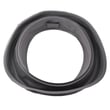
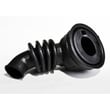
- Door boot leak or mildew: bellow WP8182119
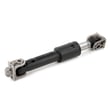
- Excessive shaking or banging: washer shock absorber W10822553
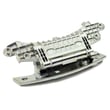
- Door not closing smoothly: hinge WP8183202
- Fill hose seepage or cracking: washer fill hose WP89503
Why it matters
A washer that is kept leak-free and stable in spin puts less strain on the drive system, wiring, and bearings. On front-load models like the WFW9200SQA10, routine door-boot care and fast leak repair are the difference between “average life” and “full life.”
For replacement parts, we list model-specific options on this page; you can also search by model number on Sears PartsDirect.
Last updated: February 2026
What is the capacity of the Whirlpool WFW9200SQA10?
The Whirlpool WFW9200SQA10 front-load washer has a 4.0 cu. ft. capacity, which is a common “full-size” drum volume for this Duet-style washer. For cycle-by-cycle loading guidance and options, use the WFW9200SQA10 owner's manual.
What 4.0 cu. ft. means for real-world loads
A 4.0 cu. ft. capacity is designed to handle everyday family laundry efficiently, including bulkier items when loaded correctly.
- Fits most queen-size bedding (typically one comforter plus sheets) when not overpacked
- Handles medium to large mixed loads (towels, jeans, cottons)
- Works best when you load loosely so items can tumble and rinse
- Use HE detergent only to control suds and improve rinsing
- Leave a little space at the top of the drum for best wash action
Quick loading guide (practical rule of thumb)
Use this as a simple way to avoid overloading, reduce vibration, and improve cleaning.
| Load type | How full to load the drum | Why |
|---|---|---|
| Everyday mixed load | About 3/4 full | Best balance of cleaning and spin performance |
| Towels/denim | About 1/2 to 2/3 full | Heavy fabrics need room to tumble |
| Bulky items (bedding) | About 1/2 full | Prevents poor rinsing and out-of-balance spins |
Why capacity matters
Capacity affects cleaning performance, rinse quality, and how well the washer can reach high spin speeds. Overloading a front-load washer often leads to poor soil removal, excess suds, and more strain on suspension components such as the washer shock absorber W10822553.
Related parts and accessories customers commonly replace
If performance issues show up (leaks, odor, vibration), these model-matched parts are commonly involved:
- Bellow WP8182119 (door boot; helps prevent leaks at the door opening)
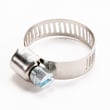
- Clamp WP8182210 (secures the bellow and related connections)
- Washer fill hose WP89503 (helps resolve fill leaks or restricted flow)
- Washer inlet flow meter WPW10110225 (helps the washer measure incoming water)
You can order replacement parts for your Whirlpool WFW9200SQA10 from the parts list for this model, or search by model number on Sears PartsDirect.
Last updated: February 2026
How to tell if a whirlpool drain pump is bad?
On a Whirlpool WFW9200SQA10 front-load washer, a bad drain pump shows up as standing water left in the tub, a “won’t drain” condition, or loud grinding/humming during the drain portion of the cycle. We confirm it by ruling out clogs first, then checking pump operation and electrical continuity.
Quick symptoms checklist
- Water remains in the drum after Drain/Spin
- Washer stops mid-cycle because it cannot drain
- Loud grinding, rattling, or buzzing when draining (impeller noise)
- Slow drain (takes much longer than normal)
- Burning smell or repeated tripping (less common, but serious)
Step-by-step: confirm it is the pump (not a clog)
- Unplug the washer and turn off water.
- Check the most common restriction points:
- Drain hose for kinks or a crushed section
- Standpipe or laundry tub drain for a backup
- Tub-to-pump hose for a sock, coin, or lint buildup
- If the washer still will not drain, inspect the pump area and hoses for debris and verify the impeller turns without binding.
If you need diagrams and access steps specific to this model, use the owner's manual.
Electrical test (what we look for)
A drain pump can fail mechanically (jammed/broken impeller) or electrically (open winding).
- With power disconnected, remove the pump connector.
- Use a multimeter to check continuity/resistance across the pump motor terminals.
- A reading that is open (no continuity) indicates an electrically failed pump.
Typical drain pumps often read in the teens to a few dozen ohms; use the tech info in the owner's manual for the most accurate expectations for your exact configuration.
Common “bad pump” look-alikes
| What you see | Often the real cause | What to check first |
|---|---|---|
| Hums but won’t drain | Jammed impeller | Coins, hair pins, lint in pump/hose |
| Drains slowly | Partial restriction | Tub-to-pump hose, drain hose routing |
| Won’t spin and water remains | Drain not completing | Drain path, then pump function |
Why it matters
A washer that cannot drain properly can leave clothes soaking wet, trigger error codes, and strain components during the spin cycle. Fixing the drain path early helps prevent leaks and repeat shutdowns.
Parts that are often involved on this model
If you find a split or leaking hose while diagnosing a drain issue, the hose WPW10467168 is one of the model-matched hoses listed for WFW9200SQA10. For ordering other replacement parts by model, use the parts list for this washer or search by model at Sears PartsDirect.
Last updated: February 2026
What is the most common problem with whirlpool washers?
On Whirlpool washers like model WFW9200SQA10, the most common problems are water-related (not filling or not draining), door-lock or won’t-start symptoms, and vibration from load imbalance. These usually come from simple causes like kinked hoses, clogged inlet screens, excess suds, or a door not fully latched (see the WFW9200SQA10 owner's manual).
Most common issues and typical causes
- Not filling or filling slowly (often F20): closed faucets, clogged inlet screens, kinked or frozen fill hoses
- Not draining or not spinning (often F21): kinked/frozen/clogged drain hose, drain hose installed too high (over 96 inches)
- Door won’t lock or washer won’t start (often F22): door not fully shut, laundry caught at the opening, overloaded basket
- Noise, walking, or vibration: washer not level, single bulky item causing imbalance
- Suds routine or poor cleaning: non-HE detergent or too much detergent
Quick checks we recommend first
- Press PAUSE/CANCEL twice to reset, then restart the cycle
- Confirm both water faucets are fully open
- Check inlet hose screens for debris; straighten any kinks
- Inspect the drain hose for clogs/kinks; keep standpipe height 96 inches or less
- Use HE detergent only and reduce the dose if you see excess suds
Symptom guide for WFW9200SQA10
| Symptom/code | What it usually points to | Best next step |
|---|---|---|
| F20 | Water supply restriction | Check faucets, screens, hose kinks |
| F21 | Drain restriction or hose height | Clear drain path; verify 96-inch max |
| F22 | Door not latched/overload | Re-close door firmly; reduce load |
When a part is the likely fix
If hoses, loading, and detergent are correct and the problem repeats, a failed component is often next. Common examples include the door lock latch WPW10253483 or a leaking door boot bellow WP8182119.
Why it matters
Inlet, drain, and door-lock problems stop cycles, leave clothes wet, and can contribute to odor or leaks if ignored.
Last updated: February 2026






