Owner’s manual


How do I tell what model my Kenmore dryer is?
Your Kenmore dryer’s model number is printed on the model and serial number label on the appliance; for this page, the model is 11076832501. We use that exact model number to match the correct parts, wiring diagrams, and cycle features listed in the 11076832501 owner’s manual.
On most Kenmore dryers, you’ll find the label in one of these common spots:
- Inside the dryer door opening (door jamb area)
- On the back panel of the dryer cabinet
- On the cabinet frame near the lint screen housing (varies by design)
- Behind the lower access panel on some configurations
The manual recommends recording key details from the label so you can get faster help when ordering parts or scheduling service.
- Model number (example: 11076832501)
- Serial number (identifies the production run)
- Purchase date (helps with warranty and maintenance records)
Using the full model number prevents ordering the wrong items when parts look similar, such as a door switch, belt, or thermostat. Even within Kenmore dryers, small design changes can affect fit and wiring.
Many Kenmore dryers start with a 3-digit prefix that helps narrow the platform.
| What you see | What it usually means | What to do next |
|---|---|---|
| 110XXXXXXXX | Common Kenmore platform used across many dryers | Use the full model number for parts lookup |
| 796XXXXXXXX | Different Kenmore platform | Use the full model number for parts lookup |
- Wipe the label gently with a damp cloth and dry it
- Use a flashlight and take a close-up photo to zoom in
- Copy the model number exactly, including all digits
Last updated: February 2026
How much does it cost to replace a heating element in a Kenmore dryer?
For a Kenmore dryer, heating-element replacement typically runs $120 to $350 total when you include the part and labor. On the Kenmore 11076832501, the exact price depends on whether you replace only the heater component or a larger heater assembly, plus service-call and labor rates.
- Part only (DIY): about $20 to $120+ (most common replacements land around $30 to $80)
- Labor (service company): about $80 to $200
- Service call / trip fee (if charged): about $50 to $120
- Total installed cost: commonly $120 to $350
| Scenario | What you pay for | Typical total |
|---|---|---|
| DIY replacement | Part only | $20 to $120+ |
| Pro repair (best case) | Part + minimal labor | $120 to $220 |
| Pro repair (common) | Part + labor + trip fee | $180 to $350 |
- Electric vs. gas dryer design: electric models use a heating element; gas models heat with an igniter and burner system.
- Assembly vs. component: some models use a simple element; others use a heater housing or kit.
- Airflow problems: a clogged lint screen or vent can overheat the heater and lead to repeat failures, adding cost.
- Extra worn parts found during teardown: belt, idler pulley, or blower wheel issues can add parts and labor.
We recommend confirming the heating system type and following the disassembly steps and safety guidance in the 11076832501 owner’s manual. Also keep up with routine care like cleaning the lint screen and maintaining the exhaust vent, which the manual calls out as a key safety and performance step.
Quick checks that often prevent repeat heater failures:
- Clean the lint screen every load.
- Inspect and clear the vent duct to the outside.
- Make sure the outside vent hood opens freely.
- Avoid crushing or kinking flexible venting.
A dryer that runs with restricted airflow can overheat, cycle poorly, and shorten the life of heating components. Spending a little time on vent and lint maintenance often saves the cost of another heating repair.
Last updated: February 2026
What is the average lifespan of 11076832501?
A Kenmore dryer like model 11076832501 typically lasts 13 years with normal household use and basic maintenance. Keeping airflow clear and replacing common wear items (belt, rollers, thermostats) on time helps this dryer reach its full service life.
- Vent restriction and lint buildup (overheats the burner and thermostats)
- Load size and cycle frequency (heavy use wears drum support parts faster)
- Heat stress from poor airflow or very long vent runs
- Wear items such as the belt, idler pulley, drum rollers, and door switch
- Preventive cleaning inside the cabinet and exhaust ducting
The 11076832501 manual calls out periodic lint removal inside the cabinet and exhaust vent; a qualified person should clean these areas about every 2 years (more often with heavy use). See the 11076832501 owner's manual for the cleaning and care guidance.
- Clean the lint screen before every load
- Check airflow at the outside vent hood; it should be strong and steady
- Clean the exhaust duct and vent hood regularly
- Keep the dryer in a space above about 45°F for proper cycle operation
These are normal wear items on many Kenmore dryers and are available for this model:
| Symptom | Likely wear area | Example part for this model |
|---|---|---|
| Drum not turning | Belt or idler pulley | Dryer drum belt 341241 |
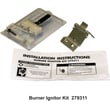
| Runs but no heat (gas) | Ignition system | Igniter 279311 |
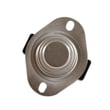
| Overheating or cycling heat issues | Thermostats | Dryer operating thermostat WP3387134 |
Most “short lifespan” complaints trace back to overheating from restricted venting or delayed replacement of inexpensive wear parts. Good airflow protects major components like the drive motor and gas burner assembly.
Last updated: March 2026