Error Codes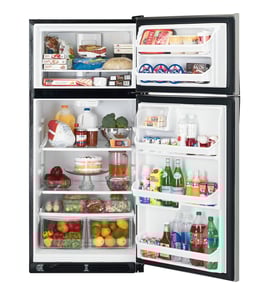



Is a top mount or bottom mount fridge better?
For most households, a bottom-mount refrigerator is better for everyday convenience because fresh-food items sit at eye level, so you bend less. A top-mount like the GE TBX21JATNRWH is often a better value and can be simpler to live with if you use the freezer frequently.
Quick comparison
| Feature | Top-mount (freezer on top) | Bottom-mount (freezer on bottom) |
|---|---|---|
| Fresh-food access | Lower; more bending | Higher; less bending |
| Freezer access | Easy, at chest height | Drawer style; can require digging |
| Typical cost | Usually lower | Usually higher |
| Organization | Simple shelves and bins | Often more specialized drawers |
| Best for | Frequent freezer use, budget | Frequent fridge use, meal prep |
When a top-mount is the better choice
- You use frozen foods daily and want the freezer at a comfortable height.
- You want a straightforward layout with fewer moving drawer parts.
- You prefer a lower purchase price and simpler long-term ownership.
- You have tighter kitchen clearances and want a classic door swing.
When a bottom-mount is the better choice
- You cook often and want the refrigerator section at eye level.
- You want easier access to produce, dairy, and leftovers.
- You dislike bending for the most-used items.
- You prefer a wide pull-out freezer drawer for bulky frozen items.
Why it matters
The “better” style depends on what you access most. If you open the refrigerator section far more than the freezer, bottom-mount improves daily ergonomics. If you rely on frozen foods or want a simpler, budget-friendly design, a top-mount like the GE TBX21JATNRWH is a strong fit.
Related help
- If you are comparing features that include alarms, see how to reset the door alarm on a GE refrigerator.
Last updated: January 2026
What is the top part of a refrigerator called?
On a GE top-mount refrigerator like model TBX21JATNRWH, the top section is the freezer compartment. It’s the insulated area designed to hold frozen food at a much colder temperature than the fresh food section below.
What the freezer compartment includes
In most top-mount refrigerators, the freezer area typically contains:
- A freezer door with shelves or bins for smaller items
- An evaporator area that creates cold air for both compartments
- A temperature control system (sometimes located in the fresh food section)
- Air vents that move cold air down into the refrigerator section
- Optional ice-making components (ice tray or an ice maker kit, depending on the setup)
Common names you may see
Different people and diagrams use slightly different terms. Here’s a quick reference:
| What you see/hear | What it usually means |
|---|---|
| Freezer | The top compartment on a top-mount refrigerator |
| Freezer compartment | Same as freezer; emphasizes it’s a separate section |
| Freezer section | Same meaning; often used in troubleshooting |
| Evaporator area | The cooling source inside/behind the freezer panel |
Why it matters
Knowing the correct name helps when you’re troubleshooting cooling problems or ordering parts for TBX21JATNRWH. For example, frost buildup or warm temperatures often point to freezer-side components such as the defrost system or airflow.
Parts that commonly relate to freezer cooling
If the freezer is not staying cold, these model-compatible parts are often involved:
- Refrigerator defrost heater WR51X465 (melts frost off the evaporator)
- Refrigerator defrost timer WR9X520 (controls defrost cycles on many older designs)
- GE refrigerator condenser fan motor WR60X187 (moves air across the condenser to help cooling)
For step-by-step troubleshooting, we recommend starting with GE refrigerator error codes.
Last updated: January 2026
What is the most common problem with a GE refrigerator?
The most common problem we see with GE refrigerators like model TBX21JATNRWH is a cooling problem: the fresh food section gets warm, the freezer temperature rises, or temperatures swing. In many cases, the root cause is airflow or heat removal issues (dirty condenser coils, a failing fan motor, or a defrost system problem).
Quick checks first (no parts needed)
- Confirm the temperature controls were not bumped warmer.
- Make sure the doors close fully and the gaskets seal all the way around.
- Clean dust from the condenser coils and the area by the condenser fan.
- Avoid overpacking; blocked vents reduce airflow between freezer and refrigerator.
- Listen for the evaporator fan in the freezer; it should run when the compressor is running.
Common causes and what they look like
| Symptom | Most likely area | What you typically notice |
|---|---|---|
| Fridge warm, freezer OK | Airflow/evaporator fan | Weak or no air coming from vents |
| Both sections warm | Condenser fan or compressor start components | Compressor hot, little or no fan airflow underneath |
| Frost buildup on freezer back wall | Defrost system | Ice on evaporator cover, airflow drops over time |
| Temps OK but door sweating or ice near edges | Door gasket | Gaps, torn gasket, or door not aligned |
Parts that commonly relate to cooling complaints on TBX21JATNRWH
If your symptoms point to a specific system, these model-matched parts are common suspects:
- GE refrigerator condenser fan motor WR60X187 (if the fan underneath is not running or is noisy)
- Refrigerator defrost timer WR9X520 (if the unit is stuck in defrost or never defrosts)
- Refrigerator defrost heater WR51X465 (if heavy frost blocks airflow)
- Thermostat WR50X10010 (if temperatures swing or the compressor cycles incorrectly)
Why it matters
Cooling problems can spoil food quickly and also strain the sealed system. Catching a simple issue early (coil cleaning, restoring airflow, fixing a defrost failure) often prevents bigger, more expensive repairs.
For model-specific troubleshooting steps and symptom patterns, we use the GE refrigerator error codes guide as a starting point when a unit has diagnostics or unusual behavior.
Last updated: January 2026
What are the disadvantages of a top mount fridge?
A top-mount refrigerator like the GE TBX21JATNRWH is usually reliable and cost-effective, but its main disadvantages are convenience and organization: you bend more to reach fresh foods, the freezer can feel cramped, and premium features (like dispensers) are less common.
Common disadvantages (what most owners notice)
- Less convenient fresh-food access: the refrigerator section is lower, so you bend more for everyday items.
- Freezer organization can be limited: fewer bins and dividers compared with many bottom-freezer designs.
- Fewer built-in features: through-the-door ice and water, advanced controls, and flexible zones are less common.
- More temperature swings in the freezer: frequent freezer-door openings can affect temps, especially if the door gasket is weak.
- Smaller “eye-level” storage: tall bottles and frequently used items may not sit at a comfortable height.
Quick comparison: top-mount vs bottom-freezer
| Feature | Top-mount refrigerator | Bottom-freezer refrigerator |
|---|---|---|
| Fresh-food access | Lower (more bending) | Higher (more convenient) |
| Freezer access | Higher (easy reach) | Lower (more bending) |
| Organization | Often simpler | Often more flexible |
| Typical cost | Usually lower | Usually higher |
When the “disadvantages” become real problems
These issues show up most when your household uses the refrigerator section far more than the freezer, or when you store lots of small items that benefit from bins and dividers.
What to check if performance seems worse than “normal”
Sometimes a top-mount feels inconvenient because it is not cooling or sealing correctly. We recommend checking:
- Door seal condition and door alignment; a leak can cause frost and uneven temps (see how to fix a fridge door seal).
- Frost buildup on the back freezer panel (possible defrost issue); the refrigerator defrost timer WR9X520 is one common part involved.
- Warm temperatures with a running compressor; airflow issues can point to the GE refrigerator condenser fan motor WR60X187.
Why it matters
Choosing the right layout affects daily comfort, food visibility, and energy use. If you already own a top-mount, keeping seals tight and airflow clear helps it run efficiently and reduces temperature complaints.
Last updated: January 2026