Owner’s manual
 Error Codes



Why is my Kenmore refrigerator leaking underneath?
Water leaking underneath your Kenmore refrigerator model 79571313310 is usually caused by a defrost drain that’s clogged or frozen, or a drain pan that’s overflowing or cracked. We recommend checking the drain path first because it’s the most common source of “mystery” puddles under a bottom-mount fridge.
- Clogged/frozen defrost drain: Meltwater can’t reach the drain pan and spills inside, then runs out under the cabinet.
- Drain pan issue: The pan can be out of position, cracked, or overfilled.
- Water supply leak (if connected to water): A loose fitting or a failing valve can drip and track to the front.
- Door seal leak: Warm air causes excess frost, which later melts and overwhelms the drain.
- Unplug the refrigerator and pull it out enough to inspect underneath.
- Look for clear water vs. oily residue:
- Clear water usually points to defrost drain or water line.
- Oily residue can indicate a sealed-system issue; stop and schedule service.
- Check the drain pan for cracks and correct placement.
- Clear the defrost drain (inside the fresh food section): remove items as needed, locate the drain opening, and flush with warm water until it flows freely.
- If the unit is plumbed for ice/water, inspect the valve area and tubing; a common suspect is the lg refrigerator water inlet valve AJU73753101.
| What you see | Most likely cause | What to do next |
|---|---|---|
| Puddle after defrost cycle, no water line connected | Clogged/frozen defrost drain | Thaw and flush the drain; confirm water reaches the pan |
| Slow drip near back/bottom with water line connected | Supply line or inlet valve leak | Tighten fittings; inspect valve and tubing |
| Water beads around door, heavy frost inside | Door gasket not sealing | Clean gasket and mating surface; check for gaps |
Leaks under the refrigerator can damage flooring and also signal airflow or defrost problems that lead to ice buildup, warmer temps, and poor ice maker performance.
For model-specific access points and cleaning guidance, follow the 79571313310 owner's manual.
Last updated: January 2026
What is the bottom part of a refrigerator called?
On a Kenmore bottom-mount refrigerator model 79571313310, the “bottom part” is most commonly called the machine compartment (also called the compressor compartment). It’s the area where the compressor and condenser-side cooling components sit, usually behind a lower rear cover or near the base.
In most bottom-mount refrigerators, the base area houses the parts that move heat out of the system and keep refrigerant circulating.
- Compressor (the pump that circulates refrigerant)
- Condenser coil (releases heat to the room)
- Condenser fan area (moves air across the coil on many designs)
- Drain pan (catches defrost water so it can evaporate)
- Electrical components such as relays, overloads, and control boards
If you want the exact component locations for your unit, we recommend checking the diagrams and access instructions in the 79571313310 owner's manual.
| What people call it | What it usually refers to | Where it is |
|---|---|---|
| Bottom back panel | Access cover for the machine compartment | Lower rear of cabinet |
| Kick plate / toe grille | Front lower trim or air intake cover (varies by design) | Bottom front |
| “Under the fridge” | Drain pan and airflow space | Beneath cabinet |
| Compressor area | Compressor and related start/protection parts | Bottom rear |
When the question is really about what’s down there, these are common machine-compartment parts for model 79571313310:
- Refrigerator compressor TCA38091801 (drives the sealed system)
- Refrigerator condenser coil ACG73946401 (rejects heat)
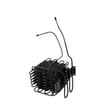
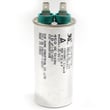
- Refrigerator compressor overload protector 6750CL0001D (protects the compressor during start/overload)
Knowing the correct name helps when you’re troubleshooting noises, heat buildup, or cooling problems. For example, a warm cabinet side can be normal heat rejection, but a loud buzz or repeated clicking often points to compressor start/protection components in the machine compartment.
Last updated: January 2026
Why is there ice on the bottom of my freezer side by side?
Ice building up on the freezer floor is almost always caused by a clogged or frozen defrost drain; defrost water can’t flow to the drain pan, so it refreezes and forms a sheet of ice. On Kenmore model 79571313310, clearing the drain and restoring airflow typically fixes it.
- Unplug the refrigerator before working inside the freezer.
- Remove the freezer drawer/bins and look for ice under the bottom panel.
- Melt the ice with a hair dryer on low or by placing towels and letting it thaw.
- Find the drain opening under the evaporator area and flush it with hot water.
- Push a flexible plastic tube or zip tie gently into the drain to clear sludge.
- Confirm the drain pan underneath is seated and not overflowing.
A common, effective flush is hot water plus a small amount of baking soda to help break up residue. After flushing, pour a small amount of clean hot water again to confirm it drains freely.
| What you see | Most likely cause | What usually fixes it |
|---|---|---|
| Ice sheet on freezer floor | Defrost drain clogged/frozen | Thaw and flush drain |
| Water pooling, then freezing again | Drain still restricted | Repeat flush; clear tube further |
| Frost buildup plus warm temps | Airflow/defrost issue | Check fan and defrost system |
If the drain keeps freezing or you also have poor cooling, a failed fan or defrost component can contribute.
- If you hear abnormal fan noise or airflow is weak, inspect the evaporator fan.
- If temperatures swing and frost returns quickly, check sensors and defrost operation.
Helpful model-matched parts to consider when symptoms point beyond a simple clog:
- Lg refrigerator evaporator fan motor 4681JB1027C (air circulation through evaporator)
- Refrigerator defrost sensor assembly 6615JB2005N (monitors coil temperature for defrost)
When defrost water can’t drain, it refreezes and can block airflow, cause temperature problems, and create recurring leaks and ice buildup. Clearing the drain early prevents repeat icing and protects food storage.
For diagrams and access steps specific to your refrigerator, use the 79571313310 manual.
Last updated: January 2026