Owner’s manual


What is the most common cause of air compressor failure?
The most common cause of air compressor failure is preventable wear from poor maintenance and overheating. On the Craftsman 919165120 air compressor, restricted airflow, air leaks, and pressure-control problems (like a failing pressure switch or check valve) commonly lead to hard starting, overheating, and premature pump or motor damage.
What fails most often (and why)
These issues create the most breakdowns because they force the compressor to run hotter, longer, or against higher load than it should:
- Restricted intake airflow (dirty or clogged air intake filter) that makes the pump work harder and run hot
- Air leaks at fittings, hoses, or valves that cause frequent cycling and longer run times
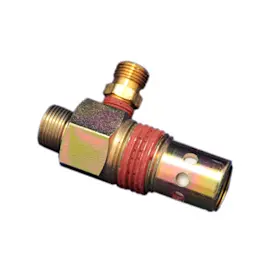
- Check valve problems that can keep head pressure from unloading properly and make restarting difficult
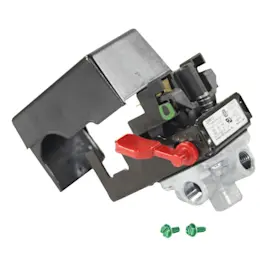
- Pressure switch issues that can prevent proper shutoff at cut-out pressure (can also trigger the safety valve)
- Water left in the tank that accelerates internal corrosion and can lead to tank damage
Quick checks we recommend first
Before replacing parts, we use these fast, high-value checks:
- Unplug the compressor and bleed off all tank pressure before any inspection or repair
- Listen for hissing around fittings, the regulator, and the pressure switch area
- Confirm the unit shuts off normally at cut-out; if it does not, move the lever to OFF immediately
- Inspect the intake area for dust buildup and blocked ventilation
- Drain water from the tank after use and before storage
Symptom-to-cause cheat sheet
| Symptom | Most likely cause | What to do next |
|---|---|---|
| Won’t restart with air in tank | Check valve stuck open or unloader not working | Inspect check valve and pressure switch unloading |
| Safety valve pops | Pressure switch not shutting off or cut-out set too high | Test pressure switch operation |
| Runs but won’t build pressure | Air leak, restricted intake, or internal valve/seal issue | Leak test; then evaluate pump |
| Gauge drops a lot under use | Regulator not adjusted under flow | Adjust regulator while tool is running |
Why it matters
Most “failures” start as small airflow, leak, or pressure-control problems. Fixing them early reduces overheating, prevents constant cycling, and protects the pump, motor, and tank.
For model-specific safety steps and troubleshooting tables, follow the owner's manual.
Last updated: February 2026
What company makes Craftsman air compressors?
Craftsman air compressors are made by different manufacturers (OEMs) depending on the model and production era. For Craftsman model 919165120, the manufacturer information is tied to the unit’s data plate and code numbers; we use those identifiers to match the correct parts list and service information in the owner's manual.
How to identify who made your Craftsman 919165120
On this compressor, the manual explains where to find the key identifiers used for parts and manufacturer tracing.
Check these locations:
- Model number: on the maintenance label on top of the motor cover or on the tank
- Code number: on the foil label on the rear of the air tank
- Manufacturer’s number (Mfg. No.): on the metal data plate welded to the backside of the air tank (painted the same color as the tank)
What those numbers tell you (and why they matter)
Craftsman is a brand; the actual builder can vary. The model number, code number, and Mfg. No. are what we use to ensure you get the right repair parts and the right troubleshooting steps for your exact configuration.
Quick reference table
| Identifier | Where you’ll find it | What we use it for |
|---|---|---|
| Model No. (919165120) | Motor cover label or tank label | Confirms the correct model family |
| Code No. | Foil label on rear of tank | Helps narrow production version |
| Mfg. No. | Welded data plate on back of tank | Pins down the actual manufacturer build |
If you’re trying to solve a problem (not just identify the maker)
In practice, the manufacturer name matters less than matching the correct pressure switch, check valve, regulator, gauges, and pump components to your exact build.
Common next steps:
- If it will not start, follow air compressor won't start
- If it will not build pressure, follow air compressor won't build tank pressure
- If it leaks air, follow air compressor air leaks
Why it matters
Using the correct manufacturer identifiers prevents ordering the wrong parts and helps you follow the right cut-in and cut-out pressure behavior, safety guidance, and troubleshooting flow for the 919165120.
Last updated: February 2026
What is the average lifespan of an air compressor?
Most homeowner-grade piston air compressors last 10 to 15 years with normal use and basic care. For your Craftsman 919165120 (an oil-free design), lifespan depends most on run time, heat, moisture control, and keeping airflow clear; our owner's manual covers the key setup and maintenance habits that extend service life.
Typical lifespan by compressor type
| Compressor type | Typical lifespan | Notes |
|---|---|---|
| Oil-free piston (DIY/home) | 10 to 15 years | Less maintenance, but wears faster under heavy duty cycles |
| Oil-lubricated piston | 15 to 20 years | Longer life with regular oil service |
| Rotary screw (shop/industrial) | 20+ years | Built for continuous duty |
What matters most for the Craftsman 919165120
The manual calls out several conditions that directly affect longevity: clean, dry location, good ventilation, and avoiding voltage drop from long/light extension cords.
Do these to maximize lifespan
- Place the compressor in a clean, dry, well-ventilated area.
- Keep at least 12 inches of clearance from walls/obstructions for cooling airflow.
- Use extra air hose instead of an extension cord when possible.
- If you must use an extension cord: 3-wire grounded, 50 ft max, 12 AWG or larger.
- Drain moisture from the tank after use (reduces internal corrosion and water carryover).
- Fix air leaks promptly (reduces run time and heat).
Quick “replace vs. repair” guide
| If you notice… | Most likely impact | Common next step |
|---|---|---|
| Longer fill times, won’t reach cut-out | Pump/valves/seals wear | Diagnose leaks and pump condition |
| Frequent breaker trips or slow starts | Voltage drop, motor stress | Correct cord/circuit issues |
| Excessive heat/noise/vibration | Cooling/fastener issues, wear | Improve ventilation; inspect mounts |
Why it matters
Air compressors usually fail early from overheating, moisture damage, and electrical strain, not from age alone. Reducing run time and keeping the unit cool and dry is the most reliable way to get the full 10 to 15 years from an oil-free compressor.
Last updated: February 2026
What are the 4 types of compressors?
The four common compressor types are reciprocating (piston), rotary screw, centrifugal, and axial. Your Craftsman air compressor model 919165120 is a small-shop style reciprocating (piston) compressor, which is designed for intermittent use with air tools and inflation tasks (see the owner's manual).
The 4 compressor types (quick breakdown)
- Reciprocating (piston): Uses a piston and cylinder to compress air; common for home garages and job sites.
- Rotary screw: Uses two meshing screws for continuous airflow; common in industrial shops.
- Centrifugal: Uses a high-speed impeller to move air outward and build pressure; used for high-volume systems.
- Axial: Uses rotating blades (like a jet engine compressor); used in specialized high-flow applications.
Which type is best for which job?
| Compressor type | Best for | Typical use pattern |
|---|---|---|
| Reciprocating (piston) | DIY, light shop tools, tire inflation | Start/stop (intermittent) |
| Rotary screw | Production air, multiple tools at once | Continuous |
| Centrifugal | High-volume plant air | Continuous |
| Axial | Very high flow, specialized systems | Continuous |
Why it matters for your 919165120
Knowing the compressor type helps you set expectations for duty cycle, noise, and troubleshooting. For example, piston compressors commonly cycle on and off and rely on good airflow for cooling; our manual guidance for this model includes keeping the unit in a clean, ventilated area and at least 12 inches from obstructions.
Helpful next steps for owners
- Confirm your compressor style and operating basics in the owner's manual.
- If it struggles to start, follow air compressor won't start.
- If it will not build pressure, use air compressor won't build tank pressure.
- If you suspect a leak, use air compressor air leaks.
Last updated: February 2026
What does 4.0 SCFM at 90 PSI mean?
“4.0 SCFM at 90 PSI” means your Craftsman air compressor model 919165120 can deliver about 4 standard cubic feet of air per minute while maintaining 90 PSI at the outlet. It is a quick way to match the compressor’s airflow (SCFM) to a tool’s air demand at a common working pressure.
How to use this rating to pick tools
Use the SCFM number as the “fuel supply” and the PSI number as the “force.” Your tool must be within both limits.
- Check the tool label for SCFM (or CFM) at 90 PSI
- Choose tools that need less than 4.0 SCFM at 90 PSI for continuous use
- If a tool needs more airflow than the compressor supplies, the tank pressure will drop and the motor will run more often
- Keep the regulator set to the tool’s required pressure; do not exceed the tool’s maximum rating
- If your compressor does not include a regulator, install one before using tools rated under 200 PSIG (per the safety guidance in the owner's manual)
SCFM vs PSI (quick comparison)
| Spec | What it tells you | What you do with it |
|---|---|---|
| SCFM | How much air the compressor can deliver | Match to the tool’s air consumption |
| PSI | How much pressure the compressor can maintain | Set the regulator to the tool’s required PSI |
| 90 PSI | Common benchmark pressure for air tools | Compare compressor and tool ratings at the same PSI |
Why it matters
If a tool’s air requirement is higher than the compressor’s SCFM at the same pressure, you will see symptoms like slow tool performance, pressure drop, and frequent cycling. The troubleshooting guidance for this model also points out that when accessory air demand exceeds compressor output, you need a larger-capacity compressor for that application.
Related troubleshooting and repair help
If performance issues show up (slow recovery, pressure drop, hard starting), these guides help you pinpoint the cause:
Last updated: February 2026