Installation guide
 Owner’s manual
 Error Codes


Where is the model number on a Kenmore Elite dryer?
On the Kenmore Elite dryer model 79669272900, the model number is printed on the identification plate inside the dryer door opening. Open the door and look along the cabinet frame around the opening; the same label typically lists the serial number.
How to find it quickly
- Open the dryer door fully and use a flashlight.
- Check the cabinet frame just inside the door opening (sides and top edge).
- Look for an “identification plate” or “rating label” with Model and Serial.
- Wipe dust off the label gently so the numbers are readable.
- Write the model and serial down before ordering parts or scheduling service.
What the label is used for (and why it matters)
We use the model number to match the correct Kenmore parts and diagrams for your exact dryer configuration (heater, controls, drum support, and venting setup). Using the wrong model number can lead to ordering a part that does not fit.
Model number vs. serial number
| Item on label | What it tells us | When you need it |
|---|---|---|
| Model number (example: 79669272900) | Exact design and parts list | Ordering parts, looking up diagrams, checking specs |
| Serial number | Production run details | Warranty and service history |
Helpful next steps
- Use the model number to confirm specs and clearances in the 79669272900 owner's manual.
- If you are troubleshooting an error code on a Kenmore Elite dryer, use the Kenmore elite dryer error codes guide to narrow down likely causes.
Last updated: February 2026
How do I know if my Kenmore dryer thermal fuse is blown?
If your Kenmore Elite dryer model 79669272900 won’t start or runs but won’t heat, a blown thermal fuse is a common cause. The sure way to confirm is a continuity test with a multimeter after unplugging the dryer; an open (no continuity) reading means the fuse is blown.
Quick symptoms to look for
- Dryer will not start (no motor run)
- Dryer tumbles but produces no heat (some configurations)
- Cycle runs but clothes stay damp and drying times increase
- No error code appears even though heat is missing
- You recently had restricted airflow (lint buildup or crushed vent)
How we test the thermal fuse (continuity check)
- Unplug the dryer (or switch off the breaker).
- Access the fuse (location varies by design; use the 79669272900 owner’s manual for access guidance).
- Remove at least one wire from the fuse terminal.
- Set a multimeter to continuity or lowest ohms.
- Touch probes to the fuse terminals.
What the meter results mean
| Meter result | What it means | Next step |
|---|---|---|
| Beep or near 0 ohms | Fuse is good | Keep troubleshooting heat/starting issues |
| No beep or OL/infinite | Fuse is blown | Replace the fuse and correct the airflow problem |
Why airflow matters (and what to check)
A thermal fuse usually opens because the dryer overheats, and overheating is often caused by poor venting. Our installation guidance for this dryer emphasizes checking vent ductwork for lint buildup and cleaning it at least yearly.
- Clean the lint screen and lint screen housing
- Inspect the entire vent run for kinks, crushing, or long duct runs
- Check the outside vent hood for blockage and that the damper opens
- Confirm the dryer is level and not pushed tight against the vent
For venting setup and performance checks, use the 79669272900 installation guide.
If the dryer runs but has no heat
Before replacing parts, confirm the basics:
- Electric models: verify both breakers/fuses are on (a dryer can run with no heat if one leg is out)
- Gas models: confirm the house gas shutoff and dryer gas valve are fully open
If you’re chasing a no-heat problem after the fuse checks out, the heating circuit parts commonly involved on this model include the dryer heating element 5301EL1001H, thermostats, and the thermistor.
Last updated: February 2026
Why is my Kenmore Elite dryer not drying?
When our Kenmore Elite dryer model 79669272900 runs but does not dry, the most common cause is restricted airflow (lint screen, vent hose, or outside hood). Next most common is a no-heat condition from a tripped breaker or a failed heating or temperature-sensing part.
Quick checks that fix most “not drying” complaints
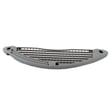
- Clean the lint screen before every load; also clean any lint buildup in the lint screen grille area.
- Inspect the vent hose behind the dryer for kinks, crushing, or long duct runs.
- Check the outside vent hood: it must open freely and be clear of lint or debris.
- Run a timed dry, high heat cycle and confirm you feel strong airflow at the outside hood.
- For electric setups, reset both dryer breakers (a dryer can tumble with one breaker tripped and have no heat).
If airflow is good, check for a heat or sensor problem
A dryer that tumbles with good airflow but still stays cool usually points to a heating circuit or temperature feedback issue.
| Symptom | Most likely area | Common next step |
|---|---|---|
| Tumbles, little or no heat | Heating system | Test/replace the lg dryer heating element 5301EL1001H |
| Overheats, shuts down, or cycles oddly | Safety thermostats | Inspect/replace the dryer high-limit thermostat 6931EL3003D |
| Heat seems inconsistent, cycles end too soon | Moisture sensing | Clean sensor bars; consider the dryer moisture sensor 6500EL3001A |
Why it matters
Poor airflow makes drying slow and can trigger temperature limits, while an electrical supply issue can let the motor run without powering the heater. Fixing airflow first protects parts like the heating element, thermistor, and thermostats and restores normal cycle times.
Specs and settings to confirm
Use the troubleshooting and “before calling for service” sections in the 79669272900 owner's manual to verify:
- Correct cycle selection (timed dry vs. sensor dry)
- Heat level settings
- Venting configuration and clearance guidance
Last updated: February 2026
What are the codes for Kenmore Elite dryer?
For the Kenmore Elite dryer model 79669272900, the display can show power and wiring codes (like PF and PS) plus “F” and “tE” error codes that point to specific failures such as the control board, user interface, heater relay, or temperature sensing. Use the 79669272900 owner's manual to match the exact code to the recommended checks.
Common Kenmore Elite dryer codes and what they mean
Here are the most common codes customers see on Kenmore Elite dryers like 79669272900:
- PF: Power failure during a cycle.
- PS (electric dryers only): Power cord wired incorrectly; the dryer detects incorrect voltage/neutral.
- tE1 / tE2: Temperature sensing failure.
- F:01: Main electronic control board failure.
- F:02: Keypad or user interface failure.
- F:20: Heater relay failure.
- F:22 / F:23: Outlet thermistor failure.
- F:24 / F:25: Inlet thermistor failure.
What to do first (safe, high-value checks)
We recommend these steps before replacing parts:
- Reset power: Unplug the dryer (or switch off the breaker) for 2 to 5 minutes, then restore power.
- If you see PF: Confirm the outlet and breaker are stable; avoid running the dryer on a loose plug or shared circuit.
- If you see PS: Recheck the terminal block wiring (neutral on center terminal for a 4-wire cord); correct wiring prevents control damage.
- If you see tE1/tE2: Stop using heated cycles until the temperature sensing issue is corrected.
- If you see F codes: Note the full code exactly as shown; it determines whether the issue is control, heater circuit, or sensor related.
Parts that commonly relate to heat and sensor codes
If troubleshooting points to temperature sensing or heat control, these parts are commonly involved on this model:
| Code family | What it usually involves | Example part for this model |
|---|---|---|
| tE1 / tE2 | Temperature sensing circuit | Dryer thermistor AGM30045804 |
| F:20 | Heater relay or heater circuit | Lg dryer heating element 5301EL1001H |
| Overheating symptoms | Airflow restriction or safety thermostat opening | Dryer high-limit thermostat 6931EL3003D |
Why it matters
Error codes help us avoid guesswork. For example, PS is often a wiring issue (not a bad heater), while tE codes point to temperature sensing, which affects drying performance and can trigger shutdowns.
Last updated: February 2026
What are common problems with Kenmore dryers?
Common problems on the Kenmore Elite 79669272900 dryer include no heat, long dry times from poor venting, won’t start, drum not turning, and loud thumping/squealing. Most issues trace back to airflow restrictions, power supply problems, or normal wear on drive and heating components; our 79669272900 owner's manual covers the key checks.
Most common symptoms and what usually causes them
- Dryer runs but doesn’t heat: tripped breaker/blown fuse (electric), gas shutoff closed (gas), failed heating component, or a temperature-sensing issue
- Long drying times: lint buildup or restricted exhaust ducting, crushed vent, or a plugged outside vent hood
- Won’t turn on: loose power cord plug, tripped breaker/blown fuse, or a door switch problem
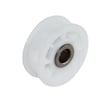
- Drum not turning: worn/broken belt, seized roller, idler pulley issue, or motor problem
- Noisy operation: worn drum support rollers, idler pulley wear, or a damaged belt
Quick checks we recommend first (fast, high-impact)
- Clean the lint filter before every load and check it against a light for clogging.
- Inspect venting end-to-end (dryer outlet to outside hood) for lint, kinks, or crushed duct.
- Confirm the outside vent hood damper opens freely and is not packed with lint.
- Verify the dryer is on a properly grounded outlet and the breaker/fuse is correct.
- Avoid overloading or underloading; both can cause poor drying and odd cycle behavior.
Parts that commonly fix these problems on model 79669272900
| Symptom | Common wear item | Example part for this model |
|---|---|---|
| Drum won’t turn | Drum belt | Dryer drum belt 4400EL2001F |
| Thumping/squealing | Drum support roller | Dryer drum support roller 4581EL2002L |
| No heat or overheating symptoms | Heating/limit controls | Dryer high-limit thermostat 6931EL3003D |
| Poor dryness sensing | Moisture sensor | Dryer moisture sensor 6500EL3001A |
Why it matters
Poor exhaust venting is a leading cause of long dry times and overheating-related shutdowns because restricted airflow makes the dryer work harder and less efficiently. Keeping the lint filter and vent system clean helps protect the heating system and shortens cycle times.
Related help
For display codes and what they mean on Kenmore 796 dryers, use our Kenmore 796 model dryer error codes reference.
Last updated: February 2026