Installation guide
 Owner’s manual


What's the average lifespan of a Whirlpool dryer?
Most Whirlpool dryers, including the Whirlpool WGD9371YW0 27-inch gas dryer, typically last 10 to 13 years with normal household use. Regular airflow maintenance (lint screen and venting) and avoiding chronic overheating are the biggest factors in reaching the high end of that range.
What affects dryer lifespan the most
- Venting and airflow: Long or restricted venting increases heat and run time, which shortens component life.
- Lint control: Cleaning the lint screen every load and keeping the blower housing clear reduces strain.
- Load size: Overloading stresses the drive motor, belt, rollers, and idler pulley.
- Heat system health (gas models): A weak igniter or sensor issues can cause repeated ignition attempts and extra wear.
- Moisture sensing accuracy: Dirty sensor bars can cause longer cycles and unnecessary heat exposure.
Quick maintenance checklist (best ROI)
- Clean the lint screen; replace it if torn or warped (see screen W10120998).
- Inspect and clean the exhaust duct; keep the vent run as straight and short as practical.
- Avoid crushing the vent behind the dryer; most installs need about 5 inches of clearance for the elbow and ducting.
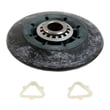
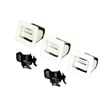
- If you hear squealing or thumping, service drum support parts early (see dryer drum support roller WPW10314173).
- If cycles run hot or shut down early, test temperature sensing parts (see dryer thermistor WP8577274).
Typical lifespan by what you do (rule of thumb)
| Usage and care level | Typical outcome | What you usually notice first |
|---|---|---|
| Light use + good venting | 12 to 15 years | Minor noise from rollers or idler |
| Average use + average venting | 10 to 13 years | Longer dry times, occasional noise |
| Heavy use or poor venting | 7 to 10 years | Repeated overheating, longer cycles |
Why it matters
A dryer that runs with restricted airflow dries slower and runs hotter. That extra heat and run time accelerates wear on common Whirlpool gas dryer parts like the blower wheel, drum rollers, idler pulley, and heat sensors. For venting and spacing guidance specific to this model, use the WGD9371YW0 installation guide.
Last updated: February 2026
Where is my dryer part number?
On your Whirlpool WGD9371YW0 gas dryer, the part number is printed on the part itself (often on a sticker, stamp, or molded marking). For the correct replacement, we match that part number to your model’s parts list in the WGD9371YW0 owner’s manual.
Where to look for the part number
Check these common spots first (use a flashlight):
- On the part body: sticker or stamped numbers on rollers, pulleys, sensors, and the motor
- Near mounting points: brackets and housings often have the number near a screw hole
- On plastic parts: molded-in numbers on ducting, lint screen frames, and covers
- On electrical parts: label on the thermistor, radiant sensor, igniter, or control board
- On the packaging (if you still have it): manufacturer part number is usually printed clearly
If you cannot find a number, use the model number instead
For WGD9371YW0, using the model number is usually faster and more accurate than reading worn labels. Once we have the model, we can narrow the exact part by location and symptom.
Quick examples for this model
| Symptom you notice | Common part to check | Example part on this model |
|---|---|---|
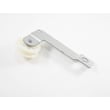
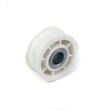
| Squealing or thumping | Drum support roller or idler pulley | Dryer drum support roller WPW10314173 or dryer idler pulley 279640 |
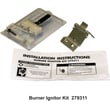
| No heat (gas) | Igniter or radiant sensor | Igniter 279311 or dryer radiant sensor WP338906 |
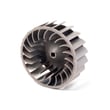
| Runs but dries poorly | Airflow components | Dryer blower wheel WP697772 |
Why it matters
Dryers often use multiple similar-looking parts across different Whirlpool models. Matching by model number (WGD9371YW0) and then confirming by part location and symptom helps prevent ordering the wrong roller, sensor, or gas-heat component.
Last updated: February 2026
What are the common problems with Whirlpool dryers?
Common problems we see on Whirlpool dryers like model WGD9371YW0 include a dryer that will not start, a drum that will not tumble, long dry times from restricted airflow, and heat problems on gas models (ignition or flame sensing). Many issues trace back to power, door switch/latch, venting, or normal wear parts.
Quick checks first (fastest fixes)
- Confirm the dryer is plugged into a properly grounded outlet and the breaker is not tripped.
- Make sure the door closes fully and latches; a misaligned latch can prevent starting.
- Start a Timed Dry heated cycle (not Air Only) to rule out cycle selection issues.
- Check that the gas supply is on (gas models) and the flexible gas line is not kinked.
- Clean the lint screen and verify the vent is not crushed, clogged, or made of improper flexible duct.
Most common symptoms and likely causes
| Symptom | Most likely causes | Parts that commonly wear |
|---|---|---|
| Won’t start | Door not closed, breaker/fuse issue, start sequence not completed | Door latch components, controls |
| Runs but won’t tumble | Broken belt, seized roller, bad idler pulley, motor issue | Dryer idler pulley 279640, drum rollers |
| No heat or weak heat (gas) | Igniter/sensor issue, gas supply off, burner/valve problem | Igniter 279311, radiant sensor |
| Long dry times | Restricted venting, lint buildup, crushed duct, low airflow | Blower wheel, ducting |
Parts that often solve noise, no-tumble, or poor tumbling
If the drum squeals, thumps, or stops turning, these wear items are common on this style of 27 inch gas dryer:
- Drum support rollers (flat spots cause thumping)
- Idler pulley (squeal, belt slack)
- Blower wheel (rattle, poor airflow)
- Drum seals (air leaks, lint inside cabinet)
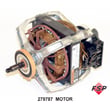
- Drive motor (hums, intermittent tumbling)
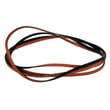
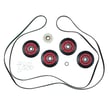
A convenient option for multiple wear items at once is a dryer repair kit 4392067.
Why it matters
Airflow and safe installation directly affect drying performance and safety. The installation instructions call out proper venting materials, avoiding crushed or kinked lines, and verifying power and gas supply during first-start checks. Use the installation guide for venting and setup requirements, and the WGD9371YW0 owner’s manual for operating tips and troubleshooting.
Last updated: February 2026