Owner’s manual



What is the capacity of the LG DLE2514W?
The LG DLE2514W dryer has a 7.0 cu. ft. capacity (IEC). You can confirm this in the specifications section of the DLE2514W owner's manual, which lists the dryer capacity as 7.0 cu. ft.
In the specifications section, the manual lists key specs such as size, capacity, and weight. For this model, it shows:
- Dryer capacity: IEC 7.0 cu. ft.
- Size: 68.6 x 96.5 x 73.0 cm (W x H x D)
- Weight: 126 lb
A 7.0 cu. ft. LG electric dryer like the DLE2514W is designed for typical household loads, including bulkier items when loaded correctly.
- Dry mixed loads without packing the drum tight
- Dry bulky items (like comforters) one at a time for better airflow
- Use the correct cycle and temperature to reduce overdrying
- Clean the lint screen before every load to maintain airflow
| Spec | Value |
|---|---|
| Capacity | 7.0 cu. ft. (IEC) |
| Width | 68.6 cm (about 27 in.) |
| Height | 96.5 cm (about 38 in.) |
| Depth | 73.0 cm (about 29 in.) |
Capacity affects drying performance and efficiency. When the drum is overloaded, airflow drops and dry times increase; when it is underloaded, you can waste energy. Matching load size to the 7.0 cu. ft. drum helps the heater and blower move air properly.
If you are shopping for replacement parts that impact drying performance (like airflow or heat), you can order model-matched parts from the parts list for DLE2514W, or search by model on Sears PartsDirect.
Last updated: February 2026
How do I reset my LG dryer flow sensor?
On an LG DLE2514W dryer, the Flow Sense (airflow) warning clears after you fix the airflow restriction and then power-cycle the dryer. Clean the lint filter and venting first; then unplug the dryer (or switch the breaker off) for about 5 minutes and restart a cycle.
- Turn the dryer off.
- Remove and clean the lint filter; wash off any fabric-softener film, dry it, and reinstall it.
- Check the exhaust path for restrictions (crushed flex duct, lint buildup, blocked outside hood).
- Restore proper venting; keep the run as short and straight as possible.
- Power reset: unplug for 5 minutes (or turn the breaker off for 5 minutes), then power back on.
- Run a timed dry cycle for 5 to 10 minutes to confirm airflow is normal.
Flow Sense is an airflow restriction indicator, not a “button reset” feature. If the vent is still restricted, the warning returns even after a power reset.
- Lint buildup in the vent pipe or wall duct
- Kinked or crushed flexible vent behind the dryer
- Clogged outside vent hood (stuck flap, screen blockage)
- Excessively long vent run or too many elbows
- Lint filter coated with residue (looks clean but blocks air)
| What you notice | Most likely cause | What to do next |
|---|---|---|
| Long dry times | Vent restriction | Clean/shorten venting, confirm strong exhaust outside |
| Dryer gets very hot | Poor airflow | Clear venting; check for crushed duct |
| Warning returns right away | Restriction still present | Recheck entire exhaust path end-to-end |
| No heat and shuts down | Overheat protection tripping | Fix airflow first; then check thermostats/element |
Restricted airflow makes clothes take longer to dry and can overheat components such as the heating element and thermostats. Keeping the venting clear helps protect parts and improves drying performance.
For model-specific operating details and cycle behavior, use the DLE2514W owner's manual. If you need replacement parts for airflow-related repairs (like the internal ducting), order from the parts list for this model or search by model number on Sears PartsDirect.
Last updated: February 2026
Why does an LG sensor dry dryer take so long to dry?
On the LG DLE2514W, Sensor Dry cycles can run longer when airflow is restricted, the load is too large or heavy, or the moisture-sensing system is getting inaccurate feedback. Start by confirming cycle settings and improving venting and lint control; then check heat and sensor-related parts.
- Clean the lint filter before every load.
- Confirm the exhaust duct is clear, not crushed, and the outside damper opens freely.
- Dry heavy items (towels, denim, bedding) in smaller, consistent-size loads.
- Use the correct Sensor Dry cycle and adjust Dry level (More or Less) to match the load.
- If items are still damp after Sensor Dry, use Time Dry to finish the load.
Sensor Dry automatically adjusts time based on detected moisture. If the dryer cannot move air well, or the load is uneven, the sensor keeps detecting moisture and extends the cycle.
| Situation | What you notice | What to do |
|---|---|---|
| Restricted venting or lint buildup | Long cycles, clothes feel hot but still damp | Clear/shorten venting; clean lint areas |
| Heavy or oversized loads | Towels/jeans take much longer than mixed loads | Split into smaller loads; use Cotton/Towels |
| Weak or inconsistent heat | Runs a long time with poor drying | Check heating and thermostats |
| Sensor feedback issue | Time keeps extending or ends too soon | Clean sensor bars; check sensor components |
If venting is clear and loads are sized correctly, long dry times often point to a heating or temperature-sensing issue.
- Heating performance: dryer heating element 5301EL1001J
- Temperature sensing: dryer thermistor AGM30045804
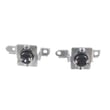
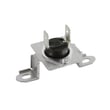
- Overheat protection that can interrupt heat: dryer blower thermostat 6931EL3002M
Long dry times usually mean the dryer is working harder than it should. Fixing airflow and heat control helps the DLE2514W dry faster, reduces wear on the drum belt and motor, and can help prevent overheating.
For cycle guidance and Sensor Dry settings (including Dry level behavior), follow the steps in the DLE2514W owner's manual. You can also look up display messages using our LG dryer error codes guide. For replacement parts, use the parts list for this model or search by model number on Sears PartsDirect.
Last updated: February 2026
What is the most common problem with LG dryers?
The most common problem we see with LG dryers (including model DLE2514W) is poor drying performance caused by restricted airflow: a clogged lint screen, blocked exhaust duct, or crushed venting. Airflow problems also contribute to overheating and shutoffs, and they can make heating and sensor issues look worse than they are.
Start with these airflow and power basics before replacing parts:
- Clean the lint filter every load; if needed, wash it in warm soapy water, dry it fully, and reinstall it (steps are in the DLE2514W owner's manual).
- Check the vent path for kinks, crushed flex duct, heavy lint buildup, or a stuck exterior damper.
- Confirm the dryer is getting full power; many electric dryers tumble with only one breaker/fuse tripped but will not heat.
- Avoid overloading; packed loads restrict internal airflow and extend dry times.
- If clothes feel “hot but damp,” treat it as an airflow issue first.
Once airflow is confirmed good, the next most common problems are heat control and drum drive wear.
| Symptom | Most likely area | Example parts for DLE2514W |
|---|---|---|
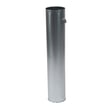
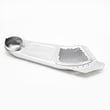
| Long dry times, weak airflow | Venting, lint screen area | Dryer exhaust duct 5209EL1006A, dryer lint screen cover 3550EL1006B |
| No heat (drum tumbles) | Power supply, heater circuit | Dryer heating element 5301EL1001J, dryer blower thermostat 6931EL3002M |
| Dryer shuts off or overheats | Airflow, temperature sensing | Dryer thermistor AGM30045804, kenmore elite dryer high-limit thermostat 6931EL3001E |
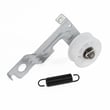
| Squealing, thumping, no tumble | Belt and idler system | Dryer drum belt 4400EL2001F, dryer idler pulley 4560EL3001A |
Restricted airflow is the root cause behind many “LG dryer not heating” and “dryer takes too long” complaints. Fixing venting first prevents repeat failures of heating components and thermostats, and it improves drying time and energy use.
Replace a part when the symptom is consistent after airflow and power checks:
- Repeated no-heat cycles with correct power: heating circuit parts.
- Overheating or error behavior after vent cleaning: thermistor or thermostat.
- Persistent squeal or drum not turning: belt or idler pulley.
For model-specific operating and troubleshooting steps, we follow the DLE2514W owner's manual. To order DLE2514W replacement parts, use the parts list for this model or search by model number on Sears PartsDirect.
Last updated: February 2026