Owner’s manual
 Error Codes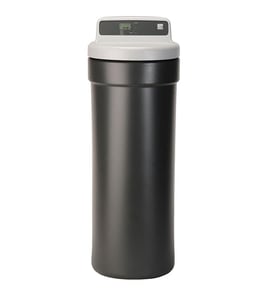




What is the life expectancy of a GE water softener?
A GE water softener like model GXSF40H02 typically lasts 10 to 15 years with normal household use. Actual life depends most on water quality (especially chlorine level), correct inlet pressure and flow, and routine cleaning and salt maintenance outlined in the GXSF40H02 owner's manual.
Typical lifespan and what affects it
Most water softeners reach end-of-life because the resin bed loses capacity, the valve seals wear, or the control components fail.
- Water chemistry: Resin can degrade faster when chlorine is above 2 ppm.
- Water pressure: Keep inlet pressure at or below 125 psi.
- Minimum flow: The system needs at least 3 GPM at the inlet.
- Freezing exposure: Freezing water can crack internal parts and tanks.
- Maintenance: Cleaning the nozzle and venturi and preventing salt bridging helps performance.
Quick “replace vs. repair” guide
Use this as a practical decision tool when your softener is near the 10 to 15 year range.
| What you’re seeing | Most common cause | Best next step |
|---|---|---|
| Hard water returns quickly | Resin worn, settings off, venturi/nozzle restricted | Verify hardness settings; clean venturi/nozzle |
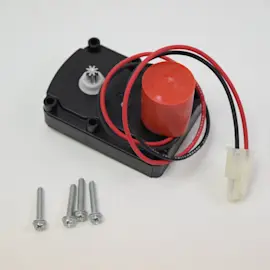
| Unit won’t advance through cycles | Switch or drive/valve issue | Check/replace switch 7030713 if position sensing fails |
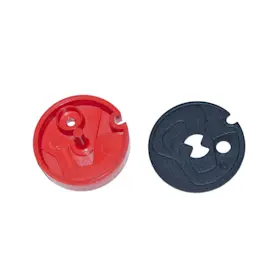
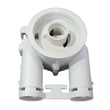
| Leaks around valve area | Worn seals or O-rings | Inspect and consider seal kit 7129716 |
| Frequent clogs or low brine draw | Screen/venturi restriction | Clean venturi/nozzle; inspect screens |
Why it matters
A softener past its typical lifespan can still run, but it often uses more salt and water to regenerate while delivering less soft water. Keeping pressure, flow, and cleaning on track helps you get the full service life from the resin tank, brine system, and valve seals.
Last updated: February 2026
Does GE make water softeners?
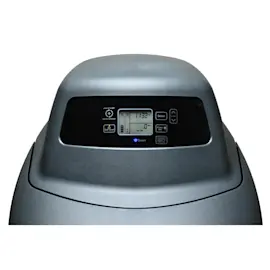
Yes. GE makes water softeners, including the GE GXSF40H02 water softening system, which is designed to reduce hard-water minerals (calcium and magnesium) that cause scale buildup, soap scum, and spotting. For model-specific features, operation, and maintenance, use the GXSF40H02 owner's manual.
What a GE water softener does in your home
A GE water softener helps protect plumbing and appliances by reducing hardness minerals that create scale. You typically notice improvements in cleaning and water-using appliance performance.
- Helps reduce scale buildup in pipes and fixtures
- Improves soap and detergent performance
- Helps reduce spotting on dishes and glassware
- Supports better water flow over time by limiting mineral deposits
- Helps water heaters, dishwashers, and washing machines run more efficiently
Salt guidance (important for performance)
For the GE GXSF40H02, we recommend using clean water softening salt that is at least 99.5% pure. Nugget, pellet, or coarse solar salts are commonly recommended; avoid salts that create heavy sediment or caking.
- Use nugget, pellet, or coarse solar salt
- Avoid rock, block, granulated, or “ice cream making” salts
- Keep the salt level above the water line in the brine tank
- Break up salt bridges if the unit stops using salt
Quick salt type comparison
| Salt type | Typical result | Best use case |
|---|---|---|
| Pellet/nugget | Cleaner brine, fewer impurities | Most homes, lowest maintenance |
| Coarse solar | Good performance, moderate residue | When pellet salt is unavailable |
| Rock/block/granulated | More dirt, caking, maintenance issues | Not recommended |
Why it matters
Hard water can shorten the life of water-using appliances and create ongoing cleaning problems. Keeping the GXSF40H02 set up correctly and using the right salt helps the softener regenerate properly and maintain consistent soft water.
Last updated: February 2026
What is the code L50 on a GE water softener?
On the GE GXSF40H02 water softener, code L50 indicates the control area has been exposed to moisture (water intrusion), which can cause display or control problems. Dry the control area, restore power, and then confirm the softener can regenerate and deliver soft water.
What to do right away
- Unplug the power transformer from the outlet.
- Dry the control panel area thoroughly (gentle airflow; avoid high heat).
- Check for obvious drips above the unit (sweating pipes, valve leaks, condensation).
- Plug back in and verify the display returns to normal.
- Run a manual regeneration and confirm normal operation afterward.
Common causes of moisture at the controls
Moisture usually comes from a small leak or condensation that travels along wiring or tubing.
- Leak at the valve or fittings near the head
- Drain line splash-back or loose drain connection
- High humidity or condensation from cold inlet water
- Brine overflow or brine tubing issue
- Water exposure during cleaning or nearby plumbing work
Parts that often help when leaks are involved
If you find water around the valve/head area, these model-related parts are commonly involved in sealing and leak prevention:
| Symptom you see | Likely area | Part to consider |
|---|---|---|
| Slow seep at valve/head | Internal seals | Seal kit 7129716 |
| Drip at nozzle/venturi area | Nozzle/venturi gasket | Gasket nozzle 7187772 |
| Water around drain port | Drain sealing surface | Drain seal 7092642 |
Why it matters
Moisture at the controls can lead to intermittent operation, failed regenerations, and hard water symptoms. Fixing the water source (not just drying the panel) helps prevent repeat L50 alerts and protects the electronic monitor.
Helpful references
- Use the GXSF40H02 owner's manual for control operation, troubleshooting tips, and care/cleaning guidance.
- If the display shows other alerts, use our GE error codes reference to identify and clear them.
Last updated: February 2026
What water softeners do plumbers recommend?
Plumbers typically recommend water softeners that are correctly sized for your home’s water hardness and flow needs, and that can be installed to code with a proper drain, shutoff valve, and power supply. For a GE GXSF40H02, we focus on correct installation and setup first because that is what drives reliable soft water performance long-term; see the GXSF40H02 owner's manual.
What plumbers usually look for (and why)
- Correct grain capacity for your hardness level and household size
- Proven control valve design with readily available service parts
- Easy access to the nozzle/venturi and seals for routine maintenance
- Installation flexibility (bypass valve, standard plumbing connections, drain routing)
- Clear diagnostics and error code support
Brand and feature comparison (quick guide)
| What you want | What plumbers recommend | What it prevents |
|---|---|---|
| Consistent soft water | Proper sizing + correct programming | Hard water bleed-through |
| Fewer service calls | Serviceable valve parts and seals | Leaks and sticking valves |
| Trouble-free recharge | Clean, high-purity salt | Salt bridging, clogs |
| Code-friendly install | Correct drain and shutoff placement | Overflows and unsafe installs |
GE GXSF40H02 installation and setup checks that matter most
Your GE GXSF40H02 has specific installation limits that plumbers pay attention to:
- Connect to the main water supply before the water heater; do not run hot water through the softener (keep inlet water under 120°F).
- Keep inlet pressure within the allowable range (maximum 125 psi; use a pressure-reducing valve if needed).
- Plug the included transformer into an indoor, grounded 120V outlet (the outlet should stay live).
- Use clean water softening salt that is at least 99.5% pure; nugget, pellet, or coarse solar salt is recommended.
- Install where it will not freeze and where a leak would cause the least damage.
Helpful resources for choosing and troubleshooting
- Use where to install a water softener to compare placement options (drain access, freezing risk, shutoff access).
- If you are comparing “recommended” units by diagnostics and serviceability, review GE error codes for what the control can report when something goes wrong.
Why it matters
Most “plumber recommended” softeners earn that reputation because they are installed correctly, use the right salt, and have serviceable valve components. Those basics reduce no-soft-water complaints, salt waste, and leak risk.
Last updated: February 2026
Why is my GE water softener not working?
If your GE GXSF40H02 water softener is not working, the most common causes are a salt bridge in the brine tank, a clogged nozzle and venturi (no brine draw), or a recharge problem you can confirm using the manual recharge test in the GXSF40H02 owner's manual.
Quick checks we recommend first
- Confirm the bypass valve is in the service position (not bypass).
- Look for a salt bridge (hard crust) that prevents salt from contacting water.
- Start a manual recharge and watch for brine tank fill water, then brine draw.
- Check for a clogged nozzle and venturi (sand, dirt, iron) that stops suction.
- Verify the unit has power and the display shows a steady time (not flashing).
How to test recharge and brine draw (most useful diagnostic)
Use the manual recharge steps in the GXSF40H02 owner's manual. During the test:
| What you observe | What it usually means | What to do next |
|---|---|---|
| No water enters brine tank during fill | Obstructed nozzle/venturi, fill flow plug, or brine tubing issue | Clean nozzle/venturi; inspect brine tubing |
| Water fills but level in brinewell does not drop during brining | No brine draw (plugged venturi/nozzle, air leak, restriction) | Clean nozzle/venturi; check seals and screens |
| Brine draws normally but water stays hard | Settings, resin bed fouling (iron), or valve internal wear | Check hardness setting; consider resin cleaning; inspect valve parts |
Cleaning the nozzle and venturi (common fix)
A clean nozzle and venturi is required to create suction that pulls brine into the resin tank during recharge. If it plugs with dirt or iron, you will get hard water.
- Put the softener in service cycle before opening the nozzle/venturi area.
- Remove the cover, then remove the cap while holding the housing.
- Lift out and clean the screen support and screen.
- Wash and rinse parts in warm water; use a small brush if needed.
- Clean and inspect the gasket; reassemble carefully.
If you need the correct gasketed nozzle parts for this model, use gasket nozzle 7187772.
Why it matters
When the softener cannot fill the brine tank or cannot draw brine, the resin bed never regenerates. That means you will keep getting hard water even though the unit appears to run.
Last updated: February 2026
Why won't my GE water softener drain?
If your GE GXSF40H02 water softener will not drain during recharge, the most common cause is a blocked, kinked, or improperly routed valve drain hose. The softener must be able to push water out to a proper drain point with an air gap, or it will stall and you can get brine and water handling problems.
What to check first (fast, high-impact)
- Make sure the drain hose is not kinked, crushed, frozen, or clogged with debris.
- Confirm the hose end is secured at the drain point and cannot move around during backwash.
- Verify you have an air gap of at least 1-1/2 inches between the hose end and the drain opening.
- Check that the drain point (floor drain, standpipe, laundry tub, sump) is not backed up.
- If you ran the hose overhead, lower it and re-test; raising the hose can create back pressure.
Drain hose routing limits (to prevent back pressure)
The GXSF40H02 can drain poorly if the hose is elevated too high above the floor.
| Inlet water pressure to softener | Max drain hose rise above floor |
|---|---|
| 20 to 50 psi | 8 ft |
| Above 50 psi | 14 ft |
Use the built-in recharge test to confirm draining
We use the manual recharge steps in the GXSF40H02 owner’s manual to verify whether the unit is actually moving water to the drain:
- Start a manual recharge and watch for fill water entering the brine tank.
- Advance to the brining step; a slow flow to the drain should begin.
- If you do not see any drain flow, focus on the drain hose, drain fitting, and internal valve components.
Parts that commonly affect draining
If the hose and drain point are good, internal sealing and valve movement issues can prevent proper drain flow.
- Worn internal seals can cause poor valve operation and leakage between cycles; see seal kit 7129716.
- A sticking or failed position sensor can keep the valve from moving through the drain portions of recharge; see switch 7030713.
- Debris in the nozzle/venturi area can disrupt brine draw and recharge flow behavior; inspect and clean, and replace the gasketed assembly if needed.
Why it matters
During recharge, the softener must drain reliably to backwash and rinse the resin bed. If water cannot exit, the system will not regenerate correctly, and you will typically notice hard water, salty water, or an overfilled brine tank.
Last updated: February 2026