Owner’s manual


What size dryer is a Kenmore 80 series?
Most Kenmore 80 Series dryers are full-size machines with a drum capacity around 6.0 to 7.0 cu. ft. (typical for standard 27-inch dryers). For exact capacity, we match the answer to the specific model number on the rating plate and confirm it in the 79691379210 owner's manual.
How to identify the exact size for your Kenmore 80 Series
Kenmore used “80 Series” across multiple manufacturers and model families, so the most reliable way to pin down capacity is by model number.
- Find the model number on the door opening or door frame label.
- If the model starts with 110, it is commonly Whirlpool-built and often an older, smaller-capacity design.
- If the model starts with 796 (like 79691379210), it is commonly LG-built and typically a modern full-size capacity.
- Use the manual specs section to confirm drum capacity and exterior dimensions.
- If you are shopping for a replacement, measure the installation space and vent path, not just capacity.
Typical capacity ranges (what “size” usually means)
| Dryer type / era | Typical capacity | Typical width |
|---|---|---|
| Older standard dryer (many 110-prefix models) | ~3.0 to 4.0 cu. ft. | ~27 in. |
| Modern full-size dryer (many 796-prefix models) | ~6.0 to 7.5 cu. ft. | ~27 in. |
| Compact dryer | ~2.5 to 4.0 cu. ft. | ~24 in. |
Why it matters
Capacity affects dry time, energy use, and whether comforters and bulky loads tumble freely. It also helps you choose compatible accessories and avoid fit issues when replacing a dryer.
Related help for Kenmore dryers
If your Kenmore dryer is showing a code or acting differently after a move or install, use Kenmore 796 model dryer error codes to narrow down what the control is detecting.
Last updated: February 2026
How to find Kenmore dryer model number?
For a Kenmore dryer, the model number is printed on the appliance’s rating label; on model 79691379210, you’ll typically find that label just inside the dryer door opening on the cabinet frame, or on the back of the dryer near the top.
Where to look first (fastest checks)
- Open the dryer door and look along the door opening on the cabinet frame (often the most common spot).
- Check the back panel near the top edge.
- Look around the door hinge area and the opposite side of the opening.
- If your dryer is stacked, check the visible edges of the cabinet frame inside the door.
What the label looks like
Most Kenmore dryer ID labels include several fields. Use the model number (not the serial number) when ordering parts like a drum belt, idler pulley, or moisture sensor.
| Label field | What it’s used for | Example of what you’ll see |
|---|---|---|
| Model number | Matching parts and diagrams | 79691379210 |
| Serial number | Manufacturing ID | A longer mix of letters and numbers |
| Electrical or gas info | Installation and troubleshooting | Voltage, amps, or gas type |
Tips to avoid ordering the wrong part
- Copy the model number exactly as printed (all digits matter).
- Take a clear photo of the label before you start shopping.
- If the label is worn, try a flashlight at an angle to make the print easier to read.
- Use the model number to confirm common wear items such as the dryer drum belt 4400EL2001F.
Why it matters
Kenmore uses many similar-looking dryer designs; the correct model number ensures we match the right parts (belt routing, drum support roller style, thermostat ratings) and the correct procedures in the 79691379210 manual.
Last updated: February 2026
How many cubic feet is a Kenmore series 500 dryer?
Kenmore “500 series” is a series name, not a single capacity; cubic feet varies by the exact model. For Kenmore model 79691379210, the capacity is listed in the specifications section of the 79691379210 owner's manual.
How to find the exact cubic feet for your dryer
- Check the Specifications or Product information section in the manual.
- Look for wording like “capacity” or “drum volume” (often shown in cu. ft.).
- If you have the model tag, match it exactly to 79691379210 (series names can overlap).
- If you are comparing dryers, use capacity plus venting and cycle options to judge real-world load size.
Typical capacity ranges (for quick comparison)
Most full-size Kenmore dryers fall into these common ranges:
| Dryer type | Typical capacity range | Best for |
|---|---|---|
| Compact | 3.4 to 4.0 cu. ft. | Small loads, tight spaces |
| Standard full-size | 6.5 to 7.4 cu. ft. | Everyday family laundry |
| Extra-large | 7.5 to 9.0 cu. ft. | Bulky items, large households |
Why it matters
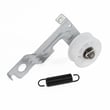
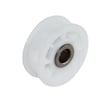
Capacity affects how well clothes tumble and dry evenly. Overloading a dryer can increase dry time and wear on drive components like the belt and idler pulley. If your dryer is squealing, thumping, or not tumbling smoothly, common wear items include the dryer drum belt 4400EL2001F and dryer idler pulley 4560EL3001A.
Last updated: February 2026
What are the codes for Kenmore Elite dryer?
Kenmore Elite dryer error codes are the letters and F-codes shown on the display that point to the system the control is detecting a problem in (power, user interface, heating, or temperature sensing). If your dryer is model 79691379210, use the model-specific code list in the 79691379210 owner's manual and compare it to the Kenmore 796 model steam dryer error codes reference.
Common Kenmore Elite-style codes (and what they usually indicate)
These are widely used on many Kenmore Elite electronic-control dryers; always match the code format to your display:
- PF: Power failure or power interruption
- F:01: Main electronic control board fault
- F:02: Keypad or user interface fault
- F:20: Heating relay or heating control circuit issue
- F:22 / F:23: Outlet thermistor (temperature sensor) issue
- F:24 / F:25: Inlet thermistor (temperature sensor) issue
What to do first when an error code appears
Start with safe checks that solve the most common causes (especially airflow and power):
- Reset power: unplug for 1 minute or turn the breaker off and back on
- Clean the lint screen and confirm strong airflow at the outside vent
- Check the power cord fit at the outlet and confirm the breaker is fully on
- Make sure the door closes firmly; a failing switch can trigger odd behavior
- If the code returns immediately, stop the cycle and troubleshoot before repeated runs
Quick guide: what system the code points to
| Code | System area | Best first check |
|---|---|---|
| PF | Power supply | Outlet, breaker, and power cord connection |
| F:01 | Control board | Loose wiring connections, then board diagnosis |
| F:02 | Console/UI | Stuck keys, console connection reseat |
| F:20 | Heating control | Airflow restriction, then heating circuit checks |
| F:22 to F:25 | Thermistors | Lint buildup and venting, then sensor/wiring |
Why it matters
Using the correct code chart prevents wrong-part replacements. Heating and thermistor codes often trace back to restricted venting, which also causes long dry times and overheating.
Last updated: February 2026