Installation guide
 Owner’s manual


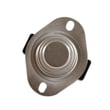
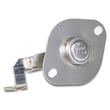
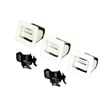
How to tell if a dryer start switch is bad?
A bad start switch on your Kenmore electric dryer model 11062602101 usually shows up as a dryer that has power but will not start when you press PUSH TO START. With the dryer unplugged, a multimeter continuity test should change from open to closed when the switch is pressed; if it does not, the switch is bad (replace it).
Quick checks before testing the switch
These items commonly prevent starting and are worth confirming first:
- The dryer door is fully closed (opening the door stops the dryer).
- The cycle selector (timer) is set to a drying setting, not OFF.
- The start button is pushed firmly.
- The dryer is plugged into a grounded outlet.
- The house fuse is intact and tight, or the circuit breaker has not tripped (some homes have two fuses/breakers for the dryer).
For the model-specific start procedure and “will not start” checklist, use the 11062602101 user manual.
How to test the start switch (continuity test)
- Unplug the dryer (electric shock hazard).
- Access the console and locate the push-to-start switch.
- Label and remove the wires from the switch terminals.
- Set your multimeter to continuity or the lowest ohms setting.
- Test across the switch terminals:
- Not pressed: meter should read open (no continuity).
- Pressed: meter should read closed (continuity, near 0 ohms).
If the readings do not change when pressed, the switch contacts are worn and the switch should be replaced.
What the symptoms usually look like
| Symptom | More likely cause | Also check |
|---|---|---|
| Nothing happens when Start is pressed | Start switch, door switch, timer/control | Power supply, breaker(s) |
| Dryer stops when door opens | Normal operation | Door latch alignment |
| Has power but will not run | Start switch or door switch | Timer set to OFF or not on a dry cycle |
Why it matters
A failing start switch can make the dryer seem “dead” even when the outlet and controls are fine. Confirming the switch with a continuity test prevents replacing higher-cost parts unnecessarily.
Last updated: January 2026
What is the average life of a Kenmore dryer?
Most Kenmore dryers average 10 to 13 years of service life. With consistent airflow maintenance (lint screen and venting) and avoiding chronic overheating, a Kenmore 11062602101 electric dryer can often run longer because proper care reduces wear on the motor, belt, and heating system.
What affects dryer lifespan the most
- Vent restriction and lint buildup; overheating shortens the life of thermostats, thermal fuses, and the heating element.
- How often you run it; multiple loads daily wears drum support parts faster.
- Overloading; strains the drum belt, idler pulley, and motor.
- Heat setting choices; high heat all the time increases thermal stress.
- Basic upkeep; cleaning and periodic internal lint removal helps prevent failures.
Maintenance that extends life (based on the manual)
Your Kenmore manual emphasizes that proper care extends dryer life and recommends keeping the lint screen clean and maintaining proper exhaust.
- Clean the lint screen before and after loads.
- Exhaust the dryer properly; clean the exhaust vent and outside hood as needed.
- Plan to remove lint from the exhaust vent about every 2 years (more often with heavy use).
- Have lint removed from inside the dryer cabinet about every 2 years (a qualified person should do this).
Reference: 11062602101 owner's manual
Quick “life extension” checklist
| What you do | How often | Why it matters |
|---|---|---|
| Clean lint screen | Every load | Keeps airflow strong and drying times shorter |
| Check vent airflow at outside hood | Monthly | Prevents heat buildup and long dry times |
| Deep-clean vent duct | About every 2 years | Reduces overheating and nuisance thermal cutoffs |
| Internal cabinet lint removal | About every 2 years | Protects motor and heater area from lint accumulation |
Why it matters
A dryer usually does not “wear out” all at once; restricted airflow and overheating typically trigger repeat breakdowns (thermal cut-off, high-limit thermostat, heating element). Keeping airflow clear is the most reliable way to get the full expected lifespan.
Last updated: January 2026
Is it worth replacing the heating element in a dryer?
Yes; on a Kenmore electric dryer like model 11062602101, replacing a failed heating element is usually worth it because the part cost is typically far less than replacing the dryer, and it restores normal drying performance when the rest of the machine is in good condition. Confirm power and airflow first using the steps in the 11062602101 installation guide.
When replacing the heating element makes sense
We recommend replacing the heating element when the dryer runs but produces no heat and basic checks pass.
- The drum tumbles normally, but clothes stay cold or take far too long to dry
- You have correct power to the dryer (many electric dryers can run on 120V but will not heat without full 240V)
- Airflow is strong at the outside vent hood (restricted venting can mimic a heat failure)
- The dryer is otherwise in good shape (drum support, motor, timer, door switch)
- You plan to keep the dryer for several more years
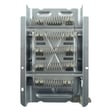
Helpful parts often replaced together on this model include the dryer element 279838 and heat-safety components.
Check these first (fast, no-parts steps)
The installation instructions for this dryer call out a simple heat check after the dryer runs for about 5 minutes.
- Verify the cycle is a heated cycle (not AIR DRY)
- Check both fuses or both circuit breakers (electric dryers commonly use two)
- Clean the lint screen and confirm the exhaust vent is not crushed or clogged
- Run 5 minutes, open the door, and feel for heat
Heating problem parts: what they do
| Part | What it affects | Common symptom |
|---|---|---|
| Heating element | Creates heat | No heat, but tumbles |
| Thermal cut-off / fuse | Safety shutoff | No heat (sometimes no run) |
| Operating thermostat / high-limit thermostat | Temperature control | Overheats, cycles oddly, weak heat |
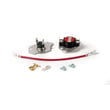
For this model, common related parts include the dryer thermal cut-off fuse kit, dryer operating thermostat, and dryer high-limit thermostat.
Why it matters
A dryer that is not heating is often a power-supply or airflow issue; fixing those first prevents repeat failures. Restricted venting can overheat the heater housing and trip safety devices, leading to another no-heat condition soon after a repair.
Last updated: January 2026
How do I tell if my dryer heating element is bad?
If your Kenmore electric dryer model 11062602101 runs but won’t produce heat (or takes much longer to dry), the heating element is a top suspect. We confirm it by doing a quick heat check during a timed, high-heat cycle, then testing the element for continuity with a multimeter.
Quick checks before you test the element
- Run a full heat cycle (not Air/Fluff) and let the dryer run about 5 minutes, then open the door and feel for heat (a basic check called out in the 11062602101 user manual).
- Verify power: many electric dryers need two fuses or breakers; if one trips, the dryer can run but not heat.
- Make sure the lint screen is clean and the vent is not crushed or kinked; poor airflow can cause overheating and repeated heat failures.
- If you smell a slight “new heater” odor right after a repair or first use, that can be normal for the first heated cycle.
How to test the heating element (best confirmation)
- Unplug the dryer (or shut off both breakers).
- Access the heater housing (location varies by design; follow the 11062602101 installation guide for safe access and setup details).
- Remove at least one wire from the element terminal.
- Use a multimeter to check continuity across the element terminals.
What the meter results mean
| Test result | What it usually indicates | Next step |
|---|---|---|
| Continuity present | Element is not open | Check thermostats, thermal cut-off, airflow |
| No continuity (open circuit) | Element coil is broken | Replace the element |
For this model, the correct replacement is the dryer element 279838.
Why it matters
A failed heating element stops heat production, but restricted venting can also overheat the heater circuit and damage safety devices. Fixing airflow issues helps the new element and thermostats last longer.
Related parts often involved in “no heat”
- Dryer thermal cut-off fuse kit 279816 (opens if overheating occurs)
- Dryer operating thermostat WP3387134 (regulates drum temperature)
- Dryer high-limit thermostat WP3977767 (safety limit)
Last updated: January 2026