Owner’s manual
 Error Codes
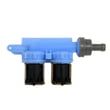


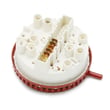
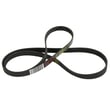
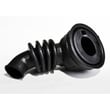
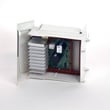


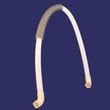
How to unclog drain hose on Kenmore washer?
On the Kenmore 11044826300 front-load washer, a clogged drain hose is usually cleared by safely draining any standing water, checking for kinks or a blocked standpipe connection, then removing the hose and flushing out debris. Use the routing and height limits in the 11044826300 owner's manual to prevent repeat clogs.
Safe steps to unclog the drain hose
- Unplug the washer to prevent shock.
- If the tub is full, run DRAIN/SPIN to drain it; if the water level is too high, the washer may drain automatically before the door unlocks.
- Pull the washer forward and inspect the drain hose for a kink, pinch, or freeze.
- Disconnect the drain hose from the home drain (standpipe or laundry tub) and check the end for lint, coins, or a sock.
- If needed, remove the hose from the washer side and flush it with hot water; a small drain snake or straightened coat hanger helps push out a clog.
- Reinstall the hose and clamps securely, then run a DRAIN/SPIN test.
Drain hose setup checks that prevent repeat clogs
The drain hose setup matters as much as the clog removal.
- Keep the hose secure but not airtight at the standpipe so there is an air gap.
- Do not force excess hose down into the standpipe.
- Do not lay excess hose on the bottom of a laundry tub.
- Confirm the standpipe height is not more than 96 in. (2.4 m) above the floor.
| What you see | Most likely cause | What to do next |
|---|---|---|
| Washer shows F02 | Drain problem (kink, clog, height issue) | Check hose routing, standpipe height, then clear hose |
| Slow drain, gurgling | Partial clog or restricted standpipe | Flush hose; clear the home drain |
| Repeated clogs | Debris in pump or hose, poor routing | Inspect hose path; consider checking the pump |
When a hose clog is not the real problem
If the hose is clear but the washer still will not drain, the drain pump or the tub-to-pump path is often restricted. For this model, common related parts include the water pump 280187 and the washer tub-to-pump hose WPW10467168.
Why it matters
A restricted drain can trigger F02 errors, leave water in the drum, and cause poor spin performance. Correct hose routing and standpipe height also reduce siphoning and repeat drain complaints.
Last updated: January 2026
What is the life expectancy of a Kenmore washer?
A Kenmore washer typically lasts 10 to 15 years. For your Kenmore 11044826300 horizontal-axis washer, lifespan depends most on load size, detergent use (especially HE detergent), and how well you prevent drain and door-boot issues; routine care can keep it running closer to the high end.
Typical lifespan and what affects it most
- Usage level: daily heavy loads shorten life compared to moderate weekly use.
- Maintenance habits: cleaning and inspection reduce wear and leaks.
- Water quality: hard water can increase buildup and stress valves and seals.
- Drain health: coins, lint, and debris strain the pump and hoses.
- Vibration control: an unlevel washer increases wear on suspension and tub components.
What “end of life” usually looks like on a front-load washer
Common symptoms that signal major wear (and often drive repair decisions):
- Won’t drain or drains slowly
- Loud rumbling during spin (bearing or tub wear)
- Door won’t lock or unlock reliably
- Leaks at the door area or underneath
- Excessive shaking or walking
Parts that commonly extend the usable life
If the washer is otherwise in good shape, these repairs are often worthwhile:
| Symptom | Likely area | Example model-matched part |
|---|---|---|
| Won’t drain / water left in tub | Drain system | Water pump 280187 |
| Won’t fill or fills slowly | Fill system | Washer water inlet valve WP8181694 |
| Door won’t lock / won’t start | Door lock system | Door lock WP8182634 |
Why it matters
Knowing the typical 10 to 15 year life expectancy helps you decide whether to repair or replace. If your 11044826300 is within that range, fixing a drain, fill, or door-lock problem often restores reliable operation for years.
For model-specific care and maintenance intervals, follow the Kenmore 11044826300 owner’s manual.
Last updated: January 2026
How do I turn off the control lock on my Kenmore Elite washer?
On Kenmore washer model 11044826300, turn off Control Lock by pressing and holding DRAIN/SPIN for 3 seconds until the CONTROL LOCKED status light turns off. This same 3-second press toggles the lock back on. See the 11044826300 owner's manual for the exact button location on your control panel.
Steps to unlock the controls
- Power the washer on (the display or status lights should be lit).
- Locate the DRAIN/SPIN button.
- Press and hold DRAIN/SPIN for 3 seconds.
- Verify the CONTROL LOCKED light turns off.
- Test a cycle button to confirm the panel responds.
If the lock will not turn off
- Hold the button a full 3 seconds (a quick tap will not toggle the lock).
- Make sure you are holding DRAIN/SPIN, not PAUSE/CANCEL.
- If a cycle is running, press PAUSE/CANCEL once, then try the 3-second hold again.
- Restore power by unplugging the washer for 1 minute, then retry the 3-second hold.
What Control Lock does on this model
When CONTROL LOCKED is lit, most buttons are disabled to prevent unintended cycle or option changes.
| Control Lock status | What you will see | What typically still works |
|---|---|---|
| On | CONTROL LOCKED light on | PAUSE/CANCEL and START |
| Off | CONTROL LOCKED light off | Normal cycle and option selection |
Why it matters
Control Lock is a common reason a washer seems unresponsive even though it has power. Unlocking restores normal button function so you can change cycles, options, and start a new load.
Last updated: January 2026
What is the capacity of a Kenmore Model 11044826300?
Kenmore model 11044826300 is a front-loading (horizontal-axis) washer; capacity is measured in cubic feet, and the exact number for your unit is listed in the specifications section of the 11044826300 owner's manual. Most full-size front-load washers are commonly in the 3.0 to 4.5 cu. ft. range.
How to find the exact capacity for model 11044826300
Use the manual to confirm the official spec for your washer.
- Open the 11044826300 owner's manual.
- Look for “Specifications” or “Product dimensions” and the line for “Capacity” (often shown as cu. ft.).
- If the manual lists a series (for example, 110.4282, 110.4482, 110.4483), match the full model number on your washer’s rating label.
- Keep the capacity handy when choosing cycle settings for bulky items.
Practical loading guidance (works even without the number)
Correct loading protects tumbling action and helps prevent spin issues.
- Load items loosely; do not pack them down.
- Fill the drum no more than about 3/4 full for mixed everyday loads.
- Wash bulky items (comforters, jackets) one at a time or as a balanced pair.
- If the washer bangs or will not reach high spin, reduce the load and redistribute.
Typical capacity ranges (for context)
| Front-load washer size | Common capacity range (cu. ft.) | Best use |
|---|---|---|
| Compact | 2.0 to 2.6 | Small households, tight spaces |
| Full-size | 3.0 to 4.5 | Most everyday laundry |
| Extra-large | 4.5+ | Large families, bulky loads |
Why it matters
Capacity affects how well clothes tumble, rinse, and spin. Overloading increases vibration and can contribute to wear on parts involved in spinning and draining, such as the washer drive belt WPW10388414 and water pump 280187.
Last updated: January 2026