Owner’s manual


How to hard reset a Kenmore dryer?
To hard reset your Kenmore Elite dryer model 11087727701, unplug it (or switch the breaker off) for about 1 to 5 minutes, then restore power and try starting a cycle again. If the control is just “stuck,” this clears the electronics and restores normal operation.
Hard reset steps (safe and effective)
- Turn the dryer OFF.
- Unplug the power cord (or turn both dryer breakers OFF for an electric dryer).
- Wait 1 to 5 minutes.
- Restore power.
- Close the door and press and hold START for about 3 seconds to begin a cycle.
- If you need to stop and clear a running cycle, press STOP twice (this ends the cycle and clears settings).
For model-specific control behavior and cycle clearing, follow the 11087727701 owner’s manual.
If the dryer still will not run after a reset
A “reset” only helps when the control needs to be cleared. If the dryer still will not start or heat, check these common causes:
- Power supply issue: a tripped breaker or blown fuse (electric dryers typically use two).
- Door not closing/latching: the door switch will not allow operation if the door is not sensed closed.
- Vent restriction: poor airflow can trigger vent-related warnings and overheating protection.
- Overheat protection opened: a thermal cut-off can open if airflow is blocked.
Quick symptom guide
| What you see | What it usually means | What to do next |
|---|---|---|
| Display shows PF | Power failure interrupted the cycle | Press and hold START to restart the cycle |
| Display shows AF | Vent may be crushed or blocked | Inspect and clean venting from dryer to outside |
| Display shows L2 | Home power supply issue affecting heat | Check both breakers/fuses; verify cord/terminal connections |
Parts that commonly relate to “no heat” or airflow problems
If troubleshooting points to a failed component, these are common matches for heat and airflow symptoms on this platform:
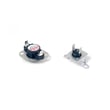
- Dryer thermal cut-off fuse kit 279973 (overheat protection components)
- Dryer heating element WP8544771 (electric heat source)
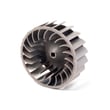
- Dryer blower wheel WP697772 (moves air through the drum and vent)
Why it matters
A hard reset clears the control, but repeated shutdowns, AF vent warnings, or loss of heat usually point to airflow or power problems. Fixing the root cause helps prevent overheating, long dry times, and repeat failures.
Last updated: January 2026
What is the cubic foot of my Kenmore dryer model 11087727701?
Kenmore Elite dryer model 11087727701 is a full-size dryer; its drum capacity is typically in the 6.0 to 7.5 cu. ft. range for this style. For the exact capacity listed for your specific version (110.8772#), use the specifications information in the 11087727701 manual.
How to confirm the exact capacity for your dryer
Use these checks so the number matches your exact model and color code.
- Open the 11087727701 manual and look for a specifications or dimensions section
- Match the covered model format shown in the manual (often 110.8772#) to your full model number
- Check the model and serial tag (commonly inside the door opening) and confirm it matches 11087727701
- Use drum capacity for load sizing; do not confuse it with cabinet dimensions or installation clearances
Typical dryer capacity comparison
| Dryer size class | Typical drum capacity | Common use |
|---|---|---|
| Compact | 3.4 to 4.4 cu. ft. | Small households |
| Full-size | 6.0 to 7.5 cu. ft. | Most families |
| Extra-large | 7.6+ cu. ft. | Bulky items |
Why it matters
Correct drum capacity helps you avoid overloading, maintain airflow through the load, and reduce dry time and wrinkling.
If dry times are long, capacity is rarely the cause
Long dry times usually come from restricted airflow or a heating problem.
- Clean the lint screen every load
- Inspect the exhaust vent for kinks, crushing, or lint buildup
- Check for strong airflow at the outside vent hood
- If the dryer tumbles but does not heat, inspect the heating circuit
A common electric-heat replacement part is the dryer heating element WP8544771.
Last updated: January 2026
Where is the moisture sensor in a Kenmore Elite dryer?
On Kenmore Elite dryer model 11087727701, the moisture sensor is located at the front of the drum area, mounted on or next to the lint screen housing (lint filter duct) near the front bulkhead. You typically reach it by removing the lint screen and the screws in the lint screen opening.
How to locate it on model 11087727701
Use the access and component location details in the 11087727701 owner's manual. On this design, the moisture sensor is a small sensor assembly positioned so tumbling clothes can contact it during Auto cycles; it connects to the harness with two wires.
Look for it in these common spots after you open the lint screen area:
- On the lint screen duct/housing just below the lint filter opening
- At the front bulkhead area (front of the drum)
- Near the airflow path where lint collects (so it is easy to inspect and clean)
Typical access steps
- Unplug the dryer or switch off the breaker.
- Pull out the lint screen.
- Remove the screws inside the lint screen opening.
- Lift the top (if required) and remove the front panel or front bulkhead (as needed).
- Find the sensor on the lint screen housing; disconnect the wire connector and remove the mounting screws.
Cleaning vs. replacing
Residue from dryer sheets can insulate the sensor and cause Auto cycles to act wrong.
| What you see | What to do first | Next step if it continues |
|---|---|---|
| Waxy film on sensor surface | Clean with rubbing alcohol | Re-test Auto cycles |
| Loose connector or damaged wires | Reseat connector, inspect wiring | Repair wiring or replace sensor |
| Auto cycles end too soon or overdry | Clean sensor and check venting | Replace the sensor if symptoms persist |
If you need the replacement part for this model, match it by model number and use the dryer moisture sensor WP3387223.
Why it matters
This dryer uses moisture sensing in Auto cycles to adjust run time and help prevent overdrying. A dirty sensor or poor connection commonly causes inconsistent dry results and time remaining changes during sensing.
Last updated: January 2026