Error Codes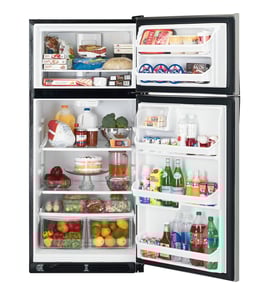


What are the disadvantages of a top mount fridge?
A top-mount refrigerator like the Whirlpool ET1FHTXMQ01 typically costs less and is simple to maintain, but the main disadvantages are less convenient fresh-food access (more bending), fewer premium storage features, and fewer built-in dispenser options compared with many bottom-freezer designs.
Common disadvantages (what most owners notice)
- More bending for daily use: the refrigerator section is lower, so you reach down more often for produce, drinks, and leftovers.
- Less “premium” organization: many top-mount models have fewer adjustable bins, deli drawers, and wide pantry-style storage than higher-end layouts.
- Dispenser limitations: many top-mount units do not include an external water/ice dispenser.
- Freezer can feel crowded: the top freezer is convenient for frozen foods, but can be harder to organize without baskets.
- Temperature swings are more noticeable: frequent freezer door openings can affect airflow and temperatures, especially if vents get blocked.
Quick comparison: top-mount vs bottom-freezer
| Feature | Top-mount refrigerator | Bottom-freezer refrigerator |
|---|---|---|
| Fresh-food access | Lower, more bending | Higher, easier daily access |
| Freezer access | Eye-level | Lower drawer/basket style |
| Storage/organization | Often simpler | Often more feature-rich |
| Dispensers | Less common | More common |
Why it matters
If you use fresh foods more than frozen foods, the top-mount layout can feel less ergonomic over time. If you use the freezer most often, a top-mount can be a practical, efficient choice.
Tips to reduce the downsides on ET1FHTXMQ01
- Keep most-used items on the middle shelf to reduce bending.
- Avoid blocking air vents with tall containers.
- Keep door gaskets clean so the doors seal tightly.
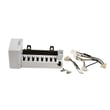
- If you have ice maker issues, start with the shutoff arm position and water supply.
- Use our DIY guide how to prevent water dispenser and ice maker problems for maintenance habits that reduce clogs and leaks.
Last updated: January 2026
Are top mount or bottom mount fridges better?
A top-mount refrigerator like the Whirlpool ET1FHTXMQ01 is usually the better pick if you want a simpler, typically more energy-efficient design at a lower purchase price. A bottom-mount is often better if you want fresh food at eye level and easier daily access to the refrigerator section.
Quick comparison (what most shoppers notice)
| Feature | Top-mount (freezer on top) | Bottom-mount (freezer on bottom) |
|---|---|---|
| Fresh food access | Lower, more bending | Higher, less bending |
| Freezer access | Easy, at chest height | Lower drawer, more bending |
| Typical efficiency | Often better | Often slightly lower |
| Complexity | Simpler | More complex (drawer rails, seals) |
| Cost | Usually lower | Usually higher |
Choose a top-mount if you want
- Lower upfront cost and a straightforward layout
- A design that is typically easier to maintain long-term
- Better freezer access (common if you use frozen foods often)
- Fewer “extras” to troubleshoot (fewer moving assemblies)
Choose a bottom-mount if you want
- Fresh food at eye level (less bending for daily items)
- A wide refrigerator section that is easier to organize
- A freezer drawer that can hold bulky items (depending on model)
What matters for real-world performance
- Kitchen habits: If you open the refrigerator 20 times a day, bottom-mount convenience can outweigh small efficiency differences.
- Door sealing: Any style performs poorly with a leaking gasket. If your ET1FHTXMQ01 door doesn’t seal tightly, replacing a worn gasket such as the gasket panel (white) 2159061 can help stabilize temperatures and reduce run time.
- Airflow and noise: Fan and defrost issues can affect either style. If you’re troubleshooting warm temps or unusual noise, our how to fix your evaporator cooling fan guide helps you narrow down common causes.
Why it matters
“Better” depends on whether you prioritize energy use and simplicity (top-mount) or everyday ergonomics (bottom-mount). Matching the layout to how you cook and shop usually delivers the biggest satisfaction.
Last updated: January 2026
What is the most common problem with whirlpool refrigerators?
Cooling complaints are the most common issue we see on Whirlpool refrigerators like model ET1FHTXMQ01: warm fresh food, weak freezer performance, or the unit running too long. The usual causes are restricted airflow (dirty condenser coils), a failing evaporator fan, or defrost system trouble that lets frost block the evaporator.
Most common symptoms and what they usually point to
- Fridge warm but freezer cold: airflow problem (evaporator fan, damper, frost buildup)
- Freezer warm and fridge warm: condenser coils dirty, compressor/start components, sealed system
- Loud humming or squealing: fan motor or fan blade issue
- Frost on freezer back wall: defrost system problem
- Ice maker not making ice: water supply, inlet valve, ice maker module
Quick checks we recommend first (no parts needed)
- Set temps to a normal baseline: 0°F freezer and 37°F fresh food
- Clean condenser coils and confirm the condenser area has good airflow
- Make sure vents inside the compartments are not blocked by food packages
- Listen for the evaporator fan running when the compressor is on (door switch held in)
- Check door gaskets for gaps and confirm doors close on their own
Common parts involved (when a repair is needed)
| Problem area | What fails | Example part for ET1FHTXMQ01 |
|---|---|---|
| Airflow in freezer | Evaporator fan motor | Evaporator motor WP2315539 |
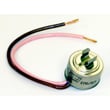
| Frost buildup | Defrost thermostat (bi-metal) | Defrost bi-metal WP4387503 |
| No ice | Ice maker assembly | Ice maker assembly - refrigerator ice maker by Whirlpool 4317943 |
Why it matters
When airflow is restricted or frost builds up, the refrigerator can run longer, temperatures drift, and food quality drops. Catching a fan or defrost issue early often prevents bigger cooling failures.
Helpful DIY guides
- Whirlpool refrigerator error codes
- How to fix your evaporator cooling fan
- Common refrigerator ice maker problems and solutions
Last updated: January 2026
What is the average lifespan of a whirlpool refrigerator?
Most Whirlpool refrigerators, including the Whirlpool ET1FHTXMQ01 top-mount refrigerator, typically last 10 to 20 years. In real-world use, 10 to 15 years is common; simpler top-mount designs often reach the higher end when the condenser coils stay clean and door seals stay tight.
Typical lifespan ranges
- Average range: 10 to 20 years
- Most common: 10 to 15 years
- Often longer when: basic design, steady indoor temperatures, good airflow around the cabinet
| What affects lifespan most | What to do | What you may notice if ignored |
|---|---|---|
| Dirty condenser coils | Vacuum/brush coils regularly | Longer run times, warmer temps |
| Door gasket sealing | Clean gasket, check for gaps | Frost, sweating, temperature swings |
| Airflow inside the cabinet | Do not block vents, avoid overpacking | Warm spots, uneven cooling |
| Ice maker and water system wear | Keep water supply steady, fix leaks early | Slow ice, leaks, no ice |
Maintenance that adds years (and saves energy)
- Clean condenser coils and the area underneath/behind the refrigerator.
- Keep the doors closing easily; level the cabinet if doors drift open.
- Clean and inspect the door gaskets; replace if torn, hardened, or warped.
- Set stable temperatures (about 37°F fresh food, 0°F freezer) and avoid frequent big changes.
- Address unusual noises early (fan rubbing, clicking, buzzing) before they stress the compressor.
Parts that commonly impact longevity
If cooling or ice production problems start, these are common wear items we see on this model family:
- Evaporator motor WP2315539 (keeps cold air moving through the freezer and into the fresh-food section)
- Defrost bi-metal WP4387503 (helps control defrost heating and prevents heavy frost buildup)
- Gasket panel (white) 2159061 (helps prevent warm air leaks that force longer run times)
Why it matters
A refrigerator that runs longer to hold temperature (often from dirty coils, airflow issues, or a weak door seal) puts extra load on the sealed system. Keeping airflow and sealing in good shape is the simplest way to push lifespan toward the 15 to 20 year range.
Last updated: January 2026