 Owner’s manual

What does F02 mean on a washer?
On the Kenmore Elite washer model 11045862402, the F02 code means a drain problem. The washer is not draining out water fast enough, so it stops the cycle and alerts you to check the drain hose and drain path. See the troubleshooting section in the owner's manual.
- Press PAUSE/CANCEL twice to cancel the cycle.
- Unplug the washer (or disconnect power).
- Check whether the drain hose is kinked behind the washer.
- Check whether the drain hose is frozen (if the washer is in a cold area).
- Check whether the drain hose is clogged (lint, coins, small socks).
- Confirm the drain hose is not installed too high: over 96 in. (2.4 m) above the floor can trigger F02.
| What you find | What it usually indicates | What to do next |
|---|---|---|
| Hose kinked or crushed | Restricted water flow out | Re-route hose with a smooth curve |
| Standpipe too high (over 96 in.) | Drain can’t push water up | Lower the drain height to spec |
| Slow drain even with correct hose setup | Partial clog or weak pump | Clear blockage; inspect pump area |
| F02 returns with no blockage | Drain system issue | Check drain hose and pump connections |
If the drain path checks out but the washer still will not drain, these model-compatible parts are commonly related to draining and leaks around the drain system:
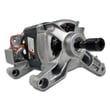
- Water pump 280187 (drain pump that moves water out)
- Washer tub-to-pump hose WPW10467168 (hose that can clog with debris)
- Clamp WP285655 (hose clamp that can leak or loosen after service)
Running the washer when it cannot drain can leave clothes soaking wet, cause repeated cycle stops, and increase the chance of leaks around hoses and the pump.
Last updated: February 2026
What is the average lifespan of a Kenmore washer?
A Kenmore washer typically lasts 10 to 15 years with normal household use and basic care. For Kenmore Elite washer model 11045862402, staying on top of routine cleaning and avoiding chronic overloading are the biggest factors in reaching the high end of that range (or beyond).
- Load size and balance: frequent overloading or unbalanced loads increase stress on the drive system and suspension.
- Water quality and hose condition: sediment and aging hoses can cause fill problems and leaks.
- Routine cleaning: detergent residue and moisture can lead to odors, mold, and premature wear.
- Vibration control: an unlevel washer can “walk” and wear shocks, springs, and mounts faster.
- Timely repairs: fixing small leaks or drain issues early prevents bigger damage.
We recommend following the care steps in the owner's manual and focusing on these habits:
- Clean the door seal area and leave the door slightly open between loads to reduce moisture.
- Use the correct amount of HE detergent (too much can cause buildup).
- Check and replace inlet hoses if they show bulging, cracking, or seepage.
- Keep the washer level to reduce vibration and suspension wear.
- Address leaks quickly; a worn door boot is a common source on front-load designs.
| Part | What it impacts | Typical symptom when worn |
|---|---|---|
| Washer door boot WP8182119 | Keeps water sealed at the door opening | Leaks at the front, mildew/tears |
| Washer shock absorber WP8182703 | Controls tub movement during spin | Excessive vibration, banging |
| Washer water inlet valve WP8181694 | Controls water fill into the washer | Slow fill, no fill, fill errors |
A washer that is kept clean, level, and properly loaded runs with less strain on the tub, drive components, and electronics. That directly reduces breakdowns and helps your Kenmore washer deliver reliable performance for its full expected service life.
Last updated: February 2026
Is it worth repairing a Kenmore washing machine?
Yes, repairing a Kenmore Elite washer like model 11045862402 is usually worth it when the problem is a common wear item (leaks, draining issues, door not locking, excessive vibration) and the machine is otherwise in good condition. It becomes less worthwhile when multiple major systems are failing at once.
Use these checkpoints before you buy parts or schedule service:
- Age and condition: If the washer has been reliable and the tub and drum are in good shape, repairs typically pay off.
- Type of failure: Leaks, door seal issues, and draining problems are usually straightforward.
- Repeat breakdowns: Frequent failures in different areas point to a bigger reliability issue.
- Cost control: If the repair total approaches about half the cost of a comparable new washer, replacement is usually the better value.
- Safety and usability: If the washer will not lock, drain, or spin consistently, fix that first before investing in other repairs.
These are frequent, fixable issues on front-load style washers and the parts are available for model 11045862402:
- Door boot leak or moldy/tearing gasket: Replace the washer door boot WP8182119
- Door won’t latch or unlocks mid-cycle: Check the washer door lock assembly WP8182634 and the washer door strike WP8181651
- Washer won’t fill or fills slowly: Inspect screens and consider the washer water inlet valve WP8181694
- Banging, walking, or heavy vibration: Worn dampers can cause this; consider the washer shock absorber WP8182703
| Symptom | Most likely area | Example part on this model |
|---|---|---|
| Water on floor at front | Door seal/boot | WP8182119 |
| Door won’t lock | Latch/lock system | WP8182634 |
| No/slow fill | Water inlet | WP8181694 |
| Loud banging in spin | Suspension/damping | WP8182703 |
A targeted repair (like a door boot, inlet valve, or shock absorber) restores performance and prevents secondary damage, such as water leaks reaching electrical components or repeated out-of-balance spinning stressing the tub and suspension.
For model-specific care and troubleshooting steps, follow the maintenance and troubleshooting sections in the owner's manual.
Last updated: February 2026
How to reset Kenmore washer model 11045862402 top loader?
For Kenmore Elite washer model 11045862402, the most reliable “reset” is a control power cycle: cancel the current cycle, unplug the washer for about 1 minute, then restore power and restart the cycle. This clears many control glitches and lets you start fresh using the normal control steps in the owner's manual.
- Press PAUSE/CANCEL twice to cancel the cycle.
- Wait for the washer to power down; the door unlocks after it is safe (it may drain first if water is hot or high).
- Unplug the washer (or switch off the breaker) for 1 minute.
- Plug back in (or turn breaker on).
- Select your cycle, choose Options/Modifiers, then press and hold START for about 1 second.
Use the built-in cancel and drain functions first:
- Pause: Press PAUSE/CANCEL once.
- Cancel: Press PAUSE/CANCEL twice.
- Manual drain: Press PAUSE/CANCEL once, select DRAIN & SPIN, then press and hold START for about 1 second.
A reset helps when the control is confused, a cycle was interrupted, or the washer needs to be restarted. It will not correct a failed part.
| Symptom | Reset likely helps? | What to check next |
|---|---|---|
| Buttons unresponsive or cycle won’t restart | Yes | Power cycle; then try cancel and restart steps |
| Won’t fill and shows inlet-related error behavior | Sometimes | Faucets fully on; inlet screens; kinked hoses; consider washer water inlet valve WP8181694 |
| Door won’t lock or unlock correctly | Sometimes | Door latch/strike alignment; consider washer door lock assembly WP8182634 or washer door strike WP8181651 |
Resetting the control the right way prevents repeated stops, protects the door lock system, and helps you separate a simple control glitch from a real issue like a water supply restriction or a door lock problem.
Last updated: February 2026
What is the capacity of a Kenmore washer model 11045862402?
Kenmore Elite washer model 11045862402 is a front-load HE design; its capacity is specified in the Specifications section of the 11045862402 owner's manual. Use that value when comparing load size because front-load capacity is measured as drum volume (cu. ft.), not pounds of laundry.
In the 11045862402 owner's manual, check these spots:
- Specifications or Product specifications
- Dimensions and capacity (often listed together)
- A model list near the front to confirm you are in the correct 110.458xx series
Most Kenmore Elite front-load HE washers in the 110.458xx family are in this range:
| Washer style | Typical capacity (cu. ft.) | What it handles well |
|---|---|---|
| Front-load HE (like 11045862402) | 3.0 to 4.5 | Towels, bedding, everyday loads |
| Compact front-load | 2.0 to 2.6 | Small loads, tight spaces |
| Traditional top-load | 2.5 to 3.5 | Mixed loads, simpler cycles |
Using the correct capacity helps prevent overloading, which reduces cleaning performance and increases vibration, leaks, and wear on the suspension and door seal.
If you are seeing vibration, banging, or door-area leaks, these model-matched parts are often involved:
Last updated: February 2026







