Owner’s manual
 Error Codes


How to do a hard reset on a Kenmore washer?
For the Kenmore Elite washer model 11045087400, a “hard reset” is a control power-down and restart: unplug the washer (or switch off the breaker) for about 1 minute, restore power, then press and hold START for about 1 second to re-enable the controls. See the 11045087400 owner's manual for the exact button behavior on your control panel.
Reset options that work on this model
- Power cycle reset: Unplug for 1 minute, then plug back in.
- Cancel and restart a cycle: Press PAUSE/CANCEL twice, choose a new cycle, then press and hold START for about 1 second.
- Pause and resume: Press PAUSE/CANCEL once, then press and hold START for about 1 second.
- Manual drain reset (if it is stuck full of water): Press PAUSE/CANCEL, select DRAIN & SPIN, then press and hold START for about 1 second.
Step-by-step: hard reset (power cycle)
- Press PAUSE/CANCEL twice to stop the current cycle.
- Unplug the washer (or turn the breaker off).
- Wait 60 seconds.
- Restore power.
- Select a cycle and press and hold START for about 1 second.
What to expect after a reset
| What you see | What it usually means | What to do next |
|---|---|---|
| Door stays locked | Washer is draining or water is too hot/high | Let it finish draining; then try PAUSE/CANCEL twice |
| Controls seem unresponsive | Control lock may be on | Use the control lock instructions in the manual |
| Won’t drain after reset | Drain system issue | Check for a clog; if needed, inspect the water pump 280187 |
Why it matters
Resetting clears a “stuck” cycle state in the electronic control and is the fastest first step for symptoms like not starting, not advancing, or needing to cancel and restart. If the washer still will not drain or unlock, the issue is usually in the drain path (pump, hose, or blockage), not the reset.
Last updated: February 2026
How to force a Kenmore Elite washer to drain?
To force your Kenmore Elite washer model 11045087400 to drain, we use the control panel: press PAUSE/CANCEL, select DRAIN & SPIN, then press and hold START for about 1 second to begin draining. This is the manual “drain the washer manually” procedure in the 11045087400 owner's manual.
Fast steps (manual drain)
- Press PAUSE/CANCEL once to pause the cycle.
- If needed, press PAUSE/CANCEL again to fully cancel.
- Select DRAIN & SPIN.
- Press and hold START (about 1 second).
- Wait for the cycle to finish; the door unlocks after the spin is complete.
If it still will not drain
These checks solve most “won’t drain” problems on front-load Kenmore washers.
- Make sure the drain hose is not kinked, crushed, or shoved too far into the standpipe.
- Confirm the household standpipe/drain is not clogged.
- Reduce oversudsing; use HE detergent only and avoid overfilling the dispenser.
- If the controls are locked, press and hold DRAIN & SPIN for 3 seconds to unlock.
- If you hear the pump humming but water stays, inspect the pump area for debris; a failing pump may need replacement.
Parts that commonly affect draining
| Symptom | Most likely area | Example model-specific part |
|---|---|---|
| No drain sound at all | Drain pump or control/lock issue | Water pump 280187 |
| Slow drain, gurgling | Partial blockage in hose path | Washer tub-to-pump hose WPW10467168 |
| Door stays locked with water inside | Drain not completing | Door lock WP8182634 |
Why it matters
A washer that cannot drain will often keep the door locked for safety and can trigger unbalanced or extended cycle behavior. Getting the unit to complete DRAIN & SPIN is the quickest way to clear water and confirm whether the issue is a clog, oversudsing, or a drain pump problem.
Last updated: February 2026
Is it worth repairing a Kenmore washing machine?
Yes, repairing a Kenmore Elite washer like model 11045087400 is worth it when the fix restores reliable operation for less than the cost of replacement, especially for common wear items (pump, door lock, belt) and when the machine is otherwise in good condition.
Quick way we decide: repair vs replace
- Repair it when the problem is isolated (drain, fill, door won’t lock, won’t spin) and the tub and drum are sound.
- Replace it when the washer has multiple major failures at once (leaks plus control issues plus severe vibration) or repeated breakdowns.
- Start by checking the troubleshooting and safety guidance in the 11045087400 owner's manual.
Typical repair costs and what they usually mean
| Symptom | Common cause | Often involves |
|---|---|---|
| Won’t drain, water left in tub | Drain pump issue or blockage | Water pump 280187, hoses, clamps |
| Door won’t lock or won’t start | Failed lock or strike | Door lock, door strike |
| Loud thumping, “walking” | Load balance or suspension wear | Suspension spring, leveling |
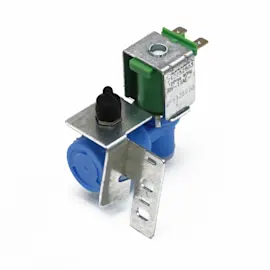
| Won’t fill or fills slowly | Inlet valve or supply issue | Washer water inlet valve WP8181694, screens, hoses |
What to check first (saves time and money)
- Confirm the outlet has power and the washer is properly grounded (per the manual’s electrical requirements section).
- Verify both hot and cold faucets are fully open; check hose screens for sediment.
- Run a drain and spin; listen for the pump running and look for slow draining.
- Inspect the door strike area for cracks or looseness; a misaligned door can mimic a bad lock.
- Look for visible leaks at the door boot and at the tub-to-pump hose connections.
Why it matters
A targeted repair can extend the life of the 11045087400 significantly because many failures are single-part issues. The manual also notes long-term coverage on major components (like the stainless steel drum and plastic tub), which makes it even more important to diagnose the exact failure before replacing the washer.
Last updated: February 2026
How many cubic feet is a Kenmore 11045087400 washer?
The Kenmore Elite 11045087400 is a front-load washer; most Kenmore front-load washers in this design class are about 3.5 to 4.0 cu. ft. capacity. For the exact capacity rating for your specific unit, we recommend confirming it in the 11045087400 owner's manual.
How to confirm the exact capacity for model 11045087400
We use the manual because capacity is sometimes listed by series and can vary by trim level.
- Check the specifications section in the 11045087400 owner's manual.
- Look for wording like “capacity,” “tub volume,” or “IEC capacity.”
- If you see multiple model numbers listed together (for example, 110.4508xxx and 110.4509xxx), match the full model number on your washer’s tag.
- If the manual lists capacity in liters, convert to cubic feet (1 cu. ft. = 28.3 L).
Typical capacity range (what it means for loads)
Here is a practical way to think about capacity for a Kenmore front-load washer like the 11045087400:
| Capacity (cu. ft.) | Typical load size | Common examples |
|---|---|---|
| 3.2 to 3.5 | Medium | Several bath towels, a few pairs of jeans |
| 3.6 to 4.0 | Medium-large | Mixed family load, light bedding |
| 4.1+ | Large | Bulkier bedding more comfortably |
Why it matters
Capacity affects how much you can wash without overloading. Overloading can cause poor cleaning, out-of-balance spinning, and extra strain on parts like the washer drive belt WPW10388414 and suspension components.
Last updated: February 2026
Does my Kenmore Elite washing machine have a filter?
Yes. Your Kenmore Elite washer model 11045087400 uses a drain pump clean-out (often called a pump filter or coin trap) that catches lint and small items before they reach the drain pump; it needs periodic cleaning to prevent drain problems.
Where the “filter” is and what it does
On most Kenmore front-load designs like 11045087400, the filter is part of the drain system at the bottom front of the washer, built into the drain pump housing.
- Traps coins, hair pins, lint, and debris
- Helps prevent no-drain/slow-drain symptoms
- Reduces strain on the drain pump
- Can cause leaks or odors if it is clogged
For your model’s access details and care steps, follow the 11045087400 owner's manual.
How to clean it (safe, typical steps)
- Unplug the washer.
- Place towels and a shallow pan under the lower front access area.
- Open the lower access panel (if equipped).
- Slowly loosen the pump clean-out cap to let water drain out.
- Remove debris, rinse the cap, and check the O-ring for damage.
- Reinstall the cap snugly (do not overtighten), then run a quick rinse/drain to check for leaks.
What to do if it still will not drain
If the clean-out is clear but the washer still will not drain, the issue is usually in one of these areas:
| Symptom | Most common cause | What to check next |
|---|---|---|
| Hums but no drain | Pump jammed or failed | Inspect/replace water pump 280187 |
| Drains slowly | Partial blockage | Check washer tub-to-pump hose WPW10467168 for socks/debris |
| Stops with water left | Control not sensing empty | Check pressure hose/switch function |
Why it matters
A clogged pump clean-out is one of the most common reasons a Kenmore washer shows drain issues, leaves water in the tub, or smells musty. Cleaning it regularly helps protect the drain pump and keeps cycles finishing normally.
Last updated: February 2026
What model is my Kenmore Elite washer?
Your Kenmore Elite washer’s model number is printed on the appliance’s rating label. On Kenmore Elite front-load washers like model 11045087400, the label is most often in the door opening (door jamb) or just behind the door; it can also be on the back of the control panel or on the cabinet.
Where to look on a Kenmore Elite front-load washer
Check these spots in order (they are the most common locations):
- Open the door and look along the door jamb (the frame around the opening)
- Look behind the door on the front panel area
- Check the back of the control panel
- Look on the side of the main cabinet near the bottom
What the model number looks like
For this Kenmore Elite series, the model number is a numeric string like 11045087400. In the manual, the model family is shown as 110.4508__, where the last characters can vary by color or version.
| What you see on the label | What it means | Example |
|---|---|---|
| Model / Mod. | The washer’s full model number | 11045087400 |
| Serial / Ser. | Unique serial number for your exact unit | (varies) |
| Type | Internal manufacturing type code | (varies) |
Why it matters
We use your exact model number to match the correct Kenmore parts and diagrams (for example, a door lock, water pump, or washer door boot). Even small model-number differences can change which part fits.
Next best step
Confirm the model number from the rating label, then use it when referencing the 11045087400 owner’s manual for identification details and when ordering parts.
Last updated: February 2026
What is the average lifespan of a Kenmore washer?
A Kenmore washer typically lasts 10 to 15 years. For the Kenmore Elite washer model 11045087400, consistent care (proper loading, periodic cleaning, and good water supply) helps you reach the high end of that range; neglected maintenance shortens it.
Typical lifespan and what affects it
Most washers fall into a predictable lifespan range, but real-world life depends on usage and conditions.
- Loads per week: more cycles equals more wear on bearings, belt, and pump
- Overloading: increases strain on the drive system and suspension
- Water quality: sediment can affect fill components and valves
- Drain habits: coins, lint, and debris can damage the pump and hoses
- Routine cleaning: reduces odor, residue, and seal wear
Maintenance that extends washer life
We recommend following the care steps in the 11045087400 owner's manual. Key habits include:
- Clean the washer regularly (tub and door area)
- Inspect and replace water inlet hoses when worn
- Use the right amount of HE detergent to reduce buildup
- Leave the door slightly open between loads to dry the boot
- Check pockets to prevent drain clogs and pump damage
Parts that commonly limit lifespan (and what they do)
When a washer starts failing near the 10 to 15 year mark, these parts are frequent culprits.
| Part | What you may notice | What it impacts |
|---|---|---|
| Water pump 280187 | Won’t drain, grinding, leaks | Draining and spin completion |
| Washer water inlet valve WP8181694 | Slow fill, no fill, fill errors | Water entering the washer |
| Washer drive belt WPW10388414 | No spin, weak spin, burning rubber smell | Basket/tub movement |
| Door lock WP8182634 | Door won’t lock, cycle won’t start | Safety interlock and cycle start |
Why it matters
Knowing the typical lifespan helps us decide whether a repair is cost-effective. Replacing a single wear part (like a pump, belt, or inlet valve) often restores reliable operation, while multiple major failures at once usually signal end-of-life.
Last updated: February 2026
Why is my Kenmore Elite washer leaking from the bottom?
A Kenmore Elite washer model 11045087400 that’s leaking from the bottom is usually leaking at the drain path (pump or tub-to-pump hose), the door seal area, or an external hose connection. We focus first on the drain pump and hose clamps because those leaks often show up as a puddle under the front.
Quick checks we recommend first
- Unplug the washer before inspecting underneath.
- Pull the washer forward and look for water trails under the front center (pump area).
- Check that the drain hose is routed correctly and not forced straight or jammed into the standpipe; it should be secure but leave an air gap. See the 11045087400 owner's manual.
- Inspect the hot and cold fill hoses at the wall and at the washer for drips.
- Look for water on the door glass and lower front panel, which can point to a door boot leak.
Most common bottom-leak causes on this model
| Where the water shows up | Most likely cause | What to inspect/replace |
|---|---|---|
| Under the front, near center | Drain pump leak | Water pump 280187 for cracks, seepage, or a leaking pump seal |
| Under the front, slightly to one side | Hose or clamp leak | Washer tub-to-pump hose WPW10467168 and clamp WP285655 for looseness or splits |
| Water runs down the front frame | Door seal leak | Washer door boot WP8182119 for tears, pinholes, or a folded lip |
| Water near the back corners | Fill hose or inlet valve seep | Tighten hoses; inspect washer water inlet valve WP8181694 for seepage |
Why it matters
A bottom leak can damage flooring and can also lead to drain problems if water is escaping at the pump or tub-to-pump hose. Correct drain hose routing also prevents siphoning and backflow that can create overflow-like symptoms.
Tips to prevent repeat leaks
- Keep the door boot clean and check for small items trapped in the folds.
- Make sure the drain hose is secured with a strap and routed with an air gap (per the manual).
- Recheck hose clamps after the first few cycles following any hose or pump replacement.
Last updated: February 2026
When was Kenmore Elite made?
Kenmore Elite is a premium Kenmore product line that has been produced across multiple years and generations, not a single one-time model release. For your Kenmore Elite washer model 11045087400, the exact manufacture date is best confirmed using the serial number details in the 11045087400 owner's manual.
What “Kenmore Elite” means (and what it does not)
Kenmore Elite is a line name used on higher-end Kenmore appliances; it is not one specific year or one specific factory run.
- It can refer to different washer designs over time (front-load, top-load, different control styles).
- The model number (like 11045087400) identifies the design family and parts platform.
- The serial number is what ties your specific washer to a production date.
- Warranty language in the manual is based on the date of purchase, not the build date.
How to identify the build timeframe for model 11045087400
Use the model and serial tag on the washer, then match the serial format guidance in the manual.
- Unplug the washer for safety before reaching around the door opening or cabinet edges.
- Locate the model and serial label (commonly around the door opening area on front-load washers).
- Write down the full serial number exactly as shown.
- Use the manual’s identification section to interpret the serial format.
Quick reference: what each identifier tells you
| Identifier | What it tells you | Where to use it |
|---|---|---|
| Model number (11045087400) | Which parts and diagrams fit | Parts lookup and ordering |
| Serial number | When your specific unit was built | Dating the washer |
| Purchase date | When warranty coverage starts | Warranty and service records |
Why it matters
Knowing the build timeframe helps when you are matching revisions of parts like a water pump, door lock, or washer door boot, and it also helps you track age-related issues such as draining problems or leaks.
If you are troubleshooting symptoms that often show up as a washer ages (slow drain, standing water, or leaks), the water pump 280187 is one of the common parts to check on this model.
Last updated: February 2026