Installation guide
 Owner’s manual


What is the most common problem with a KitchenAid dishwasher?
For the KitchenAid KUDS40FVSS4 dishwasher, the most common problems we see are poor cleaning (often from blocked spray paths or loading issues) and drainage trouble (standing water) caused by a restriction in the drain path or a failing drain component. Use the KUDS40FVSS4 owner's manual troubleshooting section to narrow it down fast.
Most common symptoms and what they usually point to
- Dishes still dirty or gritty: spray arm holes blocked, filter area dirty, or items loaded so they block spray.
- Standing water in the bottom: drain hose restriction, disposer/air gap clog, or a weak drain pump.
- Won’t start or stops mid-cycle: door not fully latched, Start/Resume not confirmed, or power issue (breaker/fuse).
- Leaks at the front or corners: worn door seal or door not closing squarely.
- Poor drying or sanitizer light flashing: cycle interrupted or water not heating to target temperature.
Quick checks we recommend before replacing parts
- Confirm Start/Resume behavior: if the Start/Resume light is blinking, press START/RESUME; if the controls are on top of the door, close the door firmly within a few seconds after pressing it.
- Check loading: keep tall items from blocking the spray arms and, if using PROSCRUB, avoid nesting or overlapping items in that zone.
- Verify power: check the household breaker or fuse if the dishwasher is completely dead.
- Inspect the drain path: look for kinks or clogs in the drain hose and at the sink connection.
Parts that commonly solve “won’t drain” complaints
| Symptom | Most likely area | Part to consider (if failed) |
|---|---|---|
| Standing water after cycle | Drain pump not pumping | Dishwasher drain pump WPW10348269 |
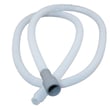
| Slow drain or intermittent drain | Drain hose restricted/kinked | Dishwasher drain hose 8269144A |
| No drain and pump hums | Hose or sink connection blocked | Drain path cleaning (no part) |
Why it matters
Cleaning and draining problems can look similar, but the fix is very different. A simple loading or drain-path restriction can mimic a bad pump, so checking the basics first helps you avoid unnecessary parts and downtime.
Last updated: February 2026
What's the average lifespan of a KitchenAid dishwasher?
KitchenAid dishwashers typically last 10 to 14 years with normal household use. For your KitchenAid KUDS40FVSS4 undercounter dishwasher, consistent maintenance (good water quality, proper detergent, and routine cleaning) is what most often determines whether you land closer to 10 years or closer to 14.
What affects lifespan the most
- Water quality: hard water speeds up mineral buildup and can reduce cleaning and drying performance.
- Maintenance habits: keeping the interior clean and addressing small issues early prevents bigger failures.
- Usage frequency: multiple loads per day generally shortens life compared to a few loads per week.
- Drying setup: this model is designed to use rinse aid for better drying and to help control hard-water deposits.
- Electrical reliability: nuisance trips or power issues can stress electronic controls.
Maintenance habits that help you reach the high end of the range
Use these as a simple routine for KUDS40FVSS4:
- Use rinse aid consistently and avoid overfilling.
- Run hot water at the sink before starting a cycle (helps fill temperature).
- Clean the tub periodically; citrus-based cleaner helps with discoloration.
- If storing seasonally, turn off water and power; winterize in freezing conditions.
- If the dishwasher pauses or will not start, follow the checks in the KUDS40FVSS4 owner’s manual.
Quick expectations table
| What you notice | What it usually means | What to do |
|---|---|---|
| Longer cycles (2 to 3 hours) | Normal for energy-efficient designs | Let the cycle finish; avoid interrupting |
| Poor drying | Often low or no rinse aid | Fill rinse aid; verify settings |
| Won’t start | Door not latched, breaker tripped, water off | Check latch, power, and water supply |
| Standing water | Drain restriction or drain component issue | Check drain path; consider the dishwasher drain pump WPW10348269 if diagnosis confirms |
Why it matters
A dishwasher near the end of its lifespan often shows up as longer run times, inconsistent cleaning, or intermittent electrical issues. Staying ahead of mineral buildup and drainage problems is one of the most cost-effective ways to extend service life.
Last updated: February 2026
What are the commonly replaced parts in a dishwasher?
In the KitchenAid KUDS40FVSS4 dishwasher, the most commonly replaced parts are the ones that handle water movement, sealing, and door operation: pumps, hoses, inlet valve, door seal, and rack hardware. These parts wear from heat, detergent, vibration, and occasional clogs.
Commonly replaced dishwasher parts (and what they do)
- Drain and circulation components: move wash water and drain water out
- Water inlet parts: control filling and prevent overfilling
- Seals and gaskets: stop leaks at the door and vent
- Door balance parts: keep the door from dropping or slamming
- Rack and spray parts: affect cleaning performance and loading
Model-relevant examples for KUDS40FVSS4
Here are examples of high-wear parts we commonly see replaced on this model:
| Part type | What you notice | Example part for this model |
|---|---|---|
| Drain pump | Water left in tub, won’t drain | Dishwasher drain pump WPW10348269 |
| Drain hose | Leaks under sink, slow drain, backflow | Dishwasher drain hose (check routing and length) |
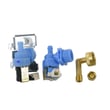
| Water inlet valve | Not filling, fills slowly, no wash action | Dishwasher water inlet valve W10648041 |
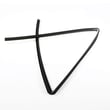
| Door seal | Water leaking at bottom or corners of door | Dishwasher door seal W11196317 |
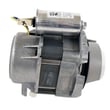
| Sump and motor | Poor wash, loud grinding, weak spray | Dishwasher sump and motor assembly WPW10780877 |
Quick checks before you buy a part
- Clean the filter area and check for debris in the sump.
- Inspect the spray arm holes for clogs and cracks.
- Look for white mineral buildup at the inlet valve and hose connections.
- Check the door seal for tears, flattening, or gaps.
- Confirm the dishwasher is draining correctly with a proper high loop or air gap (installation setup matters).
Why it matters
Replacing the correct part restores cleaning, prevents leaks, and avoids repeat failures. For example, a poor drain setup can mimic a bad pump, and a worn door seal can look like a tub leak.
For model-specific diagrams, part locations, and installation notes, use the KUDS40FVSS4 installation guide and the KUDS40FVSS4 owner’s manual.
Last updated: February 2026
How to fix rubber seal on KitchenAid dishwasher?
On KitchenAid dishwasher model KUDS40FVSS4, a loose or leaking rubber door seal is usually fixed by fully seating the gasket into the door channel evenly, then keeping the door closed for several hours so the seal “sets” in place. Use the steps in the KUDS40FVSS4 installation guide.
Quick fix steps (reseat the seal)
- Turn off power to the dishwasher at the breaker.
- Open the door and inspect the seal for twists, gaps, or hardened sections.
- Starting at one end, press the seal into the channel a few inches at a time using your fingers (even pressure).
- Work all the way around the tub opening; confirm the seal sits flat and continuous with no bulges.
- Close and latch the door; keep it closed for several hours (overnight is ideal).
- Run a short cycle and check for drips along the bottom corners.
When the seal should be replaced (not just reseated)
A door gasket that is damaged will keep leaking even if it is installed correctly.
| What you see | What it means | What to do |
|---|---|---|
| Tears, splits, missing chunks | Seal cannot hold water | Replace the seal |
| Flattened, stiff, or sticky rubber | Rubber has aged and won’t rebound | Replace the seal |
| Moldy odor that won’t clean off | Material is deteriorating | Replace the seal |
| Leak only at corners | Seal not fully seated or door alignment issue | Reseat seal; check door alignment |
Check door alignment (common leak cause)
If the door is rubbing or not closing squarely, the seal cannot compress evenly.
- Confirm the dishwasher is centered in the cabinet opening.
- Check that the door closes without hitting screws, brackets, or the countertop.
- If the door rubs, re-center the dishwasher and recheck the fit.
Parts that are often involved
If the seal is worn, replacement is the long-term fix. If the door is dropping or not closing smoothly, the balance system can also contribute to poor sealing.
- Dishwasher door seal W11196317 (door gasket)
- Dishwasher door balance link 8194001 (helps control door movement)
Why it matters
A properly seated door seal keeps wash water inside the tub, protects the toe panel area from moisture, and helps the dishwasher maintain correct wash pressure for better cleaning.
Last updated: February 2026