Installation guide
 Owner’s manual
 Error Codes


What are the disadvantages of a bottom freezer refrigerator?
Bottom-freezer refrigerators like the GE CFSP5RKBBSS keep fresh food at eye level, but the tradeoffs are a lower, drawer-style freezer that can be harder to access, higher purchase and repair costs in some designs, and more wear on freezer drawer hardware over time. See the CFSP5RKBBSS owner's manual for features specific to your unit.
Common disadvantages (what you will notice day to day)
- You still have to bend or squat to reach frozen foods, especially items at the bottom of the drawer.
- Freezer drawers can get messy; small items slide behind baskets and become hard to find.
- Heavy, fully loaded freezer drawers put more strain on slides, rails, and door alignment.
- Some bottom-mount designs have less usable freezer space than you expect because of baskets and dividers.
- Ice maker and dispenser systems (if equipped) add complexity and can increase maintenance needs.
Freezer access and organization: quick comparison
| Topic | Bottom freezer (drawer) | Top freezer (shelf) |
|---|---|---|
| Most-used items | Fresh food is easiest to reach | Frozen food is easiest to reach |
| Organization | Baskets help, but stacking happens | Shelves make sorting simpler |
| Ergonomics | More bending for frozen items | More bending for fresh items |
| Wear points | Drawer slides and alignment | Door hinges and shelves |
Why it matters for repairs and parts
A bottom freezer’s drawer and airflow layout can make certain problems show up differently. For example, if temperatures swing or foods thaw and refreeze, we often focus on airflow and sensing first.
- If you see inconsistent temperatures, a failed sensor such as the temperature sensor WR55X10025 can contribute.
- If frost buildup affects freezer performance, the defrost system (including the refrigerator defrost bi-metal thermostat WR50X10065) becomes a key check.
- If the freezer is cold but the fresh-food section is warm, an airflow control like the refrigerator air damper WR17X12456 is a common suspect.
Practical tips to reduce the downsides
- Keep a “top basket” for daily-use frozen items to reduce digging.
- Avoid overloading the drawer; it helps prevent sagging and alignment issues.
- Keep vents clear so cold air can circulate properly.
- If you have a door alarm, use the steps in how to reset the door alarm on a GE refrigerator to prevent nuisance beeping during loading.
Last updated: February 2026
What is the average lifespan of CFSP5RKBBSS?
A GE bottom-mount refrigerator like model CFSP5RKBBSS typically lasts 13 years on average. Good airflow around the condenser, clean coils, correct temperatures (37°F fresh food, 0°F freezer), and timely part replacement help you reach that lifespan.
Typical lifespan and what affects it
Most lifespan differences come from heat management, door sealing, and how hard the sealed system runs.
- Keep condenser coils clean and the condenser fan area clear
- Verify doors seal tightly; replace a worn gasket if you feel air leaks
- Avoid overpacking; it blocks airflow to the evaporator
- Change the water filter on schedule to protect the water system
- Fix temperature swings early to reduce compressor run time
Quick checks that extend life
Use these simple checks a few times per year:
| What to check | What “good” looks like | What to do if it’s not good |
|---|---|---|
| Temperatures | 37°F fridge, 0°F freezer | Adjust controls; confirm vents are not blocked |
| Condenser area | Minimal dust, fan running | Clean coils; inspect fan blade and motor |
| Door seal | Paper test grips all around | Warm and reshape gasket; replace if torn |
| Frost pattern | Light, even frost | Heavy frost suggests a defrost/airflow issue |
Parts that commonly impact cooling and longevity
If CFSP5RKBBSS is warming, running constantly, or making unusual fan noise, these model-matched parts are common suspects:
- Refrigerator condenser coil WR84X10022 (dirty or damaged coils raise operating temps)
- Refrigerator evaporator fan motor WR60X10277 (poor airflow causes warm temps and frost)
- Refrigerator door gasket WR14X10237 (air leaks create moisture, frost, and longer run times)
- Temperature sensor WR55X10025 (incorrect sensing can cause temperature swings)
Why it matters
A refrigerator that runs hotter or longer than normal wears the compressor and inverter faster, increases energy use, and can lead to food temperature problems. Preventive cleaning and fixing airflow or sealing issues early protects the cooling system.
For model-specific care, cleaning intervals, and temperature recommendations, follow the CFSP5RKBBSS owner’s manual.
Last updated: March 2026
What is the most common problem with GE CFSP5RKBBSS refrigerators?
For the GE CFSP5RKBBSS bottom-mount refrigerator, the most common customer-reported issues are ice maker and water dispensing problems (no ice, slow ice, leaks) and temperature complaints (fresh food section warming up). These usually trace back to airflow, defrost, or water-supply components; see the owner's manual for model-specific checks.
Most common symptoms we see
- Ice maker not making ice or making small/hollow cubes
- Water dispenser slow, sputtering, or not dispensing
- Refrigerator section warm while freezer stays cold
- Frost buildup on the evaporator cover or back wall
- Unusual fan noise or intermittent cooling
Quick checks that solve many “common problems”
- Confirm temperatures: set freezer near 0°F and fresh food near 37°F; allow 24 hours to stabilize.
- Check door sealing and loading: make sure doors close fully and vents are not blocked by food.
- Inspect the water supply (if you have an ice maker/dispenser): verify the shutoff valve is fully open and the supply line is not kinked.
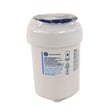
- Replace the water filter on schedule: a restricted filter commonly causes slow water flow and poor ice production; use the GE refrigerator water filter MWFP.
Parts that commonly relate to these problems
If basic checks do not help, these parts are frequent culprits on refrigerators with similar symptoms:
| Symptom | Common cause | Example part for CFSP5RKBBSS |
|---|---|---|
| Warm fresh food, temps swing | Faulty thermistor/temperature feedback | Temperature sensor WR55X10025 |
| No water or no ice fill | Weak or stuck inlet valve | Refrigerator water valve WR57X33326 |
| Slow water, small cubes | Clogged filter or filter head issue | GE refrigerator water filter MWFP |
| Frost buildup, warming | Defrost control issue (often thermostat related) | Refrigerator defrost bi-metal thermostat WR50X10065 |
| Poor airflow, noise | Evaporator fan motor problem | Refrigerator evaporator fan motor WR60X10277 |
Why it matters
Ice maker and cooling complaints often share the same root causes: restricted airflow, frost buildup from a defrost problem, or restricted water flow. Catching these early helps prevent food spoilage, repeat filter clogs, and strain on the compressor.
Helpful DIY guidance
- GE refrigerator error codes
- How to replace the water filter in a GE refrigerator
- How to diagnose a faulty refrigerator water inlet valve
Last updated: February 2026