Installation guide
 Owner’s manual


How to reset a Kenmore 11078132414 dryer?
To reset your Kenmore dryer model 11078132414, turn the dryer off, unplug it (or switch the breaker off) for about 1 minute, then restore power and start a cycle. This clears many control glitches and power-related messages.
Quick reset steps (safe and effective)
- Touch Power to turn the dryer off.
- Unplug the dryer (or turn both dryer breakers off if it is electric).
- Wait 60 seconds.
- Restore power.
- Select a cycle and touch and hold START/PAUSE (up to 3 seconds) to run.
If you are trying to clear a specific display message
Some “reset” situations are really about clearing a code or returning the dryer to normal operation.
| What you see | What it means | What to do |
|---|---|---|
| PF | Power failure interrupted the cycle | Touch START to clear, then press and hold START to resume |
| L2 | Low or no line voltage (heater may not heat) | Touch any pad to clear; check both breakers/fuses; restart a heated Timed Dry |
| Check Vent | Blocked vent or low airflow | Clean lint screen; inspect vent for kinks/clogs; restart a heated Timed Dry |
For the exact wording and steps for your model’s messages, use the 11078132414 owner’s manual.
When a “reset” will not fix the problem
A reset helps with temporary control issues, but it will not correct a failed part or airflow restriction. Check these common causes first:
- Door not fully closed (dryer will not run)
- START/PAUSE not held long enough (touch and hold up to 3 seconds)
- Tripped breaker or blown fuse (many electric dryers use two)
- Crushed or clogged venting (can trigger Check Vent and poor drying)
- Overheating from restricted airflow (can blow a safety fuse such as the thermal fuse W10909685)
Why it matters
Resetting restores the electronic control to a clean start after a power interruption or minor glitch. If the same symptom returns, troubleshooting power, venting, and key safety parts prevents repeat shutdowns and no-heat complaints.
Last updated: January 2026
How much does it cost to replace a heating element in a Kenmore dryer?
For Kenmore dryer model 11078132414, replacing a heating element typically costs about $50 to $120 for the part (electric models) and about $150 to $350+ total if you hire a technician (parts plus labor). Exact pricing depends on whether your dryer is gas or electric and what else is worn.
What changes the price the most
- Dryer type: electric dryers use a heating element; gas dryers use an igniter, gas valve coils, and sensors
- What failed: a blown fuse or airflow problem can mimic a bad heater
- Whether you DIY: labor is usually the biggest cost
- Extra wear parts: belt, rollers, and idler pulley often get replaced during a teardown
- Vent condition: restricted venting can overheat and damage heating components
Quick cost breakdown (typical ranges)
| Scenario | What you pay for | Typical total cost |
|---|---|---|
| DIY, electric dryer | Heating element only | $50 to $120 |
| DIY, electric dryer plus safety parts | Element plus fuses/thermostats as needed | $80 to $180 |
| Pro repair, electric dryer | Parts plus labor/service call | $150 to $350+ |
| Gas dryer “no heat” repair | Ignition parts (not a heating element) plus labor | $150 to $350+ |
Before you buy a heating element
Use the troubleshooting and diagnostic guidance in the 11078132414 installation guide to rule out power and airflow issues. This model can show an L2 code when the home power supply prevents the heater from turning on, and a Check Vent message when venting is restricted.
- Confirm the dryer is getting full power (electric models need the correct supply)
- Clean the lint screen and check the entire vent run for crushing or blockage
- If the dryer overheated, inspect the thermal fuse first
- If it is a gas dryer, focus on ignition components instead of a heating element
Parts that commonly get replaced during a “no heat” repair
- Thermal fuse W10909685
- Dryer thermistor WP8577274
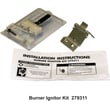
- Igniter 279311 (gas models)
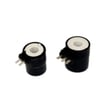
- Dryer valve coil kit 279834 (gas models)
Why it matters
A dryer that is not heating is often caused by power supply issues, restricted venting, or a blown safety fuse, not just the heater itself. Fixing the root cause helps prevent repeat failures and improves drying time.
Last updated: January 2026
What is the average life of a Kenmore dryer?
Most Kenmore dryers, including model 11078132414, typically last 10 to 13 years. With consistent venting and lint maintenance, many dryers reach the upper end of that range because they run cooler, dry faster, and put less strain on the motor, drum, and heat system.
Typical lifespan and what changes it
A dryer’s life is mainly driven by heat stress, airflow restriction, and mechanical wear.
- Venting quality (short, smooth, rigid metal venting lasts longer than long, kinked runs)
- Lint control (clean the lint screen every load; keep the exhaust path clear)
- Load size (overloading accelerates belt, roller, and idler wear)
- Cycle choices (high heat all the time shortens component life)
- Usage frequency (large households wear parts faster)
For model-specific care and safety guidance, follow the 11078132414 owner's manual.
Maintenance that extends dryer life
Use these habits to reduce breakdowns and improve drying performance:
- Clean the lint screen before every load
- Inspect and clean the vent line periodically; remove lint buildup
- Keep the vent run as short and straight as possible; minimize 90° turns
- Avoid crushing or kinking the vent behind the dryer
- Do not overload; leave room for tumbling
Venting guidance (quick reference)
The installation instructions emphasize that overly long vent runs reduce performance and can shorten dryer life. Use this as a practical target:
| 4-inch rigid metal vent | Max length (approx.) |
|---|---|
| 0 elbows | 64 ft |
| 1 elbow | 54 ft |
| 2 elbows | 44 ft |
| 3 elbows | 35 ft |
| 4 elbows | 27 ft |
For the full venting chart and installation details, use the 11078132414 installation guide.
Parts that commonly wear out over time
If your dryer is noisy, squealing, or takes longer to dry, these wear items are common culprits:
- Dryer drum support roller WPW10314173 (thumping, rumbling)
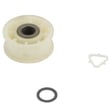
- Dryer idler pulley W10837240 (squealing, belt slack)
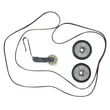
- Belt-4 rib, W10849499 (drum not turning, slipping)
Why it matters
A dryer that is properly vented and maintained dries faster and runs at safer temperatures. That reduces thermal stress on components like the thermal fuse, thermistor, and burner or heater system, which helps you get the full expected lifespan.
Last updated: January 2026
What are common problems with Kenmore dryers?
Common problems on Kenmore dryer model 11078132414 include no heat, won’t start, long dry times, and loud or thumping noises. Most causes trace to airflow restrictions (lint or vent blockage), power or gas supply issues, or normal wear parts such as the belt, rollers, and thermal safety devices.
Most common symptoms and what usually causes them
- Dryer won’t start: door not fully closed, Start/Pause not held long enough, tripped breaker or blown fuse
- Drum turns but no heat: tripped breaker (electric), gas valve closed (gas), failed thermal fuse or thermistor
- Takes too long to dry: crushed or blocked vent, lint buildup, restricted airflow
- Loud squeal/rumble: worn drum support rollers, idler pulley wear, blower wheel damage
- Stops mid-cycle or overheats: airflow restriction, thermal cut-off opening, temperature sensing issues
Quick checks we recommend first (fast, no parts)
Use the troubleshooting steps in the 11078132414 owner’s manual and start with these basics:
- Confirm the door closes and latches firmly
- Touch and hold START/PAUSE up to 3 seconds (not with a fingernail)
- Verify power: many electric dryers use two fuses/breakers
- For gas models, confirm the gas supply line valve is fully open
- Run a heated Timed Dry cycle (avoid Air Only) to confirm heat operation
- If the airflow indicator shows “Check Vent,” inspect the vent for crushing or blockage
Parts that commonly fix noise, no-heat, and no-dry complaints
If the checks above point to a worn or failed component, these are frequent fixes for this model:
- Dryer drum support roller WPW10314173 (rumbling, thumping, drum drag)
- Dryer idler pulley W10837240 (squealing, belt slack, intermittent tumbling)
- Thermal fuse W10909685 (no heat or won’t run after overheating)
- Dryer thermistor WP8577274 (temperature control problems, inconsistent drying)
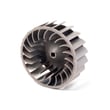
- Dryer blower wheel WP697772 (poor airflow, loud vibration, weak exhaust)
Symptom-to-likely-cause guide
| Symptom | Most likely cause | What to do next |
|---|---|---|
| Won’t start | Door not shut, Start/Pause not held, breaker/fuse | Check door, hold Start/Pause, reset breakers |
| No heat | Power supply issue, gas valve closed, thermal safety open | Verify supply, open gas valve, test thermal devices |
| Long dry times | Vent restriction | Clean lint path and vent run |
| Loud noise | Rollers, idler pulley, blower wheel | Inspect and replace worn moving parts |
Why it matters
Airflow and temperature control protect the heater and prevent repeated shutdowns. Fixing vent restrictions first often prevents thermal fuse or thermal cut-off failures and restores normal drying performance.
Last updated: January 2026