Owner’s manual
 Error Codes


Why is my GE side by side freezer freezing up?
Your GE GSHF3KGZBCWW side-by-side freezer typically freezes up because warm, moist air is getting inside (most often from a door sealing issue) or because the defrost system is not clearing frost off the evaporator. Fixing the air leak or the defrost failure stops the frost buildup and restores airflow.
Quick checks we recommend first
- Make sure the freezer door closes fully and nothing is holding it open (bins, packages, ice bucket).
- Inspect the door gasket for gaps, tears, or hardened sections; clean it with mild soap and warm water.
- Do the “paper test”: close the door on a sheet of paper; if it slides out easily, the seal is leaking.
- Confirm the freezer is not overpacked; blocked vents cause poor airflow and uneven temperatures.
- Check for heavy frost on the back inside panel; that pattern points to a defrost problem.
What usually causes frost buildup (and what to do)
| What you see | Most likely cause | What to do next |
|---|---|---|
| Frost mainly around the door opening | Door not sealing | Clean gasket and mating surface; level the refrigerator so doors self-close; replace gasket if damaged |
| Solid frost blanket on rear freezer panel | Defrost system issue | Check defrost thermostat and related wiring; follow the diagnostic steps in the owner's manual |
| Frost plus weak cooling in freezer and fridge | Airflow restriction from iced evaporator | Defrost the unit (unplug, doors open) to restore airflow, then address the root cause |
Parts that commonly solve “freezer freezing up” on this model
If your symptoms match a defrost failure, these model-compatible parts are common fixes:
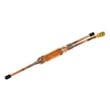
- Refrigerator defrost bi-metal thermostat WR50X10065 (opens/closes to protect the heater circuit during defrost)
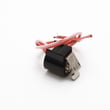
- GE profile refrigerator temperature sensor WR55X10025 (helps the control regulate temperature and defrost timing)
- Refrigerator evaporator fan motor WR60X10307 (moves cold air; weak airflow can worsen icing patterns)
Why it matters
When frost builds up on the evaporator, airflow drops. That makes temperatures swing, can warm the fresh food section, and forces the compressor to run longer, which increases energy use.
Last updated: February 2026
How long does a GE GSHF3KGZBCWW water filter last?
For the GE GSHF3KGZBCWW side-by-side refrigerator, the water filter typically lasts about 6 months under normal household use. If your water has heavy sediment or you dispense a lot of water and ice, plan on replacing it sooner; confirm your model’s filter guidance in the owner's manual.
Typical replacement timing
Most refrigerator water filters are replaced on a time and usage basis:
- Every 6 months for average use (most common)
- Sooner than 6 months if water flow slows, ice production drops, or taste and odor return
- Sooner if you have hard water, well water, or frequent dispenser use
- After long periods of non-use (for example, after a vacation), flush several gallons and replace if taste or odor persists
Signs your filter is due
A filter can be “used up” even if water still dispenses.
- Slower water dispensing from the door
- Smaller or hollow ice cubes
- Cloudy ice or water
- Off taste or odor
- Filter indicator light is on (if your unit uses one)
Which filter fits this model?
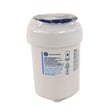
For this model page, the listed replacement filter is the refrigerator water filter MWFP.
| What you notice | Most likely cause | What to do |
|---|---|---|
| Slow dispenser flow | Clogged filter media | Replace the filter, then flush water lines |
| Bad taste or odor | Filter at end of life | Replace the filter |
| Ice maker slow | Restricted water supply through filter | Replace filter, verify supply valve is fully open |
Why it matters
Replacing the filter on schedule helps protect water taste, keeps dispenser flow steady, and supports consistent ice maker performance. A heavily restricted filter can also make you think you have a water valve or ice maker problem when the fix is simply a new filter.
Last updated: February 2026
What are the disadvantages of a water dispenser fridge?
A water-dispenser refrigerator like the GE GSHF3KGZBCWW adds convenience, but it also adds cost and maintenance. The main downsides are higher purchase price, ongoing filter replacements, and more parts (valves, reservoir, dispenser components) that can eventually leak, clog, or fail.
Common disadvantages to expect
- Higher upfront cost compared with similar fridges without a dispenser.
- Ongoing filter cost and upkeep; you will need to replace the water filter on schedule for taste and flow.
- More failure points (water valve, reservoir, dispenser solenoid, tubing connections).
- Leak risk from fittings, cracked lines, or a failing valve.
- Reduced usable space; dispenser hardware and water routing can take up door or interior room.
- Slower dispensing or weak flow when the filter is clogged or water pressure is low.
Maintenance and parts that matter most
If your dispenser starts acting up (slow flow, no water, dripping), these model-compatible parts are commonly involved:
- GE GSHF3KGZBCWW owner's manual
- GE refrigerator water filter MWFP
- Refrigerator water valve WR57X33326
- Refrigerator water reservoir assembly WR17X11440
Quick symptom-to-likely-cause guide
| Symptom | Most common cause | What to check first |
|---|---|---|
| Slow water flow | Clogged filter | Replace filter, then flush lines |
| No water dispenses | Valve not opening, frozen reservoir/line | Verify supply, check for freezing |
| Dripping at dispenser | Valve not sealing, air in line | Inspect valve, purge air |
| Bad taste/odor | Old filter, stagnant water | Replace filter, flush reservoir |
Why it matters
A dispenser system is a small plumbing system inside your refrigerator. When it is maintained, it is reliable and convenient; when it is neglected, it can cause poor water quality, weak flow, and leaks that damage floors or create ice buildup.
Last updated: February 2026