Owner’s manual
 Error Codes


Why is my refrigerator not getting cold at the bottom?
If your Kenmore Elite 79574053412 bottom-mount refrigerator is warm at the bottom, the most common causes are restricted airflow, doors not sealing, or a control setting that is too warm. Start by confirming the temperature settings and door closure, then check for airflow and frost issues.
Quick checks that fix many “warm bottom” complaints
- Make sure the doors close fully and are not being held open by bins or food packages.
- Reduce how often the doors are opened; frequent openings let warm, humid air in.
- If you recently loaded a lot of food (especially warm food), allow several hours for temperatures to recover.
- After a defrost cycle, wait about 30 minutes and recheck temperatures.
- Adjust the temperature control one increment at a time, then wait for the temperature to stabilize before adjusting again (see the 79574053412 owner's manual).
What to inspect if the bottom stays warm
A bottom-mount refrigerator cools by moving cold air through vents; if that airflow is blocked, the lower area can run warm.
- Air vents and circulation: Look for blocked vents in the fresh food section and avoid packing items tightly against vent openings.
- Door seal leaks: A leaking gasket can pull in warm air and create temperature swings.
- Frost buildup: Heavy frost can indicate a defrost problem that reduces airflow.
- Condenser area: Dust buildup around the condenser can reduce cooling performance.
Common symptoms and likely causes
| Symptom | Most likely cause | What to do first |
|---|---|---|
| Bottom shelves warm, top OK | Airflow blocked | Clear vents, rearrange food |
| Whole fridge warm | Control set too warm, heavy loading, frequent openings | Adjust control, allow recovery time |
| Temps fluctuate, moisture/condensation | Doors opened often or not closing | Improve door closure, reduce openings |
| Frost and weak cooling | Defrost system issue | Check for frost pattern, consider service |
Parts that are often involved
If you confirm a component problem, these model-matched parts are commonly related to cooling performance:
- Refrigerator condenser coil ACG73645004 (dirty or damaged coils can reduce heat removal)
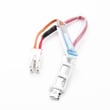
- Refrigerator defrost sensor assembly 6615JB2005R (defrost sensing issues can contribute to frost and airflow restriction)
Why it matters
When warm air enters through frequent door openings or a poor seal, the refrigerator temperature rises and moisture increases. That combination can reduce cooling at the bottom and can also lead to condensation or frost that further restricts airflow.
Last updated: January 2026
What are the common problems with Kenmore Elite refrigerators?
Common problems on the Kenmore Elite 79574053412 bottom-mount refrigerator usually trace to cooling system trouble (compressor or airflow), ice maker and dispenser failures, or control and sensor issues that disrupt temperatures and defrosting. Our 79574053412 owner's manual troubleshooting section helps narrow the cause fast.
Most common symptoms and what they usually point to
- Not cooling or warm temperatures: sealed system issue, weak compressor, dirty condenser coil, or evaporator fan/airflow problem
- Ice maker not making ice: water supply issue, failed ice maker module, or dispenser/auger problem
- Frost buildup or water leaking inside: defrost system fault or a clogged drain tube
- Noisy operation: condenser fan area, evaporator fan area, or compressor-related noise
- Display problems or erratic operation: control board or sensor/thermistor issues
Parts that commonly fail on this model
If your symptoms match, these are frequently involved on model 79574053412:
- Cooling and heat exchange: refrigerator compressor TCA38091801, refrigerator condenser coil ACG73645004
- Defrost and temperature sensing: refrigerator defrost sensor assembly 6615JB2005R
- Ice production: lg refrigerator ice maker AEQ73130004
- Leaks from defrost drain: refrigerator drain tube 5251JA3003D
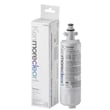
- Water taste/flow complaints: genuine Kenmore refrigerator water filter 9690 AGF80300801
Quick checks we recommend before replacing parts
- Confirm the controls are set correctly and the doors seal tightly.
- Clean dust from the condenser area (restricted airflow can cause warm temps).
- If ice is slow, verify household water supply is on and the line is not kinked.
- If you see water under crispers, suspect a clogged defrost drain.
- If the unit recently lost power, allow 24 hours for temperatures to stabilize.
Symptom-to-part cheat sheet
| Symptom | Most likely area | Common part examples |
|---|---|---|
| Warm fridge and freezer | Cooling system/airflow | Compressor, condenser coil |
| Frost on back wall | Defrost system | Defrost sensor assembly |
| No ice | Ice maker/water supply | Ice maker, water filter |
| Water pooling inside | Drain system | Drain tube |
Why it matters
Catching the right failure early protects food temperatures, reduces compressor run time, and prevents repeat issues like drain clogs that can lead to recurring leaks.
Last updated: January 2026
What does DH mean on Kenmore Elite refrigerator?
On Kenmore Elite refrigerator model 79574053412, DH typically indicates a defrost heating problem (the refrigerator is not sensing the expected temperature change during the defrost cycle). This can lead to frost buildup, warm temperatures, and reduced airflow.
What you’ll notice when DH is active
- Frost or ice buildup on the freezer back wall
- Freezer temperature rising, then fresh food section warming
- Fan noise changing (airflow restricted by frost)
- Ice maker slowing down or stopping
- DH returning after you reset power
Most common causes (and what to check first)
Start with the easiest checks before testing electrical parts.
- Door not sealing well: warm, moist air increases frost load; inspect gaskets and door alignment
- Airflow blocked: packages against vents can cause uneven temps and frost
- Defrost sensor issue: a failed sensor can misread coil temperature; see refrigerator defrost sensor assembly 6615JB2005R
- Defrost heater or wiring issue: heater not warming the evaporator during defrost
- Control board issue: board not powering the heater circuit; see refrigerator electronic control board CSP30021023
Quick troubleshooting steps (safe DIY)
- Power reset: unplug for 5 minutes, then restore power.
- Check door seal: close a dollar bill in several spots; it should resist being pulled out.
- Look for heavy frost: if the freezer back panel is packed with frost, a defrost failure is likely.
- Clean condenser area: dust can worsen cooling performance and make symptoms more obvious.
When electrical testing makes sense
If DH returns and frost keeps building, testing the defrost circuit is the next step. Use the wiring and troubleshooting guidance in the 79574053412 owner’s manual.
| What you test | What it tells you | Typical next step |
|---|---|---|
| Defrost sensor continuity (cold vs. warm) | Whether the sensor is reading correctly | Replace sensor if readings are incorrect |
| Heater continuity | Whether the heater can heat | Replace heater if open |
| Voltage to heater during defrost | Whether the control is driving defrost | Diagnose wiring or control board |
Why it matters
DH is more than a display message; it usually points to a defrost system problem that can snowball into warm food temps, ice buildup, and compressor overwork if it’s not corrected.
Last updated: January 2026