Installation guide
 Owner’s manual
 Error Codes


How to identify a Kenmore washer model?
Your Kenmore washer model number is the ID we use to match the correct parts and instructions; for this appliance, the model is 11026752503. On most Kenmore washers, you will find the model/serial tag under the lid (top-load) or around the door opening (front-load), and sometimes on the back panel.
Where to look on a Kenmore washer
Check these common locations in this order:
- Under the lid: along the rim of the tub opening or underside of the lid (most top-loaders)
- Door opening area: on the cabinet frame behind the door (front-loaders)
- Back of the washer: near the power cord entry or rear panel
- Control console area: behind the console or along the side of the cabinet
If you are using the documentation for this washer, the model number on the tag should match what is shown on the 11026752503 installation guide.
What the model number looks like
Kenmore washer model numbers are often numeric and commonly start with 110. The tag usually includes both a model and a serial number.
| Item on tag | What it’s used for | Example format |
|---|---|---|
| Model number | Picking exact-fit parts and diagrams | 11026752503 |
| Serial number | Production info and service history | Letters and numbers |
Why it matters
Even small model-number differences can change the correct fit for parts like a lid switch, drain pump, or inlet valve. Using the exact model number helps avoid ordering the wrong component and speeds up troubleshooting.
Quick tip for parts matching
When you search parts for this washer, match the model number first, then confirm the part by name.
- Lid not starting or stopping mid-cycle: often points to a lid switch
- Not draining: often points to a drain pump or a clog
- Not filling: often points to an inlet valve
Last updated: February 2026
Is it worth repairing a Kenmore washing machine?
For a Kenmore washer like model 11026752503, repairing is worth it when the fix restores reliable wash and spin performance for less than the cost of replacing the machine. Common wear items (lid switch, drain pump, motor coupling) are straightforward repairs that often extend service life.
Quick decision checklist
- The washer fills, agitates, and drains, but has one clear symptom (no spin, no drain, won’t start).
- The tub and cabinet are solid (no severe rust, no major leaks from the tub area).
- The repair is a single-part failure, not multiple systems at once.
- You can confirm the symptom with basic checks in the 11026752503 owner's manual.
- The machine meets your needs (capacity, cycle options, noise level) once repaired.
Most common “worth it” repairs on this model family
These are frequent, high-impact fixes on Kenmore top-load designs like 11026752503:
| Symptom | Likely area | Example part for this model |
|---|---|---|
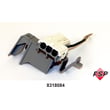
| Won’t spin or won’t start | Lid safety circuit | Washer lid switch assembly WP8318084 |
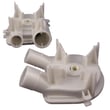
| Won’t drain or drains slowly | Drain pump or blockage | Washer drain pump WP3363394 |
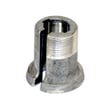
| Agitates poorly or “slips” | Agitator drive components | Agitator dog 80040 |
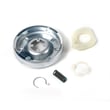
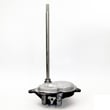
| Motor runs but basket does not move correctly | Drive coupling | Washer motor coupling 285753A |
Why it matters
A targeted repair prevents repeat breakdowns and protects other components. For example, a weak drain pump can leave water in the tub, which strains the drive system and can lead to bigger spin and balance problems.
When replacement makes more sense
- Repeated major failures (for example: gear case plus basket drive issues).
- Persistent leaks from the tub or drive shaft area.
- Repair cost approaches the price of a comparable new washer, especially if multiple parts are needed.
Last updated: February 2026
What is the average lifespan of a Kenmore washer?
A Kenmore washer typically lasts 10 to 15 years with normal household use. For Kenmore model 11026752503, consistent care (proper loading, correct water supply, and protecting it from freezing) helps you reach the longer end of that range; see the 11026752503 owner's manual for routine care guidance.
What affects washer lifespan most
- Overloading the basket and straining the drive system
- Unbalanced loads that increase vibration and wear on suspension and drive parts
- Water quality and pressure issues that stress the fill system
- Drain restrictions that overwork the pump
- Cold-weather storage; operating at or below 32°F can leave water inside that can cause damage
Quick maintenance habits that add years
- Keep loads evenly distributed; wash bulky items in smaller loads.
- Use the right amount of detergent to reduce residue buildup.
- Periodically check fill hoses and confirm your supply meets typical requirements (many washers run best around 5 to 100 psi).
- Make sure the washer drains freely; slow draining is a wear multiplier.
- If the washer is in a garage or seasonal space, winterize before temperatures reach freezing (details are typically covered in the 11026752503 installation guide).
Common wear parts and what they usually look like when failing
| Symptom | Common cause | Example part for this model |
|---|---|---|
| Won’t drain or leaves water in tub | Pump jammed or worn | Washer drain pump WP3363394 |
| Won’t spin or stops when lid opens | Lid switch not closing | Washer lid switch assembly WP8318084 |
| Agitator moves poorly or “ratchets” | Worn agitator dogs | Agitator dog 80040 |
Why it matters
Knowing the typical 10 to 15 year lifespan helps you decide whether to invest in a repair (like a drain pump or lid switch) versus planning for replacement, especially if multiple drive or leak-related issues show up close together.
Last updated: February 2026