Owner’s manual


How to find part number for Samsung dryer?
To find the correct part number for your Samsung dryer, we match parts to the model number first. On Samsung model DV220AGW, the model and serial tag is typically on the front frame behind the door; if it’s missing or unreadable, check the back of the dryer next.
Where to look for the model and serial tag
- Open the dryer door and inspect the front frame (door opening area)
- Check the rear panel of the dryer for a second label
- Write down the full model number and serial number exactly as shown
- If the label is worn, use a flashlight and take a close-up photo to zoom in
How we use that info to get the right part number
Once you have the model number, use the parts list for DV220AGW and confirm the part by location and description in the exploded views. The DV220AGW owner’s manual also helps you identify features (like reversible door setups) that can affect which hardware or door parts you need.
Quick match checklist
| What you have | What we need it for | Why it matters |
|---|---|---|
| Model number (DV220AGW) | Filters the correct parts diagrams | Prevents ordering a similar-looking part that won’t fit |
| Serial number | Confirms production variation (when applicable) | Some parts change by production run |
| Symptom (noise, no heat, won’t start) | Narrows likely parts | Saves time and avoids unnecessary returns |
Common parts customers look up by symptom
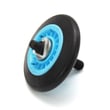
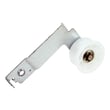
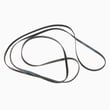
- Thumping or squealing: drum support roller, belt, idler components
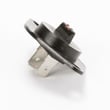
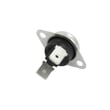
- No heat or overheating: thermostats, thermistor, radiant sensor
- Door won’t latch: door catch, door strike, hinge components
If you’re troubleshooting heat or control issues, our Samsung dryer error codes guide can help you connect an error code or symptom to the most likely parts.
Why it matters
Samsung dryers often have multiple versions that look alike. Using the exact DV220AGW model number ensures the part number you order matches the mounting points, wiring connectors, and fit.
Last updated: February 2026
How to tell if a Samsung dryer heating element is bad?
If your Samsung DV220AGW dryer runs but won’t heat, the most reliable way to confirm a bad heating element is to unplug the dryer and test the heater circuit with a multimeter for continuity and for a short to ground. Use the DV220AGW user manual troubleshooting checks first.
What you’ll notice when the heater is failing
Common symptoms that point to a heater or heater circuit problem include:
- Dryer tumbles normally but clothes stay cold or damp
- Cycle seems to run, but drying takes much longer than normal
- Heat works intermittently (heats for a short time, then stops)
- A burning smell or scorching odor (stop using the dryer and inspect venting)
- The dryer shuts off early because it overheats (often airflow-related)
How we test the heating element (and related heat parts)
- Disconnect power (unplug; for electric models, verify the outlet is dead).
- Access the heater terminals (follow the disassembly steps in the manual).
- Continuity test (ohms/continuity setting):
- Touch one probe to each heater terminal.
- A good element shows continuity (a measurable resistance value).
- An open element shows no continuity (often “OL” or infinite resistance).
- Ground test (short to cabinet):
- Touch one probe to a heater terminal and the other to bare metal on the heater housing.
- You should get no continuity. Continuity here indicates a grounded element.
Quick result guide
| Test | What you should see | What it means |
|---|---|---|
| Terminal-to-terminal continuity | Continuity present | Element is not open |
| Terminal-to-terminal continuity | No continuity | Element coil is broken (bad element) |
| Terminal-to-cabinet (ground) | No continuity | Element is not shorted |
| Terminal-to-cabinet (ground) | Continuity present | Element is grounded (bad element) |
Don’t miss the most common “no heat” cause: airflow
Your DV220AGW manual calls out lint filter and exhaust duct cleaning, and recommends proper metal venting. Poor airflow can cause no-heat symptoms and can also trip safety thermostats.
- Clean the lint screen before every load
- Inspect and clean the exhaust duct and outside hood
- Use 4-inch rigid metal duct when possible
- Avoid plastic flexible duct
Why it matters
A failed heating element stops drying, but restricted venting can mimic heater failure and can overheat the dryer. Checking airflow first helps you avoid replacing good parts and restores safe, efficient drying.
Last updated: February 2026
How to tell if Samsung dryer thermal fuse is bad?
On a Samsung DV220AGW dryer, a bad thermal fuse typically shows up as a dryer that won’t start (most common) or a dryer that runs but won’t heat. The sure test is a continuity check with a multimeter; a good fuse reads closed (continuity), and a blown fuse reads open (no continuity). See the DV220AGW user manual troubleshooting and safety notes before testing.
What you’ll notice when the fuse is blown
- Dryer does not run at all when you press Start
- Motor hums briefly and stops (some failures present this way)
- Dryer runs but has no heat (depends on design and where the fuse is in the circuit)
- The problem appears suddenly after a long or hot cycle
How to test the thermal fuse (quick steps)
- Unplug the dryer (and shut off gas on gas models).
- Access the fuse location (commonly on the blower housing or heater/burner duct area).
- Pull the two wires off the fuse terminals.
- Set your multimeter to continuity (or lowest ohms).
- Touch probes to the fuse terminals.
Interpreting your meter reading
| Meter result | What it means | What to do next |
|---|---|---|
| Beep or ~0 to 1 Ω | Fuse is good | Keep troubleshooting (door switch, power, controls, heat circuit) |
| No beep or OL/infinite Ω | Fuse is blown | Replace the fuse and fix the overheating cause |
Fix the cause first (or the new fuse can blow again)
Overheating is usually caused by restricted airflow. The DV220AGW manual calls out venting basics such as using rigid or stiff-walled metal duct, avoiding plastic flex duct, and keeping the exhaust path clear.
- Clean the lint filter and lint screen housing
- Inspect and clean the full vent run to the outside hood
- Confirm the outside hood opens and closes freely
- Avoid crushed or excessively long venting
- Verify you are using 4-inch metal vent material
Related heat-safety parts to consider
If airflow is good but heating still acts up, heat-control parts can be involved. For this model, common related items include the dryer thermal cut-off thermostat DC47-00016A and the dryer high-limit thermostat DC47-00017A.
Why it matters
The thermal fuse is a safety device; when it opens, it prevents unsafe overheating. Restoring proper airflow helps the dryer heat correctly, dry faster, and reduces repeat shutdowns.
Last updated: February 2026
What is the average lifespan of a Samsung dryer?
A Samsung dryer typically lasts 10 to 15 years. For your Samsung DV220AGW, lifespan is driven by airflow (lint and venting), load size, and heat stress; consistent cleaning and correct venting keep the dryer running cooler and extend component life.
What affects dryer lifespan the most
- Restricted venting (crushed duct, long runs, clogged vent hood)
- Lint buildup in the lint screen housing and exhaust path
- Overloading that strains the drum belt, rollers, and motor
- Running high heat on every load (more wear on thermostats and sensors)
- Poor leveling that increases drum support wear
Maintenance checklist (best return for the effort)
- Clean the lint screen every load.
- Check airflow at the outside vent hood; strong, steady flow means the vent path is clear.
- Use rigid or approved metal ducting and keep the run as short and straight as possible.
- Keep the dryer level to reduce vibration and drum support wear.
- Follow the venting and care instructions in the DV220AGW owner’s manual.
Common wear items over time
| Symptom | Likely wear area | Example DV220AGW part you may replace |
|---|---|---|
| Thumping or squealing | Drum support rollers | Drum support roller (common wear item) |
| Drum not turning | Belt or motor drive | Samsung dryer drum belt (common wear item) |
| Overheating or no heat | Sensors/thermostats or airflow | Dryer thermistor or thermal cut-off thermostat |
Why it matters
A dryer that cannot move air runs hotter and longer each cycle. That extra heat and run time accelerates wear on the motor, drum support system, belt, and temperature controls.
Last updated: February 2026